

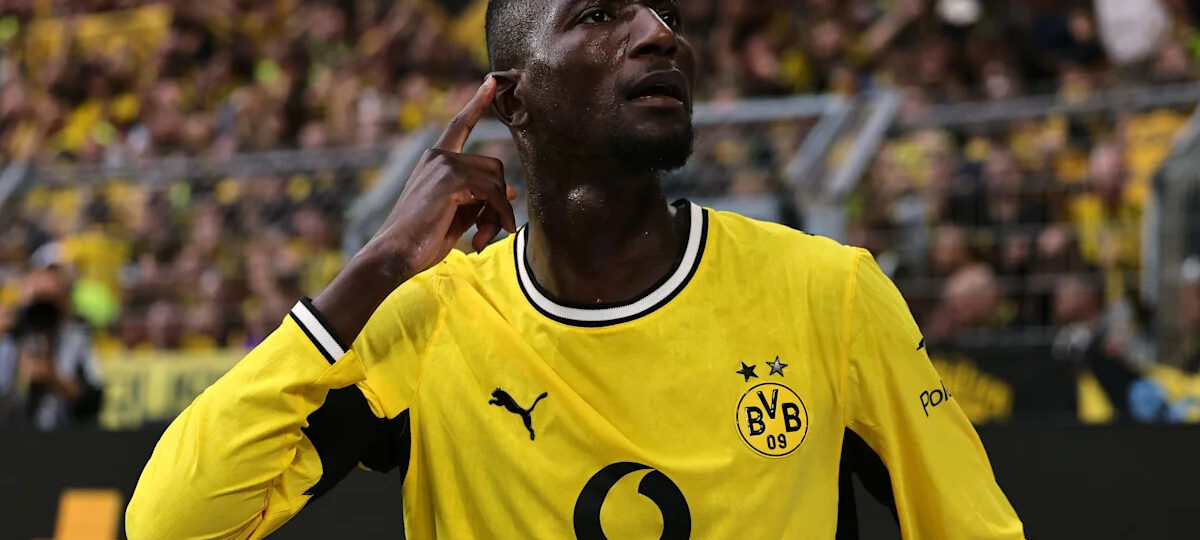

Four matchdays in, and the Bundesliga table already presents a fascinating split: are we witnessing genuine tactical dominance, or are early-season statistical anomalies tricking us into false narratives? Here is the deep dive into the top, and bottom, five.
Bundesliga Top 5 – Real dominance or early-season illusion?
Borussia Dortmund (1st | 12 Pts | +7 GD)
A maximum haul of 12 points from four matches paints a picture of flawless efficiency, but a look under the hood reveals a side relying heavily on moments of individual brilliance rather than sustained territorial dominance. Dortmund’s rest-defence has shown marginal structural improvements compared to last term, yet their inability to control games in central midfield often forces them into end-to-end battles. Generating xG through rapid vertical transitions works when individual attackers are clinical, but as European midweek fixtures pile up, this high-energy approach will test Borussia Dortmund’s squad depth. Unless they establish better possession control to dictate the tempo, their top spot remains vulnerable to an inevitable tactical regression.
Bayern Munich (2nd | 10 Pts | +12 GD)
Sitting second only due to a minor draw, Bayern Munich remain the undisputed statistical powerhouse of the Bundesliga. With 14 goals scored across four games and an 12.5 xG generation that dwarfs the rest of the league, Bayern’s positional play in the final third is operating at an elite level. The tactical implementation of aggressive counter-pressing keeps opponents pinned in their own half for extended periods, reducing counter-attacking threats to a minimum. While the table shows a two-point gap to the top, Bayern’s underlying creative metrics and defensive stability indicate they are the only true title favorite equipped to maintain this pace over a 34-game distance.
Freiburg (3rd | 10 Pts | +9 GD)
Freiburg’s leap into the top three is the result of clinical efficiency and defensive compactness. Conceding just three goals in four matches, their disciplined mid-block forces opposition attacks into wide areas where their aerial dominance takes over. Offensively, set-pieces remain their primary weapon, converting low-percentage chances into crucial match-winners. However, their physical style requires immense tactical discipline, and their current goal conversion rate is significantly outperforming their expected goals (xG) by 2.7. While a European finish is well within reach, competing for a Champions League spot long-term will be difficult once opponents adapt to their build-up patterns.
Augsburg (4th | 7 Pts | +5 GD)
Augsburg represents the classic early-season statistical anomaly. Sitting fourth with seven points, their game plan relies on maximum physical intensity, aggressive duel rates, and lightning fast direct play. They bypass complex build-up phases entirely, aiming to provoke mistakes in the opposition half. While this chaotic approach has rattled several opponents early on, their shot-suppression numbers are concerning, allowing far too many high-quality box entries. As shot conversion rates normalise across the league, Augsburg’s current high-flying status will likely revert toward a comfortable mid-table position.
Bayer Leverkusen (5th | 7 Pts | +5 GD)
Despite sitting fifth, Leverkusen look like the most dangerous side lurking just outside the top three. Their fluid positional rotation between the half-spaces allows them to break low-blocks with ease, creating high-percentage scoring opportunities. The five goals conceded stem from isolated communication lapses in a newly assembled backline rather than systemic defensive flaws. As their central midfield axis continues to refine its pressing triggers, Leverkusen’s underlying metrics suggest they will steadily climb the table and firmly re-establish themselves in the top-four race.
While Dortmund and Augsburg are riding a wave of early-season variance, Bayern and Leverkusen possess the structural frameworks built for long-term survival at the top. Expect the table to realign as xG metrics force regression across the board.
The Basement Five – Structural crises & early alarm bells
Early-season panic or genuine systemic failure? With four games down, the bottom five find themselves in a high-stakes battle against tactical flaws, catastrophic defensive records, and looming crisis meetings…
Hoffenheim (14th | 3 Pts | -3 GD)
Three defeats from four games highlight a clear structural issue in Hoffenheim’s defensive transition. Conceding ten goals already, their attacking full-backs leave massive vacuums behind them that opposition wingers exploit with ease. When losing possession in the final third, their central midfield lacks the athletic recovery pace to break up counter-attacks before they reach the penalty area. However, Hoffenheim’s offensive metrics remain respectable; if the coaching staff adjusts their rest-defence to a more conservative cover structure, the individual quality in their squad should easily pull them away from any prolonged relegation scrap.
VfB Stuttgart (15th | 3 Pts | -3 GD)
Stuttgart’s presence in 15th place is largely a result of finishing variance rather than a broken system. Their positional build-up, box entry numbers, and field tilt remain among the top half of the league, proving that their tactical framework is intact. The core issue lies in a sudden lack of composure in front of goal combined with costly individual errors during opponent set-pieces. Unlike other struggling sides, Stuttgart are not being outplayed structurally; once their shot conversion aligns with their xG output (7.6, -1.6 difference), a rapid climb back toward the European positions is expected.
Hamburg (16th | 3 Pts | -11 GD)
Thirteen goals conceded in just four matches highlight the brutal reality of the step up to the top flight for HSV. Their backline has been repeatedly exposed by the speed and precision of Bundesliga attacks, with mistakes in fundamental defensive positioning being punished ruthlessly. While their home atmosphere provides a psychological boost, their willingness to engage in open, expansive football leaves their central defenders hopelessly isolated in 1v1 situations. To survive this season, HSV must abandon their romantic possession approach in favor of a pragmatic, low-block survival strategy.
Union Berlin (17th | 1 Pt | -13 GD)
A league-worst 17 goals conceded marks a total collapse of the defensive identity that previously defined Union Berlin. The once-impenetrable low-block has lost its spatial discipline, allowing opponents to easily penetrate the half-spaces and create high-value chances inside the six-yard box. Furthermore, their traditional threat from set-pieces has vanished, leaving them without a reliable route to score goals. With confidence at an all-time low and the defensive unit leaking goals at an alarming rate, immediate tactical intervention is required to avoid an agonizing season-long battle against the drop.
Borussia Mönchengladbach (18th | 0 Pts | -10 GD)
Rooted to the bottom of the table with zero points and 16 goals conceded, Gladbach are in full-blown crisis mode. Their defensive shape lacks any form of central compactness, allowing opponents to slice through their midfield with simple vertical passes. When losing the ball, there is a visible lack of intensity in counter-pressing, leaving their backline completely unprotected. Coupled with anemic possession that fails to generate meaningful xG (6.(, Gladbach look tactically lost, putting the coaching staff under immense, immediate pressure ahead of the coming matchdays. Question is, is Alexander Blessin the man to guide the Foals up the table?
Discover more from NAIRAVOICE.COM.NG
Subscribe to get the latest posts sent to your email.