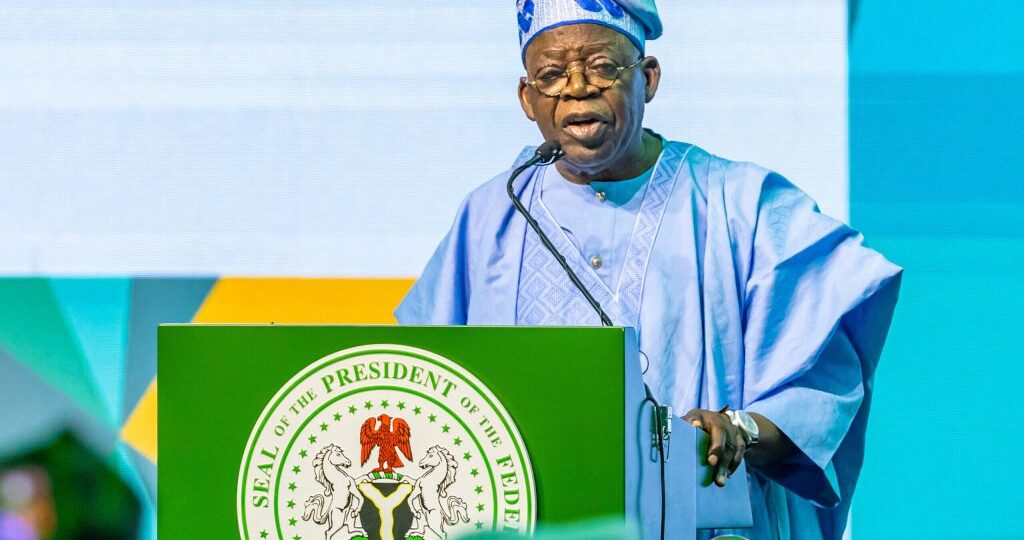
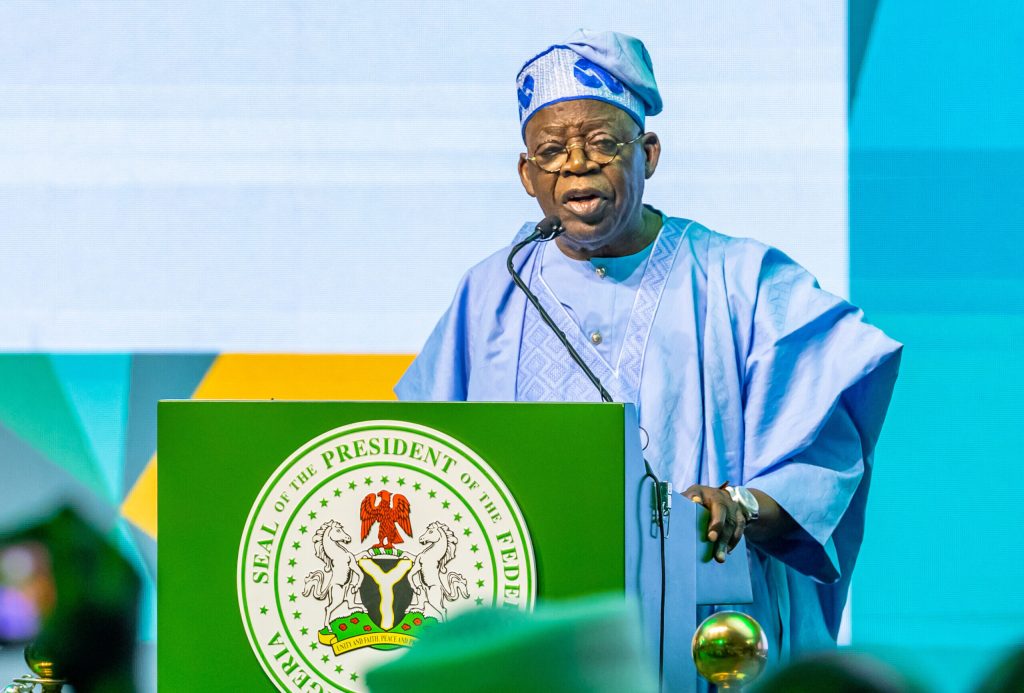
President Bola Tinubu has said Nigeria is shifting from borrowing to cover short-term fiscal pressures to raising funds for infrastructure projects that can drive economic growth, create jobs and support the country’s ambition of becoming a $1 trillion economy by 2030.
Tinubu said the government’s economic reforms had improved the country’s fiscal position and strengthened its access to international capital, but stressed that the next phase must focus on completing projects and delivering measurable benefits to Nigerians.
The President stated this in an article titled “From Reforms to Delivery: Our Infrastructure Investment and Growth Strategy,” shared on X on Thursday by his Special Adviser on Information and Strategy, Bayo Onanuga.
He said the removal of petrol subsidy, exchange-rate unification and tax reforms had helped restore macroeconomic balance and improve government revenue.
According to Tinubu, Nigeria’s real gross domestic product growth reached 4.43 per cent in the second quarter of 2026, while headline inflation fell to 14.63 per cent in September from 20.98 per cent a year earlier.
He also said gross external reserves stood at $55.1bn as of October 9, 2026, including about $46bn in net reserves.
“These reforms have restored macro balance, quadrupled federation revenue since 2021 and rebuilt the credibility of the State’s balance sheet,” Tinubu wrote.
He argued that the improved fiscal position should enable the government to channel more borrowing towards productive investments while maintaining financial discipline.
“Borrowing to build, not to bridge, not for consumption: Nigeria is fundamentally changing the purpose of public borrowing: from financing short-term fiscal pressures to investing in assets that will transform the economy for generations,” he said.
Tinubu said public debt stood at 35.75 per cent of GDP in the second quarter of 2026, while debt servicing consumed about 65 per cent of revenue in the first half of the year.
He acknowledged the need for fiscal discipline, stating that the Federal Executive Council’s economic strategy ruled out deficit monetisation and unfunded commitments during the pre-election period.
The President listed the Lagos-Calabar Coastal Highway, Sokoto-Badagry Superhighway, Trans-Sahara Superhighway, electricity grid improvements and upgrades to commercial ports in Lagos among the administration’s priority infrastructure projects.
He said the projects would connect economic regions, improve access to markets, reduce logistics costs and attract private investment.
Tinubu cited progress on the Lagos-Calabar Coastal Highway, saying that as of August 2026, Lot 2 was reported to be more than 80 per cent complete, while work on the Calabar-Akwa Ibom section was over 30 per cent complete.
He added that the coastal highway was expected to reduce logistics costs along its corridor by 15 to 20 per cent and could contribute up to two per cent to Nigeria’s GDP through industrial development, trade and tourism.
The project is also expected to generate about 100,000 direct jobs in construction and engineering, alongside more than 150,000 indirect jobs in logistics, materials and services, according to the President.
Tinubu said the administration was aligning its borrowing strategy with the long-term nature of infrastructure assets by extending debt maturities and seeking financing at lower costs.
He also pointed to positive assessments by international financial institutions and markets, including rating actions by S&P, Fitch and Moody’s, Nigeria’s return to FTSE Russell’s Frontier Market status and its removal from the Financial Action Task Force grey list in October 2025.
According to him, these developments could improve access to international capital and help the country secure more competitive financing terms.
“The reforms have opened the door to capital; delivery is what will turn that capital into prosperity,” he said.
Tinubu added that the government’s next priorities included improving food affordability and energy price stability, maintaining fiscal discipline, completing critical infrastructure projects, improving the policy and regulatory environment, and supporting households through human development investments.
He said the success of the economic strategy would ultimately be judged by completed projects and improvements in living standards, rather than policy announcements.
“Every Naira borrowed must be justified by the economic value it creates, and we must measure every project by its results,” the President said.
He maintained that Nigeria could not achieve a $1 trillion economy without infrastructure capable of supporting higher productivity, industrialisation, trade and long-term investment.
Discover more from NAIRAVOICE.COM.NG
Subscribe to get the latest posts sent to your email.