

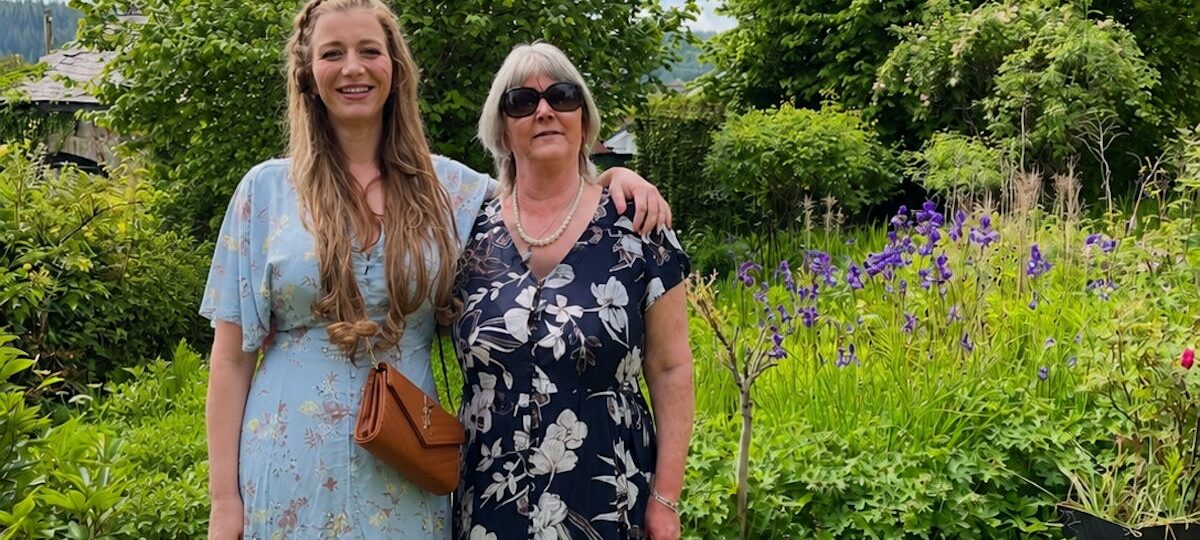
People now speak honestly about postpartum exhaustion, hormones, and sleepless nights, but very few people talk about the way motherhood pulls you back toward your own mother in almost instinctive ways.
Every uncertainty suddenly becomes a reason to reach for her.
When my baby boy would not settle, when his cry sounded slightly different, when I convinced myself something terrible must be wrong, all I wanted was to hear her say, “Frankie, it’s normal.” She had a way of making panic settle quietly.
But my mom died on December 27, just six weeks after my son was born.
Looking back, it feels as though she carried herself through one final Christmas for everyone else’s sake.
The presents were wrapped carefully.
Even while she was losing her fight, she still poured herself into making sure everyone else felt held together.
That was how she loved people: quietly, through care.
Then suddenly she was gone, and I was left standing in that strange place where new life and grief exist side by side.
There is something deeply disorienting about grieving while postpartum because motherhood continues regardless of heartbreak.
Babies still wake hungry in the night.
Your body is healing while your heart is breaking, and somehow both things are expected to happen at once.
I remember sitting in the dark, feeding my son, and instinctively reaching for my phone to message her before remembering she was no longer there.
Even now, after months have passed, I sometimes call her phone just to hear her voice on the voicemail.
For a few seconds, hearing her voice creates the briefest illusion that she still exists somewhere close enough to reach.
One of the loneliest things about grief is how heavy joy can become.
When my son first started smiling, my immediate instinct was to send videos to my mom.
When he let out his first tiny laugh, excitement rose in me so quickly it almost hurt, because heartbreak followed immediately behind it.
Who was I supposed to share these moments with now?
Who would treasure them in the way she would have?
I have learned that love does not disappear when someone dies; it simply changes shape.
Since my mom died, I have lived life at a million miles an hour.
I’ve made enormous decisions quickly, choices I probably once would have sat with for much longer.
I’m preparing for another international move, this time to Malaysia, so I can experience another part of the world.
I bought an apartment because somewhere inside me grew a desperate need to make sure my children would always have somewhere safe to land.
Losing my mother made me realize how suddenly life can fracture.
I think part of me has been trying to build protection against that feeling from ever happening again.
Still, there are moments where life softens around the edges.
Watching my son smile in his sleep.
Hearing his tiny laugh in the early morning light.
Sitting in the Kenyan sunrise, holding him while birds begin singing outside.
Those moments do not erase grief, but they exist beside it quietly.
Grief changes your relationship with time.
It makes everything feel both fragile and urgent.
Since losing her, I’ve struggled to sit still.
Movement feels easier than silence because silence leaves too much room for longing.
Sometimes I wonder if I’ve been running simply so I don’t have to fully feel the shape of her absence.
I think grief has changed the texture of motherhood for me.
Love feels sharper now, more fragile and precious at the same time.
My son will grow up without knowing my mom, but traces of her remain around us: in the way I soothe him, in the tenderness she taught me, in the instinct to care for others even when your own heart is breaking.
It has simply woven itself quietly into motherhood, memory, and love itself.
Discover more from NAIRAVOICE.COM.NG
Subscribe to get the latest posts sent to your email.