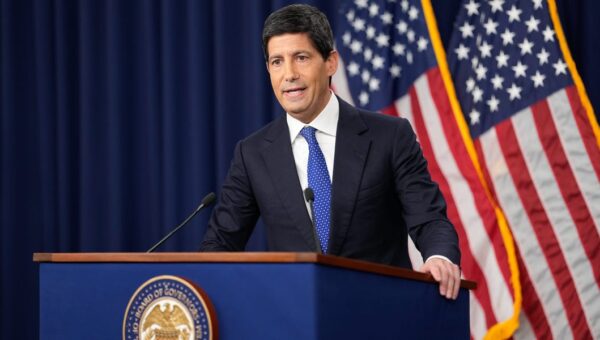

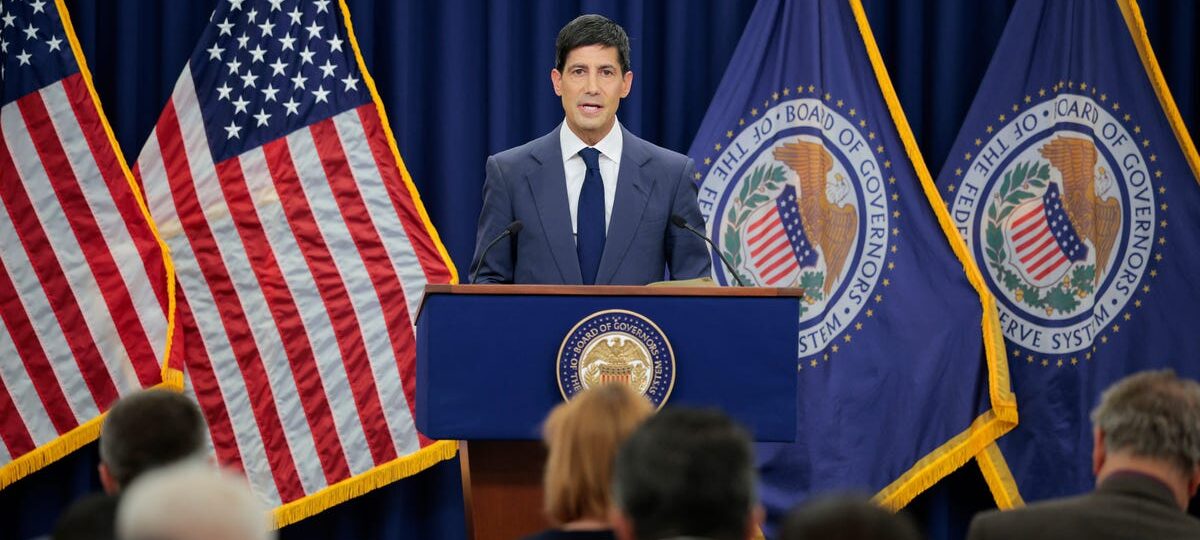
Kevin Warsh launched task forces. “At any institution, a change in leadership is a natural and timely opportunity to reaffirm its mission, to review current practices, and to consider whether those practices best meet our objectives,” Warsh said Wednesday during a press conference. “My Fed colleagues and I will be working in close collaboration to ask what changes might improve the conduct of monetary policy.” Warsh has arrived at the Fed as a new appointee of President Donald Trump, following the end of former chair Jerome Powell’s tenure, with experience examining how central banks communicate.
A former Federal Reserve governor, he led a 2014 review of the Bank of England’s Monetary Policy Committee’s transparency practices and procedures, resulting in recommendations to bolster the bank’s transparency, accountability, and governance.
That history makes his early focus on process and communications less surprising and suggests that his review-heavy approach may reflect a long-held interest in how central banks explain themselves, given that the Fed is likely unaccustomed to the kind of sweeping changes seen in corporate America.
The mandate that Warsh laid out — to “start with first principles,” “ask hard questions,” and “consider alternatives” — is the kind of language a CEO might use, and resembles a familiar corporate strategy: gathering information, reassessing priorities, and building support for changes that may come later.
A spokesperson for the Fed declined to comment when reached by Business Insider. “It’s close to expected, especially when the new leader comes in with a change mandate,” Mike Sacks, managing director of corporate reputation and advisory at Hudson Lake, a MikeWorldWide company that advises organizations through mergers and other transitions, told Business Insider. “The first thing a new CEO usually does, especially if an outsider, is signal that things are open for debate,” Sacks said. “That’s partly substance, partly symbolism.” To employees, a strategic review signals that leadership is reassessing whether existing practices still make sense, Sacks said.
To outside stakeholders — investors in the corporate world, or financial markets in the Fed’s case — it communicates that the new leader intends to put their own stamp on the institution rather than simply continue a predecessor’s agenda.
Warsh’s creation of multiple review groups also mirrors a common change-management tactic.
Leaders often establish cross-functional teams to broaden ownership of recommendations, draw on expertise from different parts of an organization, and create a structured process for evaluating potential changes, Sacks said. “You’re not promising change by a certain date, you’re promising a process,” Sacks said.
That approach leaves room for the conclusion that some areas need radical overhaul — and some may not need significant changes at all.
Warsh’s repeated calls to question assumptions and consider alternatives are also common in the early stages of organizational change “because it gives employees permission to surface ideas that may not have moved under the prior leadership structure,” Sacks said.
Still, he cautioned that there are limits to that message.
If leaders focus too heavily on change, they risk undermining institutional memory and expertise. “A good version of this language is not ‘everything is up for grabs,'” Sacks said. “It is: ‘We respect the institution’s expertise, but no assumption is beyond review.'” Jo-Ellen Pozner, an associate professor of management and entrepreneurship at Santa Clara University’s Leavey School of Business, said Warsh’s approach “does feel corporate.” Leaders, including CEOs, are wise to take the time to understand the ins and outs of an organization, including its advantages and dysfunctions, before announcing sweeping changes, she said.
A task force could be a way to bring about big changes, she said. “It does seem like it’s intentionally meant to shake things up and to signal change and the desire for change pretty clearly,” Pozner said.
Pozner said that at the Fed, staffers tend to be professionals “with deep training and experience.” For highly experienced staff like that, she said, big changes announced by leadership can rankle those who have been trained over many years to think and act a certain way. “The danger is that you lose the people who are most committed to the initial vision, and the Fed is meant to be an apolitical, stable institution,” she said.
The Fed chair’s job, like any leader, is to corral decision-making and ensure that everybody is aligned around the right set of priorities.
For the Fed, that means focusing on its dual mandate of balancing maximum employment and inflation — but that doesn’t mean the chair shouldn’t also be concerned with other efforts, such as reducing waste and improving the organization’s culture, Pozner said.
Sacks said many of the management techniques Warsh is employing — strategic reviews, internal workstreams, structured decision-making, and testing assumptions — are commonly used in both public and private institutions.
However, there are important differences.
While CEOs can justify changes by pointing to shareholder value or competitive performance, Sacks said, a Fed chair operates under a mandate of institutional independence and faces far greater sensitivity to political interpretation. “The same management and communications technique that looks decisive in a company can look more complicated in this context,” Sacks said.
Taken together, the moves resemble a familiar phase in the life cycle of a large organization, Sacks said. “This sounds like the early stage of an organizational reset, often what you see in a new leader’s first 100 days,” he said. “The leader has not yet announced the full change agenda, but they are creating the conditions for one: reviewing strategy, testing assumptions, forming working groups, and building internal legitimacy.” That doesn’t necessarily mean sweeping changes are on the way, Sacks added.
Sometimes, the review process serves a different purpose: helping a new leader determine what should stay exactly as it is.
Discover more from NAIRAVOICE.COM.NG
Subscribe to get the latest posts sent to your email.