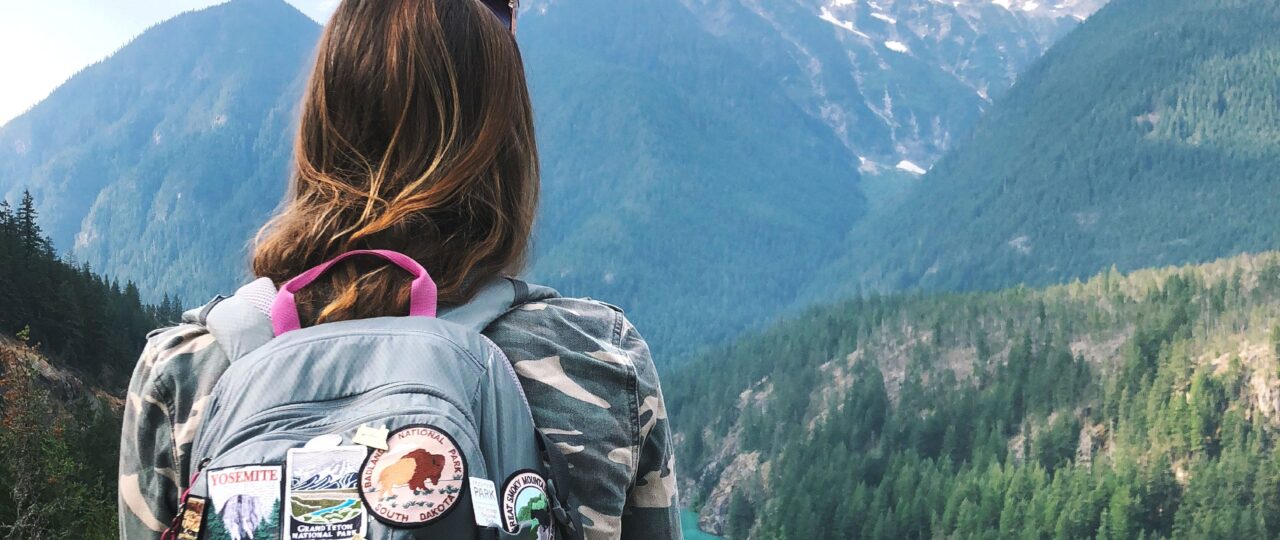

- I think parks like Congaree, Petrified Forest, and Channel Islands are best suited for a day trip.
- Visiting Badlands, White Sands, and Olympic national parks feels like stepping onto another planet.
Some are grand and awe-inspiring, embodying the vision of what a national park likely looks like in your mind. Others, although still worth visiting, don’t quite reach that same iconic standard.
Here’s how I’d rank all the US national parks based on personal preference and things like scenic beauty, accessibility, and crowd sizes.
64. Hot Springs National Park in Arkansas
That said, I don’t dislike Hot Springs National Park at all — in fact, I’d love to visit again. However, it’s last on this list because it doesn’t have the same natural scenic beauty and outdoor opportunities as the other parks.
Hot Springs is in the middle of a town, where the main attraction is Bathhouse Row — eight historic bathhouses built between 1892 and 1923.
Although it’s a fun and interesting place, I think it would be better suited as a national historic park.
- Gateway Arch National Park in Missouri
Once known as the Jefferson National Expansion Memorial, this spot was designated a national park and renamed in 2018. It’s also the smallest of the 64 national parks.
Like Hot Springs, I ranked it lower because the main attraction, the 630-foot-tall Gateway Arch, is man-made. In my opinion, the park would be better designated as a National Monument.
- Mammoth Cave National Park in Kentucky
I’m not a fan of caves, so national parks primarily focused on cave tours are not for me. However, if you’re fascinated by caves and underground passageways, Mammoth Cave National Park in Kentucky should be higher on your list.
- Carlsbad Caverns National Park in New Mexico
New Mexico, home to Carlsbad Caverns National Park, is one of my favorite states to visit. Unfortunately, though, I think this park’s location works against it, as I prefer many other spots in the state.
However, one thing I love about the park is the nightly bat flight that happens from April through October, where thousands of bats emerge from the caverns at sunset.
- Indiana Dunes National Park in Indiana
The dunes are incredible, and visiting the beaches feels like being transported to another world.
The only reason this park is ranked lower on my list is because one side is adjacent to a power plant, and another has views of Chicago. Unfortunately, this brings me out of the more natural landscape I enjoy at other parks.
- Wind Cave National Park in South Dakota
Unsurprisingly, another park with “cave” or “cavern” in its name is low on my list.
Although the surrounding scenery and wildlife at South Dakota’s Wind Cave National Park are quite stunning, I still rank it lower because I’m not as interested in the main attraction.
There are also many other state and national park sites nearby — like Custer State Park and Badlands National Park — that, in my opinion, are more impressive above ground.
- Congaree National Park in South Carolina
Some trees are estimated to be over 500 years old and over 100 feet tall, making walking the trails and raised boardwalks feel magical.
Although I’ve enjoyed this park and have visited several times, it’s much smaller than many others and is best suited for a day trip.
- Cuyahoga Valley National Park in Ohio
Cuyahoga Valley National Park in Ohio offers a unique blend of history, natural beauty, and recreation. For these reasons, I think it’s a standout destination in the Midwest despite not being one of my favorite national parks.
Its proximity to Cleveland and Akron means it’s easily accessible for city dwellers, which is a plus. However, it doesn’t give me the vast wilderness feeling I want when visiting a national park.
- Petrified Forest National Park in Arizona
I think Petrified Forest National Park is one of the most visually stunning and scientifically interesting parks in the US.
However, despite showcasing extensive deposits of petrified wood and fossilized remnants of ancient trees, there aren’t many long hiking trails. In fact, all the park’s trails are 2 miles or less.
I recommend making the 28-mile scenic drive through the park and stopping for some short hikes, but I wouldn’t plan to stay more than a day.
- Kobuk Valley National Park in Alaska
The park itself is vast and untamed — there are no roads in or out, so visitors primarily arrive by chartered planes.
- Biscayne National Park in Florida
Florida’s Biscayne National Park is about 95% water, making it an excellent place for boating, kayaking, or snorkeling.
The park is less than two hours from Miami, making it pretty accessible. However, because most of the park is underwater, it’s hard to appreciate its true beauty.
- Mesa Verde National Park in Colorado
I’ve visited Colorado’s Mesa Verde National Park several times and always learn something new.
The park preserves the cliff dwellings of the Ancestral Pueblo people and is home to Cliff Palace, the largest-known cliff dwelling in North America.
Although I recommend visiting some of the over 600 dwellings, you can only enter them on a ranger-guided tour, which is offered with a reservation from mid-May to late October.
- Theodore Roosevelt National Park in North Dakota
This stunning North Dakota park is named after President Theodore Roosevelt, who was integral to early conservation movements and created five national parks during his presidency.
This park is more remote than others, meaning there’s more solitude and vast, wide-open wilderness. I love taking a scenic drive here, watching the bison herds, and looking for wild horses.
- Guadalupe Mountains National Park in Texas
Guadalupe Mountains National Park is home to the highest natural peak in Texas.
With over 80 miles of hiking trails, this less-crowded park is a great place to spend a weekend hiking, backpacking, or stargazing.
- Great Basin National Park in Nevada
Nevada’s Great Basin National Park is extremely diverse, covering over 77,000 acres with ancient forests, high mountain peaks, desert valleys, and caves. The landscape is dramatic, to say the least.
Visitors can also find the Great Basin Bristlecone pines, which are some of the world’s oldest trees.
- Black Canyon of the Gunnison National Park in Colorado
Black Canyon of the Gunnison National Park in western Colorado is home to one of North America’s steepest and most dramatic gorges.
I love taking a scenic drive or hiking along the canyon’s rim during my visits. Just keep in mind that inner-canyon adventures require a permit.
- Pinnacles National Park in California
Pinnacles was only officially designated a national park in 2013, so it’s still a lesser-known spot in the park system.
Named for its towering pinnacles and spires, the park is popular for hiking, caving, rock climbing, and stargazing.
Although this is a beautiful and unique park, there are only about 30 miles of hiking trails. So, for a non-climber and caver like me, there isn’t as much to do here as there is in some other California parks.
- Wrangell-St. Elias National Park in Alaska
Wrangell-St. Elias doesn’t have the same name recognition as many others, but it’s actually the largest national park in the country.
Covering a staggering 13.2 million acres, the park contains a diverse landscape, including glaciers and volcanoes.
The only downside to this park is that although some parts are accessible by road, there is minimal infrastructure, and it’s very remote.
- Lassen Volcanic National Park in California
I’ve found that many people aren’t as familiar with Lassen Volcanic National Park as some others in California. Still, it’s a showstopper nonetheless.
The park is home to all four types of volcanoes, including its centerpiece, Lassen Peak, which last saw eruptions between 1914 and 1917.
The park also has volcanic features, such as a large geothermal hiking area called Bumpass Hell, which can be visited in the summer and fall.
- Chiricahua National Park in Arizona
It’s known for its unusual rhyolite spires that jut out of the landscape, creating an almost otherworldly scene. At just over 12,000 acres, it’s the fourth-smallest national park, but the dramatic rock formations make it feel much larger.
Although I really enjoyed my visit, it ranks 45th on my list largely because of its remote location and limited exploration opportunities.
Plus, the park has just 17 miles of day-use hiking trails, which pales in comparison to larger parks with hundreds of miles to explore.
- Haleakalā National Park in Hawaii
Haleakalā National Park, which is located on Maui, is known for its massive volcano of the same name.
The volcano rises 10,023 feet above sea level and is a very popular spot to watch the sunrise and sunset (just keep in mind that you’ll need a reservation to enter for sunrise).
This park has unbelievable views and beauty, but it can also get incredibly crowded, which, in my opinion, changes the experience a bit.
- Saguaro National Park in Arizona
Saguaro National Park, located near Tucson, Arizona, is named after the largest cacti in the US.
The Saguaro cactus is an essential symbol of the American West, and seeing so many up close is a treat.
The park is divided into two districts and offers over 170 miles of hiking trails. It’s also a great place to take a scenic drive and view wildlife.
- Kings Canyon National Park in California
Kings Canyon National Park is located in California’s Sierra Nevada mountains.
The park is excellent for hikers and backpackers and is full of natural beauty. I love that Kings Canyon feels grand but doesn’t have the same heavy crowds I’ve experienced at some other California parks.
- Channel Islands National Park in California
Sometimes referred to as the “Galápagos of North America,” Channel Islands National Park consists of five islands off the coast of Southern California. In my opinion, it’s home to some of the most unique national park landscapes in the US.
The only reason it’s not higher on the list is that you have to take a boat to get to the islands, and anecdotally, I’ve experienced many weather-related cancellations. However, the islands aren’t huge, so a lot can be seen on a day trip.
- Badlands National Park in South Dakota
Visiting Badlands National Park in South Dakota feels like stepping onto another planet. The striking and colorful buttes, spires, and other unique geological formations are unlike anything else you’ll see.
I love to drive the 39-mile Badlands Loop Road (Highway 240) that takes visitors through the park, with numerous overlooks and trailheads.
- Shenandoah National Park in Virginia
The road offers breathtaking views of the Blue Ridge Mountains, and there are many overlooks and pullouts along the way for sightseeing.
- Hawaii Volcanoes National Park in Hawaii
The coastal park features diverse volcanic landscapes, including craters, lava tubes, and active lava flows.
Although it’s beautiful and interesting, the park can become extremely crowded, so it is further down on my personal list.
- Everglades National Park in Florida
Everglades National Park in Southern Florida is massive, with 1.5 million acres of unique and diverse ecosystems. This park is perfect for birdwatching, canoeing and kayaking, fishing, hiking, and airboat touring.
However, the tropical climate is very hot and humid during the summer months, so I recommend making a trip between November and April.
- White Sands National Park in New Mexico
White Sands in southern New Mexico was designated a national park in 2019.
In my opinion, the landscape is stunning and unlike that of any other US national park. Visitors can hike the dunes, practice photography, go sand sledding, stargaze, or simply marvel at the otherworldly landscape.
- Canyonlands National Park in Utah
With four distinct districts, this park is massive and perfect for adventurers who want to get off the beaten path.
Mesa Arch is a popular, short, postcard-perfect trail for hikers of all levels. For those with more outdoor experience, backpacking and four-wheel-drive-only backcountry driving opportunities are available.
- Isle Royale National Park in Michigan
Isle Royale National Park, an island in Lake Superior, is one of the least-visited national parks in the contiguous 48 states.
In my opinion, the park, only accessible by boat or seaplane, offers some of the most remote and pristine scenery in the US. There are plenty of opportunities to hike, canoe, camp, and view wildlife.
- Arches National Park in Utah
I’ve visited Utah’s Arches National Park, home to over 2,000 documented arches, dozens of times. I love hiking to the iconic Delicate Arch and visiting the Windows Section of the park, which has a high concentration of arches to view.
- Crater Lake National Park in Oregon
Oregon’s Crater Lake National Park is endlessly fascinating. It’s centered on its namesake lake, which is the deepest in the US.
The lake is unique in that no rivers flow in or out — it’s sustained purely by rain and snow, giving it its famous clear blue color.
- Voyageurs National Park in Minnesota
Made up of four large lakes and over 500 islands, you can’t really experience Voyageurs National Park without getting out on the water.
I recommend staying at the Kettle Falls Hotel, which is the only lodging available within the park (other than camping and houseboating).
Like most of the park, the historic hotel is only accessible by water, and once you’re there, it’s an excellent jumping-off point for other activities.
- The National Park of American Samoa in American Samoa
Visiting the National Park of American Samoa was truly an adventure and one of the most incredible experiences of my life. Despite that, the cost, time, research, and intrepidness needed to visit means it likely won’t be at the top of many travelers’ lists.
If visiting from the US, there are just two flights each week from Honolulu to the small main island of Tutuila. From there, travelers are swept into a tropical paradise.
However, with very little tourism infrastructure, visitors need to be self-reliant and able to navigate independently. Although this isn’t a typical national park, I think it’s one of the most stunning, memorable, and unique.
- Virgin Islands National Park in St. John, US Virgin Islands
Virgin Islands National Park takes up about 60% of the island of St. John.
- Bryce Canyon National Park in Utah
Bryce Canyon National Park in southern Utah is famous for its unique hoodoos that create a magical and otherworldly landscape.
Hiking the Queens Garden and Navajo Loop trails are must-do experiences.
However, it’s important to remember that the weather in the park can vary greatly. Because of the high elevation, Bryce Canyon can receive a lot of snow and become dangerous during lightning storms.
- Great Smoky Mountains National Park in Tennessee and North Carolina
This popular park is a great place to spend a fall weekend among the vibrant foliage or a summer day hiking one of the many scenic trails.
I love driving the 11-mile one-way loop at Cades Cove and hiking to one of the many waterfalls in the park — Laurel Falls and Rainbow Falls are favorites.
- Katmai National Park in Alaska
Many travelers will spend their time at the Brooks Camp portion of the park, which has raised platforms for safe viewing of the roughly 2,200 brown bears.
Seeing so many bears in their natural habitat is a once-in-a-lifetime experience, and the surrounding landscape is pristine.
- Sequoia National Park in California
The park is known for its giant namesake trees and has hundreds of miles of hiking trails. There truly is something for everyone here.
- Great Sand Dunes National Park in Colorado
Driving the entrance road to Great Sand Dunes National Park in southern Colorado feels completely surreal.
Home to the tallest dunes in North America, visiting this park feels like stepping onto another planet.
Hike the dunes, sandboard down them, or enjoy the seasonal snowmelt-formed Medano Creek, which forms a unique “Colorado beach” landscape at the base of the dunes.
- Denali National Park in Alaska
Denali National Park in Alaska is home to Mount McKinley, the tallest peak in North America. It’s a place that will take your breath away, especially on a clear day.
- Big Bend National Park in Texas
My favorite thing about Big Bend National Park is its diverse landscapes, which include mountains, rivers, and deserts.
I especially love visiting the dramatic Santa Elena Canyon, a gorge carved by the Rio Grande with impressive limestone walls up to 1,500 feet high.
- Kenai Fjords National Park in Alaska
The Harding Icefield, which spans 700 square miles, is a must-see. I also recommend taking a boat tour or kayak trip into the fjords, as most of the park can only be experienced by water.
- Gates of the Arctic National Park in Alaska
Alaska’s Gates of the Arctic was one of the least-visited national parks last year, with just 11,907 recreational visits.
Despite being logistically challenging — and expensive — to visit, the sheer untouched wilderness is unlike anywhere else in the US. This bucket-list destination is for experienced travelers only, but in my opinion, it is well worth the effort it takes to get there.
- Joshua Tree National Park in California
In my opinion, Joshua Tree National Park is one of the most unique places in the US.
The park, which is made up of nearly 800,000 acres, is known for its namesake Joshua trees. It’s perfect for hiking, climbing, camping, and scenic driving.
I love visiting the Cholla Cactus Garden and hiking the easy trail at Hidden Valley.
- Redwood National and State Park in California
Hiking and driving through the thick forest of some of the tallest trees on Earth can only be described as magical.
Redwood National and State Park is also unique in that it has been co-managed by the National Park Service and California Department of Parks and Recreation since a joint management agreement was signed in 1994.
- Zion National Park in Utah
Although I love the dramatic red canyon walls around the Virgin River, great hiking opportunities, and scenic drives, I don’t rank it higher due to crowding.
- Dry Tortugas National Park in Florida
Spanning 100 square miles, Dry Tortugas encompasses seven small islands and the surrounding coral reefs and waters.
Accessible only by ferry, boat, or seaplane, the park offers visitors a chance to experience natural beauty, rich history, and vibrant marine ecosystems.
- Rocky Mountain National Park in Colorado
The park is jam-packed with scenic vistas, high mountain peaks, alpine lakes, and lush forests.
I love taking visitors to hike to the Emerald and Dream Lakes, drive Trail Ridge Road, and visit the quieter Wild Basin area of the park.
- Mount Rainier National Park in Washington
Seeing Mount Rainier up close on a clear day leaves me speechless. The tallest peak in the Cascade Range is unbelievably beautiful.
Known for its vibrant wildflowers in the summer months, anywhere you look in Mount Rainier National Park could be a painting.
I love visiting the popular Paradise area for day hiking, trekking through the Carbon River Rainforest, and driving the park’s scenic loop.
- Death Valley National Park in California
California’s Death Valley National Park feels different every time I visit.
The park is known for its scorching (and sometimes unsafe) summer temperatures, remote location, unique geology, and incredible size.
- Glacier Bay National Park in Alaska
Glacier Bay National Park in Alaska is massive. However, no roads lead into the park, so visitors can only visit via boat or plane.
Home to over 1,000 glaciers, taking a tour through the bay is one of the most visually stunning and scientifically interesting things I have ever done.
- Capitol Reef National Park in Utah
Capitol Reef has always been my favorite park to visit in Utah.
This park is the second largest in the state (behind Canyonlands) and, in my opinion, feels much more remote than Zion, Bryce Canyon, or Arches.
I love to hike, take a scenic drive, and visit the historic Fruita orchards for pick-your-own fruit.
- North Cascades National Park in Washington
Despite being just a few hours outside Seattle, North Cascades is typically one of the least-visited national parks in the US.
This park is great for hiking, camping, and boating, and is a must-visit in the summer months.
- Lake Clark National Park in Alaska
Lake Clark is among the least-visited national parks, likely because it’s so difficult to get to. There are no roads to the park, meaning travelers must arrive via plane or boat.
In my opinion, though, the extra expense and logistical challenges are worth it to see this stunning landscape.
In fact, the flight into and out of the park allowed me to take in some of the most beautiful sights I’ve ever seen.
- Yellowstone National Park in Wyoming, Idaho, and Montana
The park is home to about half of the world’s geysers, including the iconic Old Faithful.
With abundant wildlife and over 10,000 geothermal features, a trip to this iconic park should be on everyone’s bucket list.
- New River Gorge National Park in West Virginia
New River Gorge National Park in West Virginia might be a surprise entry to the top 10, but it more than deserves its spot.
It’s also home to the New River Gorge Bridge, which is the third-highest in the US.
- Grand Canyon National Park in Arizona
Standing at the rim and looking out over the vast canyon is an experience everyone should have at least once. If you’re up for a challenge, head into the canyon to hike from a unique vantage point.
- Olympic National Park in Washington
One of the parks I recommend most to new visitors is Olympic National Park. Located on Washington’s Olympic Peninsula, the park is easy to travel to but feels like entering a different world.
What I love most about Olympic is the diversity of its landscapes. The park is home to Hurricane Ridge, a mountain range that sees 30 to 35 feet of snow a year, and the Hoh Rainforest, which some say is the quietest place in the continental US.
With 73 miles of rocky coastline, there is an overwhelming amount of beauty here.
- Acadia National Park in Maine
The summit of the park’s Cadillac Mountain sees the first sunrise in the continental US from October 7 through March 6. But even if you don’t catch the sunrise, there is so much beauty to see here.
I love to hike around Jordan Pond, head out to the quieter Schoodic Peninsula, and lounge on Sand Beach before heading up to the Ocean Path for an easy hike with incredible views.
- Yosemite National Park in California
Even after nearly a dozen visits, I still get emotional every time I enter Yosemite National Park. The towering granite cliffs in Yosemite Valley are a sight that can’t be accurately depicted in any photo or video.
In my opinion, Yosemite is one place where the reality is always better than what you see online. I love to hike around the valley, in the quieter Tuolumne Meadows, and among the towering sequoias of Mariposa Grove.
- Glacier National Park in Montana
Visiting this park never gets old, from the glaciers to the clear lakes, challenging hiking trails, historic lodges, and abundant wildlife.
- Grand Teton National Park in Wyoming
Despite having love for every major US national park, I knew one would be at the top of my list from the first time I laid eyes on it.
To me, Grand Teton National Park in Wyoming is unlike any other park. With the uniquely shaped mountain peaks that tower dramatically above the many blue lakes, hiking trails, and rivers, it feels like stepping into a postcard at every turn.
I love to camp at Colter Bay, swim in Jackson Lake, float on the Snake River, and hike in Cascade Canyon.
This story was originally published on April 8, 2025, and most recently updated on November 9, 2026.
Read the original article on Business Insider
Discover more from NAIRAVOICE.COM.NG
Subscribe to get the latest posts sent to your email.