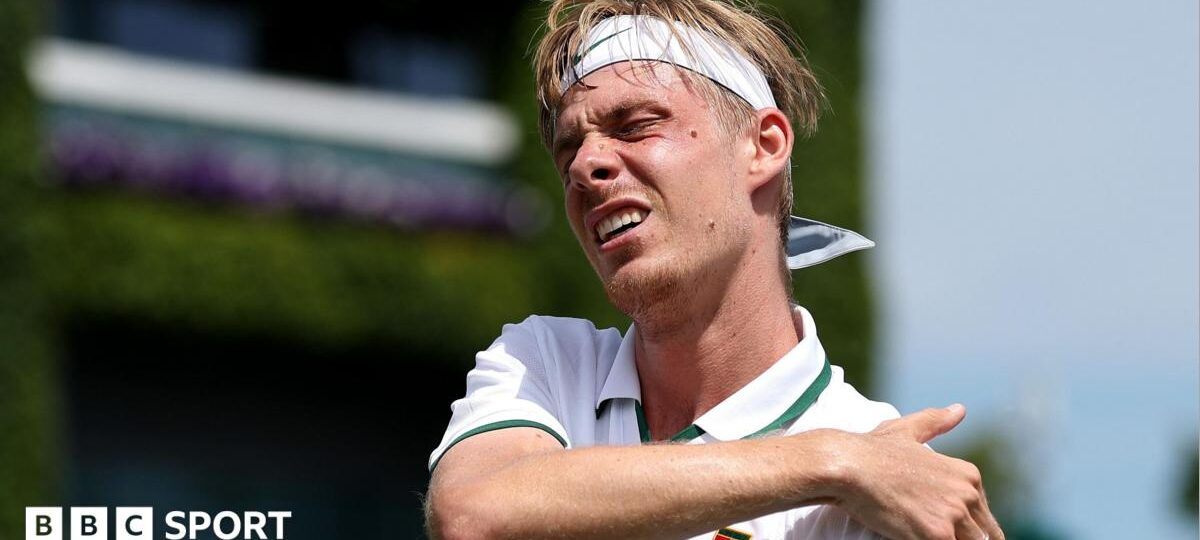

The timing of Jack Draper voicing his concerns about the amount of injuries players suffer was either extremely unfortunate or subtly calculated.
Less than 24 hours after saying he felt the volume of injuries was “pretty worrying”, the Briton pulled out of Wimbledon with a long-standing arm problem.
Former world number four Draper believes the demands placed on the top stars – a gruelling season with a short break, longer matches and more physical battles – are responsible for their bodies breaking down.
Seven-time major champion Carlos Alcaraz is missing Wimbledon with a wrist injury, while several ATP players withdrew from grass-court events at Queen’s and Eastbourne to protect themselves.
“When I look at the draws, everything is shoulder, arm, wrist [injuries]. They need to really take a close look at what we’re doing on tour,” Draper said.
Draper’s withdrawal came after fellow Briton Emma Raducanu was ruled out of playing with a stress fracture in her lower leg.
The absence of the star home pair is undoubtedly a major blow to the tournament, but more importantly points to an increasingly worrying trend.
“There are so many great players that everyone is pushing to find that extra 1% – spending more time on the court and in the gym,” former world number one Tracy Austin told BBC Sport.
“Some are playing more tournaments than is good for them, either mentally or physically. It is very, very demanding in all aspects.”
How can tennis avoid breaking point?
Injuries are part and parcel of elite sport, but the view that tennis is becoming increasingly punishing is supported by medical experts.
Data shows that matches and rallies are longer, players are faster and they are hitting the ball harder across a season that can last almost 11 months.
“I always said that if we can somehow find a way to make this season shorter and have a bigger off-season, this could help avoid injuries,” world number nine Daniil Medvedev told BBC Sport.
Draper was critical of several ATP and WTA mandatory tournaments adding to the workload by being extended across a fortnight to create so-called ‘mini Slams’.
Chasing ranking points – and money – to maintain a career at the top level means many players feel they have to compete even when not 100% fit.
“When you train so much, constantly trying to improve and playing back-to-back weeks on the tour, it’s more than normal that you’re going to get injured or there might be overuse at some point,” said Greek two-time major finalist Stefanos Tsitsipas.
For players coming back from injuries, balancing the need for court time and the risk of aggravation is delicate.
“It’s so tough playing an individual sport. You can’t be subbed out, you just have to be dunked back in the deep end immediately,” former British player Naomi Broady said on BBC TV.
“You can’t go out and play 20 or 30 minutes and build up from there. You’re just having to play day in day out for a week.
“There’s so much load on your body. If it’s not the same injury it’s a new one cropping up.”
Both Draper and Raducanu seem to have found that out to their cost.
Draper, 24, had not played competitively for over two months before playing four matches at Eastbourne last week.
He pulled out of Wimbledon – in what would have been his first Grand Slam of the season – when bone bruising in his serving arm flared up again.
Raducanu, 23, believes overplaying at Queen’s a fortnight ago contributed to a stress fracture in her lower right leg.
The 2021 US Open champion played five matches in six days, having been out for most of the previous four months, and played a quarter-final, semi-final and final in the space of less than 30 hours because of previous rain delays.
“It’s so tough to allow time for injuries to heal and build that load up slowly when you do return,” said Broady.
“I think that’s where most of the damage is re-done when you come back too quickly. That’s why we say how relentless our sport is.”
As well as a shorter season, players have asked for smarter scheduling at tournaments – including fewer late-night finishes.
Sports scientists suggest tennis must adopt a more coordinated approach to data sharing to guide the wellbeing of its stars.
They also believe younger players need more protection to avoid overuse injuries, although the ATP and WTA already place restrictions on how many senior tournaments teenagers are allowed to play.
“A lot of players have played so much tennis before they’re even gone on tour,” said Britain’s Billie Jean King Cup captain Anne Keothavong.
“I think that leads to overplaying and injuries. The toll it takes on your body is not from over 12 months – it is about all those hours you put in from so young.”

Discover more from NAIRAVOICE.COM.NG
Subscribe to get the latest posts sent to your email.