Advocates unified regional agenda, investment in agriculture, agro-allied industries to combat poverty, insecurity
Sultan applauds Gombe governor’s Almajiri education reforms
By Ben Ngwakwe, Gombe
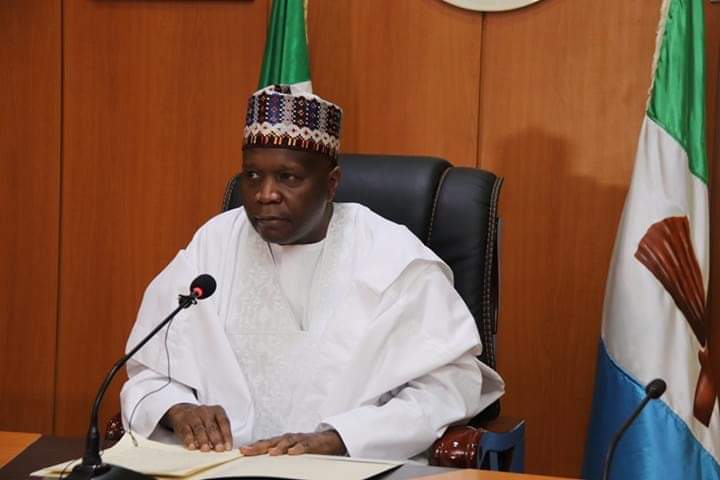
Gombe State Governor and Chairman of the Northern States Governors’ Forum, Muhammadu Inuwa Yahaya, has called for a common policy framework and unified regional agenda to sustain education reforms, tackle the growing number of out-of-school children and accelerate human capital development across Northern Nigeria.
The governor said addressing the region’s educational challenges required a coordinated approach that went beyond school enrolment to include poverty reduction, improved security, economic empowerment and the creation of sustainable livelihood opportunities for the growing population.
Yahaya made the call at the 2026 Biennial Lecture and Awards Ceremony of the Barewa Old Boys Association (BOBA), held in Gombe, with the theme, “The Scourge of Out-of-School Children and the Implications for National Security.”
Describing the theme as timely and critical to the future of Northern Nigeria, the governor warned that the increasing number of children outside the formal education system posed serious threats to social stability, economic productivity and national security.
He observed that educational exclusion perpetuated poverty, widened inequality and exposed vulnerable children and young people to criminal exploitation, radicalisation and other antisocial tendencies.
Yahaya recalled that when his administration assumed office in 2019, Gombe State had more than 500,000 out-of-school children, explaining that sustained interventions by his government had brought approximately 350,000 of them back into the classroom.
He attributed the achievement to the declaration of a state of emergency in the education sector, construction of mega schools with expanded learning capacities, recruitment of more than 1,000 qualified teachers and establishment of Almajiri Integrated Learning Centres, among other initiatives.
Drawing from the state’s experience, the governor urged Northern states to move away from fragmented interventions and embrace a common regional framework that would identify successful educational models, encourage their adoption across state boundaries and guarantee continuity.
He proposed that the Northern States Governors’ Forum should provide the institutional platform for harmonising educational policies, coordinating priorities and strengthening collaboration among the 19 Northern states.
According to him, a unified Northern Agenda would ensure that successful programmes initiated by successive administrations were sustained, while promoting the sharing of resources, expertise and best practices for regional development.
He maintained that the magnitude of the challenges confronting Northern Nigeria required collective responsibility, stressing that no single state could effectively address the problem of out-of-school children in isolation.
The governor also advocated the expansion and institutionalisation of student exchange programmes among Northern states to promote educational integration, cultural understanding and regional cohesion.
He cited Gombe State’s experience of accommodating more than 800 students from outside the state as a model that could be replicated across the region through the establishment of special schools with expanded facilities.
“If Gombe has the capacity to host more than 800 exchange students, I think it will be even better if we can have expanded schools in each of the 19 Northern states where we can accommodate a larger number. If Barewa can make this lot of impact, I would support having several Barewas across the North,” he said.
Beyond education, Yahaya called for greater investment in agriculture, agro-allied industries, industrialisation and agricultural value chains, describing them as critical instruments for addressing poverty, unemployment and insecurity.
He noted that Northern Nigeria possessed enormous agricultural potential which, if properly harnessed through modern farming techniques, processing facilities and value-chain development, could stimulate economic growth, create employment opportunities and improve household incomes.
The governor explained that improving the economic circumstances of families would complement investments in education by enabling parents to support their children’s schooling and reducing the socioeconomic pressures that push vulnerable children into street activities and exploitation.
He said his administration had continued to pursue an integrated development strategy in Gombe State, combining investments in education with infrastructure, agriculture and industrial development.
Yahaya consequently challenged BOBA and other participants at the lecture to produce practical and implementable recommendations that would assist governments and stakeholders in addressing the out-of-school children crisis and the broader socioeconomic challenges facing the North.
He assured that recommendations emerging from the engagement would be presented to the Northern States Governors’ Forum for consideration as part of efforts to strengthen a common regional approach to education and sustainable development.
Earlier, the National President of BOBA, Major General Alwali Jauji Kazir, described the theme of the lecture as timely, noting that it reflected the association’s commitment to the educational welfare of Nigerian children.
Kazir emphasised the importance of school safety, particularly in Northern Nigeria, and called for improved learning environments, adequate teaching resources and deliberate government policies to ensure that children were enrolled, retained and supported to complete their education.
Similarly, the Chairman of the BOBA Board of Trustees, General Yakubu Gowon, said the challenge of out-of-school children could be addressed through deliberate policies and the provision of appropriate conditions and incentives to encourage school enrolment, retention and completion.
His message was delivered by the Sultan of Sokoto, His Eminence, Alhaji Muhammad Sa’ad Abubakar III, who appreciated the government and people of Gombe State for their hospitality and commended Governor Yahaya for his personal commitment and sacrifices towards the success of the 2026 Biennial Lecture.
Speaking in his capacity as Deputy Chairman of the BOBA Board of Trustees, the Sultan described education as a fundamental pillar of Islam, which encourages the pursuit of knowledge irrespective of distance or circumstance.
On the Almajiri education system, the Sultan maintained that begging was prohibited in Islam, urging wealthy and privileged members of society to extend support to the less privileged and complement government efforts in addressing the challenges confronting vulnerable children.
He acknowledged that government alone could not shoulder the entire responsibility of providing for the less privileged, stressing the need for collective action by individuals, communities and institutions.
The Sultan also applauded Governor Yahaya for establishing modern Almajiri schools across Gombe State, describing the initiative as a positive step towards integrating religious and Western education and improving the learning opportunities available to Almajiri children.
In his remarks, the Emir of Gombe, Alhaji Abubakar Shehu Abubakar III, commended BOBA for drawing national attention to the challenge of out-of-school children and its implications for national security and development.
He assured that the traditional institution would continue to collaborate with relevant organisations and stakeholders to promote education and improve access to learning opportunities, particularly across Northern Nigeria.
Former Governor of Jigawa State and elder statesman, Sule Lamido, expressed concern over the state of Nigeria’s education system, warning that failure to address the crisis could create an environment in which vulnerable young people become susceptible to recruitment into criminal activities.
Lamido called on political leaders at all levels to demonstrate the necessary political will to enact and implement strong legislation capable of revitalising the education sector, particularly in Northern Nigeria.
Participants at the biennial lecture unanimously called for deliberate and sustained interventions by governments at all levels to revive the education system in the interest of national security, social stability and sustainable development.
The event also featured goodwill messages from former Minister of Education, Hon. Aishatu Jibril Dukku, and Gombe State Commissioner for Education, Prof. Aishatu Maigari, who highlighted the achievements recorded by the Inuwa Yahaya administration in the education sector.
Discover more from NAIRAVOICE.COM.NG
Subscribe to get the latest posts sent to your email.