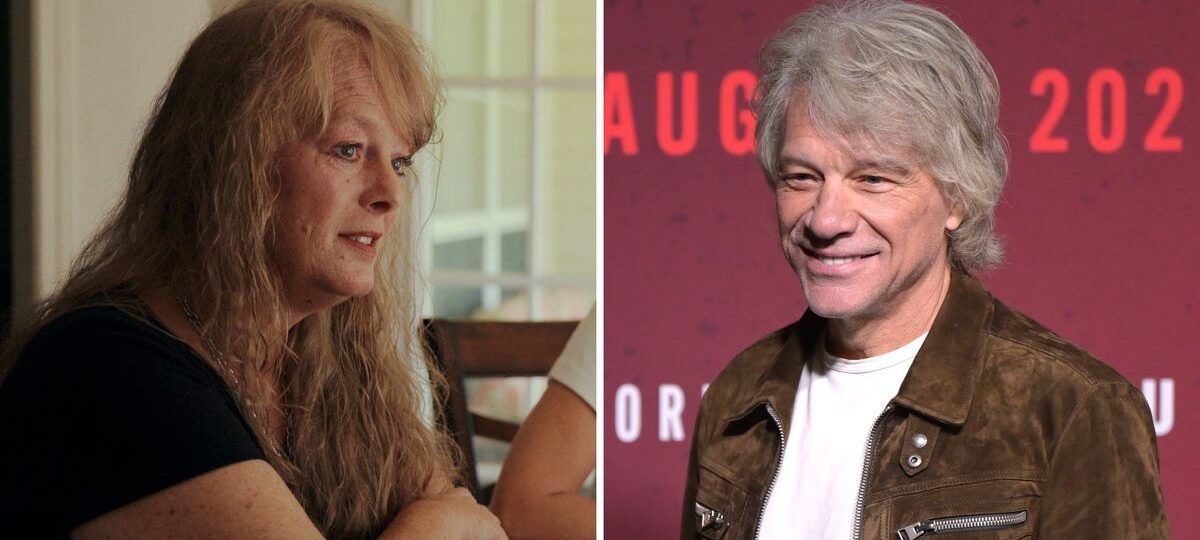
This story is based on an interview with Leslie Pickett, 55, a mortgage lender from north Louisiana.
She appears in the new National Geographic series “Super Scam Me,” out October 17.
It has been edited for length and clarity.
I’ve been a fan of Jon Bon Jovi ever since the age of 14, when I was blown away by his music during the 1980s.
Then, as I got older, I could see all the good things he had done as a philanthropist.
His Soul Foundation supports affordable housing and feeds the hungry.
He’s an amazing human being, and who doesn’t love Jon Bon Jovi?
Have you been the victim of a romance scam?
Please send details to Jane Ridley at jridley@businessinsider.com if you’d like to share your story.
I’m more of a Facebook person and unfamiliar with Instagram, but I came across his verified account toward the end of 2024.
I wrote a comment on the post, and saw a personal message in my inbox.
The message didn’t come from his verified account, but another one showing his face.It said something to the effect of, “Glad to have you here, fan.
How long have you been a fan of mine?
What’s your favorite song?” It was just a bunch of questions.
Then he said that if his management found out he was messaging directly on Instagram, they would shut down the page.
He said it would be better if we went to WhatsApp or Telegram.
I’d never been on either, but I figured it out.
We sent a ton of texts over the next couple of months, and I found myself falling for him.
There was one specific incident when I had my doubts and asked him outright why he was chatting to me.
I mean, why would Bon Jovi want me?
He threw out, “I love you.” I said, “You don’t even know me!
Name five things about me you love.” He wrote down five things, and some of them were from the first and second months of our conversation.
I framed it as if he were a friend of mine because it was just beautiful.
Then, we did a live video chat, but it was very grainy, and he was really far back from the camera.
The call only lasted five seconds before it cut out.
However, it looked very much like Bon Jovi to me.
Then I received a mixed bouquet of flowers in a vase.
I suppose my address is public record, so it wasn’t difficult for him to find it.
I had no idea they were coming, and I immediately threw them away.
I didn’t want anyone else to see them and ask where they came from.
After that, I told him absolutely not to send flowers again or call my phone unless we had a time set up beforehand.
Meanwhile, he said he and his wife had already filed for divorce, but nobody knew because it wouldn’t be good for his public image.
He said he just wanted somebody who loved him for him and not for his money and fame.
The only person I confided in was my cousin, Jerry.
He knew the full extent of what was going on.
He said it was just a fantasy — a fairytale — and not to fall in love with the guy.
When you’re talking to someone that often, it’s hard not to believe they are who they are.
The idea was that I would pay him for one of those meet-and-greets that big stars do with their fans.
He said we’d spend a day together and that he’d take me out to dinner.
I can’t remember the original figure he quoted, but it was around $3,000, which I paid in increments.
I once sent $1,000, but the other payments ranged from $150 to $500.
I had a lot of trouble getting the money over.
He advised me to use Cash App or PayPal instead of Venmo, saying they had lower fees.
He also guided me on how to send bitcoin by showing me screenshots of the process.
In July 2025, he finally said he was flying to Louisiana to meet me.
He sent me pictures of him sitting at a table in a hotel that I was familiar with.
I could see the same wall sconces, the napkin arrangements, the tablecloths, the rug, and the floor pattern.
Next, he said we had to do a security clearance call on Google Chat before we met.
I was at my cousin Jerry’s house and made the phone call in the bathroom.
I’d never used the app before, and all I could see was a tiny box on the bottom right of my screen.
I put my hand down to enlarge the picture, and he hung up.
He texted afterward to say that it was a security breach because his people thought I was trying to record the call to blackmail him.
He said the only way I could meet him was to pay more money for a second security check.
He was willing to stay in town if I were willing to do so.
That’s the only time I paid him a much larger amount of bitcoin.
As usual, he was very willing to send me screenshots of his phone showing exactly which sites to visit, and he walked me through it step by step.
Then he made every excuse in the book not to meet me.
Looking back, I guess I had paid my dues.
At that point, the doubts started to flood in.
I thought about the power and sophistication of AI, and asked myself if it was a scam.
I was bamboozled, yet determined not to sit back and do nothing.
I really liked the National Geographic series “Trafficked” and contacted the host, investigative journalist Mariana van Zeller, for help that same month.
She was filming episodes for her new documentary, “Super Scam Me.” That October, we teamed up with a reformed hacker and obtained the scammer’s IP address by setting a trap to lure him into claiming more bitcoin, the favored currency of scammers.
We looked up the exact house on Google Earth.
I was shocked and couldn’t stop crying when we found out the truth.
People might wonder why I fell for the scammer’s lies.
This man was very good at what he did.
I was lonely, and it wasn’t hard to develop feelings for someone who told you everything you wanted to hear.
You don’t get over a 10-month relationship quickly, especially since it was supposedly with someone you’ve idolized since 14.
To my horror, after I went to the police and they helped me put together the math, I discovered I had lost $10,000 to the scam.
It might not seem a lot to some people, but it is to me.
I have been rocked emotionally and financially.
The only way I can reconcile it with myself and forgive myself for being that dumb is to think that God maybe thought the scammer needed the money more than I did.
My objective is to raise awareness and keep more men and women safe online.
If people know how to spot a scammer, it could stop their world from falling apart.
Editor’s note: Business Insider contacted Jon Bon Jovi’s press team to ask for comment about people impersonating him online.
The team has not immediately responded.
Discover more from NAIRAVOICE.COM.NG
Subscribe to get the latest posts sent to your email.