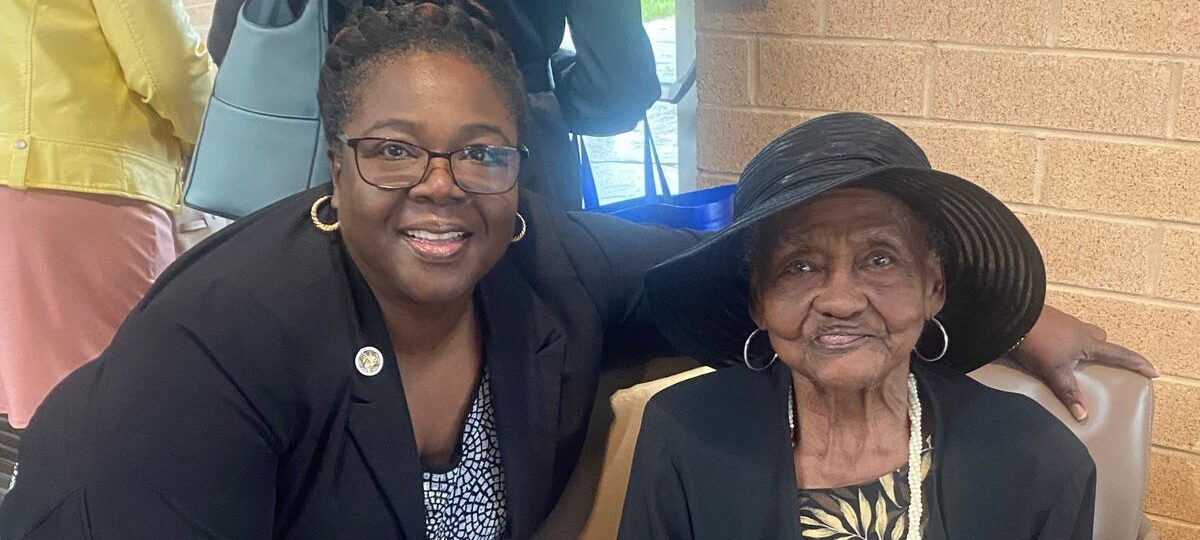
This story is based on an interview with Vincia Gordon, 56, an operational manager for two call centers, living in Baltimore County, Maryland.
It has been edited for length and clarity.
My mom, Hyacinth Lynch, 92, lived in the US Virgin Islands, but constantly visited my family and me in Maryland, staying for months at a time.
She lived by herself after my father died in 2020 at the age of 94.
However, she started to show signs of decline in the summer of 2023.
A physical exam confirmed she had high blood pressure and other issues, such as a hernia.
What is your situation regarding long-term care for yourself or your loved ones?
To share your story with a Business Insider reporter, please fill out this quick form.
In September, one of our friends from the islands called to ask if there was something wrong with Mom.
She had called her twice one morning, asking her the same thing.
It was the first sign of her dementia.
I told them to keep their eyes on her and report to me anything that was askew.
She flew over for the holidays — and never left.
Her mobility had gotten much worse, as well as the hernia.
She had surgery in the Spring of 2024.
Her long-term memory stayed intact — she could rattle on about looking after my daughters when they were young — but her short-term memory was a problem.
I talked to her medical team, who put her on the drug donepezil.
It helped slow things down and remove some of the brain fog.
There was no question in my mind that she should stay at home with me.
I didn’t like the idea of a care home, because I compared them to overcrowded classrooms.
You’d question your children’s education if the teacher had 30 kids on any given day.
How could Mom get the attention she needed without a specially designated aide?
I contacted the senior living advisory, A Place for Mom, for help finding providers and other services.
They put me in touch with some private carers, who usually visit between 11 a.m. and 1 p.m.
They charge $44 an hour, and they mostly spend the time doing cognitive exercises.
Mom has always been a word search queen and loves doing puzzles.
We also have visits from other professionals, including a social worker and an occupational therapist.
Meanwhile, I keep on top of things such as keeping her clean, monitoring her blood pressure, and administering her medication.
I’m very accountable and write everything down in a copybook in case I need to consult a provider.
People ask me how on earth I manage to run two call centers — one in the US and the other in the Philippines — while caring for my mother.
My days are knee-deep in meetings and calls with staff.
The answer is FMLA (the Family Medical Leave Act lets eligible workers take time off to care for a family member, without losing their job).
I receive 480 hours a year, and my salary is not affected.
I usually take it in increments of two or three hours, but it can extend into days if necessary.
It’s always a balancing act, and the juggling is hard.
Still, I wouldn’t have it any other way.
Discover more from NAIRAVOICE.COM.NG
Subscribe to get the latest posts sent to your email.