With the 2026 World Cup knockout round well underway, things are starting to heat up from the penalty spot. In total, 13 penalty kicks have been attempted in the run of play at the tournament, and two of the Round of 32 games have gone to a dramatic penalty shootout.
For fans who are new to soccer, or who might just need a little reminder, here are some of the basic rules and reasonings behind penalty kicks in the beautiful game.
A penalty kick (also called a penalty or a PK for short) is awarded to a team as a result of a transgression inside the penalty box — usually a foul, or sometimes a handball. One player takes the penalty, facing off against the opposing goalkeeper in a one-on-one scenario.
When a player is fouled elsewhere on the field, their team would receive a free kick at the spot of the foul. But since fouls or handballs in the box are typically in the run-up to an attempt on goal, the penalty kick offers a controlled solution to all violations that take place inside that space.
During the World Cup and other competitive tournaments, penalties tend to be most associated with penalty shootouts, which are used to decide a winner after playing through extra time. (More on that later.)
Penalties have a series of rules that help keep them more regulated in the context of the game. Referees are very strict about them as well: Violations of these rules typically result in either the kick being retaken, or with the defending team regaining possession with an indirect free kick.
Whoever is taking the penalty has to place the ball on the penalty spot in the center of the box. The ball doesn’t have to cover the spot perfectly — most players like to have the ball slightly off-center — but it must touch the dot before the kick is taken.

As the player takes the PK, the rest of their teammates have to stick to the outside of the penalty box. That includes the semi-circle at the top of the box, which is designed specially for PKs, in order to keep players a roughly equal distance from the penalty shot.
Failure to do so is considered “encroachment,” and can result in the penalty being retaken.
Players want to be close to the penalty spot, though, and will crash into the box as soon as the kick is taken. The reason for that is that they can help out with a rebound if the kick is saved by the goalie or goes off the post or crossbar. In that situation, the penalty taker is not allowed to touch the ball, but their teammates can.
Because creeping toward the spot could be an unfair advantage, goalkeepers who are trying to defend a penalty have to stay on or behind the goal line until the moment the penalty taker kicks the ball.
Keepers will often put their toes on the line in order to ensure that they don’t go too far forward, and they can’t jump off the line before the ball is kicked. If they are too far forward, or if they jump early, that is also considered encroachment.
This exact scenario happened during the group stage match between England and Croatia: Harry Kane stepped up to take a penalty early in the game, and his first attempt was saved by Croatia goalkeeper Dominik Livaković. Review, though, indicated Livaković had come off his line too early; Kane then nailed the penalty on the retake.
Penalty takers have one touch to kick the ball, meaning that they have to be very deliberate about their shot. There are also rules about how long players can hesitate before taking a kick, with the general rule being that they have to keep moving. Many players do a stutter step for this reason, moving with short steps to slow down the play before finally shooting the ball.
Now that the World Cup has entered the knockout round, all games have to have a winner, rather than end in a draw. If a game is still tied after 90 minutes, it heads to two 15-minute periods of extra time (overtime in American parlance); after that, the game is decided by a penalty shootout.
PK shootouts consist of five rounds to start, with the order of which team goes first determined by a coin flip. Teams select five penalty takers and then alternate them, with each pair of players making up a “round.” If the penalties are still tied after that, more rounds are added until a winner emerges. (Sometimes, penalty rounds go on long enough that even the keeper will have to take a penalty kick as a team rotates through the roster.)
Penalty shootouts are a famously even-footed way to end a game, as one miss or save is enough to change the outcome. Both of the knockout games that have gone to penalties — with Paraguay stunning Germany and the Netherlands falling to Morocco — ended with the underdog team getting the win.
Sometimes a penalty kick is treated as a guaranteed goal, but the reality is a lot more complicated than that. Plenty of players miss penalties, usually because of three reasons: inexperience, goalie saves and over-complication.
In terms of experience, most teams usually have a few players who are designated penalty-takers — i.e., the ones with the most skill and proven success from the spot. But having a huge number of seasoned penalty experts on a team is rare, and the most experienced players are often subbed off before the game heads into a shootout.
That means that players without a lot of penalty experience are often left to take these high-stakes shots under enormous pressure. During Germany’s lost penalty shootout, the final kick was taken by Jonathan Tah, a defender who had never attempted a penalty in a game before; he promptly sent his attempt well high.
Another reason for misses is that goalkeepers are getting better at saving penalties. Because a penalty kick usually moves too quickly for a keeper’s reflexes, there all kinds of ways that keepers prepare for penalties, from cheat sheets with players tendencies to playing mind games with players taking the penalty. But normally keepers try to approach a penalty by diving one way or the other, and hoping they chose correctly based on those other factors.
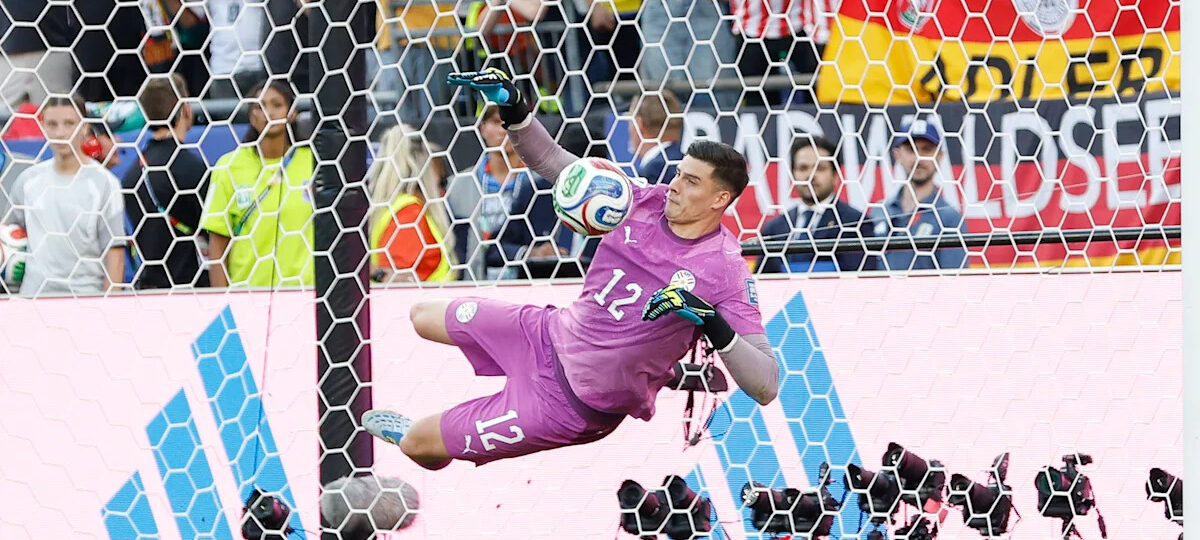
That, however, is starting to change as well: Moroccan keeper Yassine “Bono” Bounou saved a shot from Crysencio Summerville by staying upright and jumping to match Summerville’s shot.
In order to offset the increased skill, players are finding new ways to try and make their shots harder to guess. But sometimes that means that they over-complicate it, and end up missing entirely.
Lionel Messi, who is known for his incredible shots from distance, shanked a penalty against Austria after trying to take a soft touch. Morocco captain Achraf Hakimi tried to take a hard angle to the left, but overshot and hit the post.
There are many ways to try and make a penalty happen, and players will always keep trying new ways to make their shots harder to save, with various levels of success. That’s part of the fun and the drama of a penalty shootout: You never know what’s going to happen.
Discover more from NAIRAVOICE.COM.NG
Subscribe to get the latest posts sent to your email.