
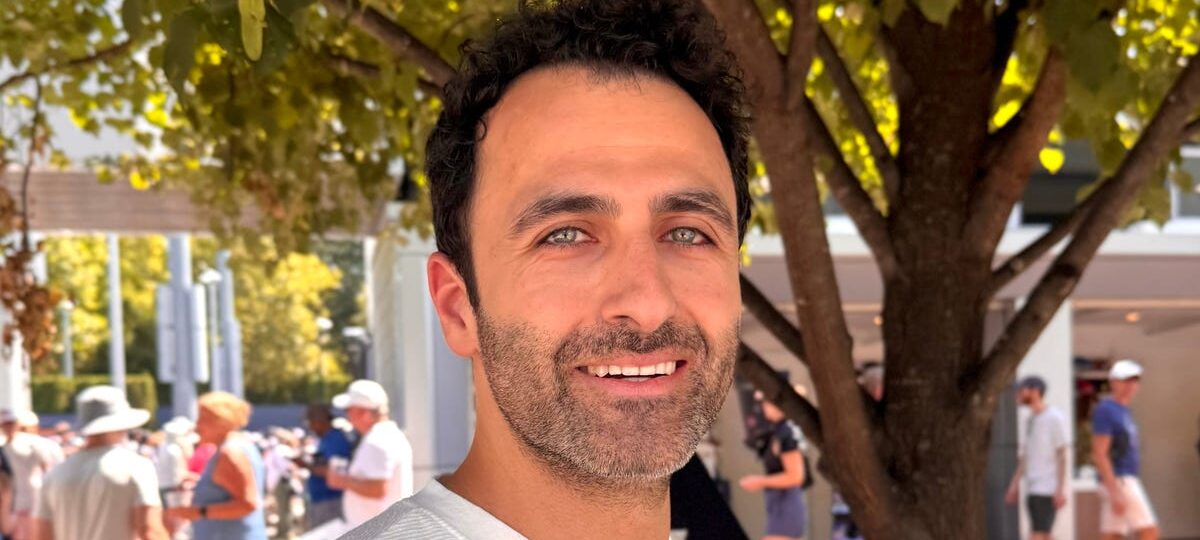
Kasra Kyanzadeh missed working with people. “I was like: Where are there smart people?” the 33-year-old engineer told Business Insider. “At OpenAI, there are smart people.” So, Kyanzadeh joined the team building the Codex desktop app in June.
By mid-August, he said he was feeling tired and drained.
It wasn’t OpenAI that was the problem, he said.
Kyanzadeh is one of many engineers who have expressed fatigue with AI coding tools.
As AI transforms the job of a software engineer, some developers aren’t happy with their new roles.
He had enough money to support a career change.
Kyanzadeh joined Airtable when it had five employees and later joined Watershed when it was small, too.
After Watershed, he founded Lightpage, an AI notebook app.
This was 2024, the era of “tab completion models,” which he looks back on fondly. “That removed a lot of the annoying boilerplate of writing syntax, but we were still thinking about the code and the architecture,” he said.
In December, coding “slipped,” he said.
One person can own an entire feature with their AI agents, he said, so there’s less collaboration among engineers.
This is meI ended up leaving OpenAI, not because there’s anything wrong with OAI (I actually think they’re underrated as a biz), but because to me, building commercial software doesn’t feel fun anymoreBecause agents write ~all the code:- There’s less human to human… https://t.co/DYyqG3jvi3 When he was younger, Kyanzadeh loved having a whole project to himself, mapping it all out in his head. “Maybe it’s gone too far,” he said. “I miss people.” There were other ways to find community at OpenAI.
Kyanzadeh praised OpenAI’s employees and said the company had “all the usual stuff,” like happy hours.
But it doesn’t “scratch the same itch,” he said, when the day-to-day work is one-person projects. “Human bonding happens best through stress,” he said. “When every person is working on their own project, you don’t get that same feeling of: We accomplished this thing together.” He also struggled to get into a flow state, he said.
Each task takes a few minutes, which he called “the worst amount of time.” It’s not enough time to do something meaningful, he said, but it’s enough time you’ll want to perform another task.
So, Kyanzadeh would set up another agent. “Now you’re juggling five, six different threads,” he said. “Or, you open Twitter.” Then there’s the time spent reviewing the code and checking for errors. “Most people have never liked code review,” Kyanzadeh said. “It was always just a thing we had to do.
But, as a percentage of time, it has grown.” The result is fatiguing, he said.
Some developers told Business Insider that AI caused workplace paralysis.
Anthropic engineering leader Fiona Fung said AI agents made the company’s programmers lonelier.
He’s always wanted to try filmmaking and decided to get out of commercial software.
The team was kind about it, he said, and he finished the project he was working on before he left. “To me, OpenAI was an experiment of: What is it like to build software on a large scale in this new era?” he said. “It turned out, I don’t feel like I’m doing my best work anymore.” Are you a software engineer who recently pivoted careers?
Reach out to the reporter at hchandonnet@businessinsider.com
Discover more from NAIRAVOICE.COM.NG
Subscribe to get the latest posts sent to your email.