Welcome back to the Monday Tennis Briefing, where The Athletic will explain the stories behind the stories from the past week on court.
This week, a chaotic French Open ended with two singles finals that went to script.
In the women’s one, Mirra Andreeva won her maiden Grand Slam title at 19, ending Maja Chwalińska’s storybook run with a controlled, 6-3, 6-2 win. In the men’s edition, No. 2 seed Alexander Zverev defeated No. 10 seed Flavio Cobolli. The 29-year-old German lifted his first Grand Slam trophy in his fourth major final, coming out on top with a 6-1, 4-6, 6-4, 6-7(5), 6-1 win.
Here, Ava Wallace, Charlie Eccleshare, Charlotte Harpur and Matthew Futterman present their takeaways from the second Grand Slam of 2026, from the best matches and biggest upsets to their abiding memories of Roland Garros 2026.
If you’d like to follow our fantastic tennis coverage, French Open takeaways: The best match,.
Best match?
Ava Wallace: João Fonseca’s 4-6, 4-6, 6-3, 7-5, 7-5 win over Novak Djokovic had a little bit of everything. Including drop shots.
Charlie Eccleshare: A match I watched from start to finish and wrote countless different drafts about, it has to be 19-year-old Brazilian Fonseca’s five-set win over Djokovic, a 24-time Grand Slam champion 20 years his senior.
Fonseca has had to carry the burden of being hailed as the Next Big Thing for a year and a half, and this felt like the moment he showed the wider world why. The fearless forehands to reel Djokovic in from two sets up, the ability to feed off a crowd that was full of passionate Brazilians, and then the nerve at the very end to hit three straight aces to go from break point down to victory.
There were shades of a 19-year-old Roger Federer beating Pete Sampras, at the time the most decorated male player in history, at Wimbledon in 2001.
Charlotte Harpur: Fonseca vs Djokovic.
In the first two sets, Djokovic’s shot selection, execution and athleticism showed why he is one of the greatest players of all time. The 39-year-old pulled the Brazilian, an opponent practically half his age, from side to side, forwards and backwards, as if he had him on a string, crafting points like a magician.
But just when Djokovic looked like the puppet master, Fonseca pulled out his own tricks. He hit the lines, found clutch drop shots and hit three consecutive sledgehammer aces to become only the second person ever to beat Djokovic from two sets down.
Matthew Futterman: Fonseca vs Djokovic. It seemed so impossible that Fonseca could manage a comeback from two sets down, given that only one player had done it against Djokovic before. Djokovic even had an early break in the fifth set. Surely it was over.
It was — for Djokovic. He just didn’t know it yet.
Favorite match?
Wallace: The Maja Chwalińska vs. Diana Shnaider women’s semifinal, which the qualifier and world No. 114 won 7-6(4) 6-4, was an absolute treat. It was so fun to watch the world No. 114’s anticipation, shotmaking and defensive capabilities slowly squeeze the will out of her seeded opponent — and Shnaider did a good job holding her own.
Both players were so creative with their tennis and prepared for the moment, though they had every right to be intimidated. The fantastic atmosphere, thanks in large part to the hordes of Polish fans supporting Chwalińska on Court Philippe-Chatrier, made this a delight.
Eccleshare: I won’t forget the scenes on Court Suzanne-Lenglen during French wild card Moïse Kouame’s thrilling five-set win over Adolfo Daniel Vallejo of Paraguay.
Kouame is only 17, but the new French tennis hero has an understanding of point construction and when to pull the trigger that belies his young age.
He also knows when to work a crowd, and winning the match’s first set was such a moment, as Kouame put his finger to his ear and then went for the full “lawnmower” celebration associated with expressive former greats such as Rafael Nadal.
Kouame ended up winning the match in extraordinary style. He gave up a two-set lead, but then came back from 5-2 down in the decider to pinch it in a tiebreak. The roar when it was all over was deafening, even by the standards of one of the most raucous courts in tennis.
It was clear to everyone that a star had been born.
Harpur: That roar of the French crowd hit me to my core and my arms were covered in goosebumps. French teenager Kouame had just defeated Vallejo 10-8 in a fifth-set tiebreak to progress to the third round, and Court Suzanne-Lenglen erupted. The fans had just witnessed the youngest player to reach that stage of a men’s singles Grand Slam since Nadal in 2003 at Wimbledon.
The match had everything: tension and jeopardy, skill and endurance and fervent fans willing an exhausted body over the line. Kouame’s shot selection was supreme, none more so than when he serve-and-volleyed on match point.
Futterman: Chwalińska’s deconstruction of Shnaider in the women’s semifinals. It was such an exquisite filleting. She seemed so in control of a seemingly superior player. One woman playing checkers. The other playing chess.
Favorite quote?
Wallace: “No thoughts, no emotions. Just want to quit tennis right now, but we’ll see. We’ll see in a few days,” by world No. 1 and women’s title favorite Aryna Sabalenka.
Who hasn’t been there? Sabalenka’s news conference after losing 3-6, 7-5, 6-0 to Shnaider in the quarterfinals was honest and relatable in so many ways. She showed up in front of a room full of reporters ready to talk about her emotions, while acknowledging she was still processing the loss herself, with frankness and humor. She didn’t handle her news conference well after losing to Coco Gauff in the final last year. This year, she was much more gracious to her opponent.
Eccleshare: “I almost s––t on my pants,” by Flavio Cobolli.
After reaching the fourth round of a women’s event that had suddenly opened up, American No. 19 women’s seed Madison Keys summed up the nervousness of a men’s draw without Carlos Alcaraz (who missed the tournament through injury), Jannik Sinner and Djokovic by saying that “their anxiety is slowly seeping into everyone’s lives”.
A couple of days later, Cobolli went a step further, saying what he did after throwing away a 5-1 fourth-set lead, before ultimately winning, against Zachary Svajda of the United States.
Harpur: Chwalińska, on taking a break from professional sport to manage a period of depression.
“I was struggling a lot. I pushed at the beginning. I thought that I just needed to stay very strong, tough, and just keep practicing. But then I just couldn’t get out of bed anymore. I was just lifeless, to be honest,” she said in a news conference.
“I knew that I needed to take a break, because otherwise I’m just not able to live. I didn’t know if I was going to come back or not. After months, I decided to come back. I needed to figure a few things (out) in my head. I came back. I’m happy that I did (smiling).”
Futterman: “I almost s––t on my pants,” from Cobolli.
Best player not to reach the quarterfinals
Wallace: Setting aside Sinner, I’ll say Gauff. The defending champion said she let up when she had momentum in her 4-6, 7-6(1), 6-4 third-round match against Austria’s No. 28 seed Anastasia Potapova, instead of stepping on the gas. Gauff was playing as well as anyone entering the French Open and had a real shot at defending her title. Instead, she left with a frustrating loss — which always feels heavier in Paris for her because opportunity for redemption seems far off. Gauff doesn’t love the grass-court swing.
Eccleshare: It has to be Sinner, after heat, seemingly the Italian’s Kryptonite, and illness helped lead him to a painful 3-6, 2-6, 7-5, 6-1, 6-1 defeat to Argentina’s Juan Manuel Cerúndolo in the second round. It was a simultaneously shocking and also foreseeable way for Sinner to exit. He led 6-3, 6-2, 5-2 on his own serve, then won two more games all match.
Harpur: Sinner. The world No. 1 came into this French Open in imperious form. He was on a 30-match winning streak and had won his last five tournaments. Then came illness on a boiling-hot day, which left him dizzy and depleted of energy. “It was nothing against the heat, nothing against the weather,” he said. “It was just me today, but it happens.”
Futterman: Sinner. No Alcaraz to worry about. A career Grand Slam within reach. Oy.
Worst prediction?
Wallace: Here, I thought we wouldn’t see a women’s match scheduled at night at the French Open! Joke’s on me! Two four-time Grand Slam champions and world No. 1s, Sabalenka and Naomi Osaka, played one of the 11 night sessions.
Eccleshare: That Sinner and Sabalenka would win the singles titles.
Harpur: “Once you have one or two big shocks, that’s it, no more.” How wrong was I? There was something in the water that just spread throughout the tournament.
Futterman: The afternoon Sinner lost, I went on film and said the only other player worth paying attention to was Djokovic. He lost the next day.
Biggest letdown?
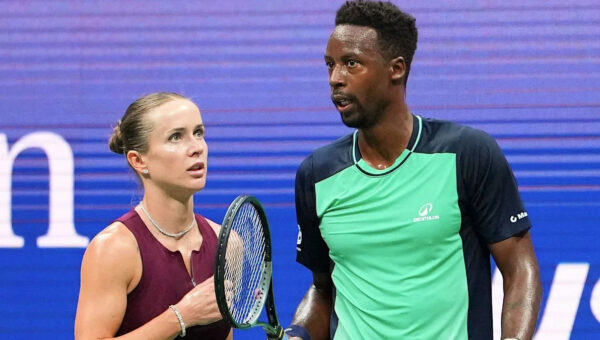
Wallace: It was a minor bummer that Gaël Monfils’ final stand at the French Open against Hugo Gaston wasn’t a better match, and I was sad to see the Kouame phenomenon finally end, because of how much fun it was watching French fans fall in love with him. But my expectations both for Monfils and Kouame weren’t sky-high to begin with, so I can’t call them big letdowns. I was truly let down by the overabundance of five-set matches (there were 32), many of which were attritional battles rather than entertaining shows. Some of them were fun but way too many were way too long.
Eccleshare: How the volume of five-set epics eventually, and inevitably, caught up with the men’s event.
It was particularly sad to see Italy’s Matteo Berrettini, so bedeviled by injury over the past few years, have to pull out hurt in the second set of his quarterfinal against compatriot Matteo Arnaldi.
And then Arnaldi, who had spent almost 20 hours competing to reach the semifinals, couldn’t even take the court for his match against Cobolli because he was laid low by a stomach virus.
Harpur: Following his second-round defeat against Kouame, Paraguayan Vallejo said their match needed to be “umpired by a man“.
“It’s very difficult for a woman to do it,” he said during an interview with Clay. “It has to be refereed by a man, because it’s a very demanding crowd and you need a lot of strength to go against the crowd.”
Really? These misogynistic tropes in 2026? Vallejo was fined $65,000, roughly half of his prize money, and the 22-year-old apologized on social media later on: “I have respect for the umpires and for the job they do. After a five-hour battle, I was very heated and felt a lot of emotions.” But the damage was already done.
Futterman: Sabalenka — Iga Świątek and Gauff out of the way, up a set and two breaks and serving for the semifinals against Shnaider. Then she let the wind and the scenarios enter her head.
Abiding memory?
Wallace: The three times in the media center when reporters bum-rushed the main news conference room. The first time was after Sinner’s defeat — I have never seen a news conference room so full, not even after Serena Williams lost her final match at the U.S. Open in 2022. There were rows of reporters standing along the sides and back of the room. It happened again a day later, when Djokovic lost to Fonseca. The third big, multi-lingual traffic jam was when Sabalenka came to talk after losing to Shnaider.
Eccleshare: The way that in a scorching-hot first week, shocking results spread through the tournament like a virus.
Elena Rybakina, the No. 2 seed, had already lost to Ukraine’s Yuliia Starodubtseva in the second round on the first Wednesday when Sinner wilted a day later. Djokovic tumbled out the following day, and Gauff was beaten by Potapova 24 hours later. Amanda Anisimova, the No. 6 seed, was eliminated the same day by Diane Parry. Świątek, the four-time champion, was beaten the next day by Marta Kostyuk.
Anything felt possible in that frenzied first seven days.
Harpur: A spontaneous one-on-one interview with Harri Heliövaara, who went on to be a men’s doubles finalist here, about how he experiences nerves.
The 37-year-old’s eyes lit up. “Wow, where do I start?” he said.
The Finn put his hands just below his ribs and pushed on his diaphragm as he explained exactly where nervous energy grips his body. “It’s like a big bubble of air that just does not want to get out of my system,” he said. I’ve rarely experienced an athlete describing such visceral symptoms.
Futterman: Djokovic slithering a backhand winner down the line in the fifth set against Fonseca, when his legs were gone and he was trying to hold off both the 19-year-old Brazilian and Father Time. Then he hit a ridiculous touch half-volley, from practically behind him, for a winner. I don’t think anyone else even thinks of attempting that shot. He is still so, so good. There I go again…
Shot of the tournament
Two-time finalist Casper Ruud’s backhand drop-shot return winner from almost in the crowd, against a disbelieving Hamad Medjedovic:
🏆 The winners of the week
🎾 ATP:
🏆 Alexander Zverev (2) def. Flavio Cobolli (10) 6-1, 4-6, 6-4, 6-7(5), 6-1 to win the French Open in Paris. It is the German’s first major title.
🏆 Marcel Granollers / Horacio Zeballos (1) def. Harri Heliövaara / Henry Patten (2) 6-4, 6-2 to win the men’s doubles.
🎾 WTA:
🏆 Mirra Andreeva (8) def. Maja Chwalińska (Q) 6-3, 6-2 to win the French Open. She is the youngest women’s champion at Roland Garros since Monica Seles in 1992.
🏆Kateřina Siniaková / Taylor Townsend (1) def. Anna Danilina / Aleksandra Krunić (2) 6-2, 7-5 to win the women’s doubles.
📈📉 On the rise / Down the line
📈 Maja Chwalińska moves up 93 places from No. 114 to No. 21 after reaching the French Open final.
📈 Matteo Arnaldi reenters the top 40 after rising 70 spots from No. 104 to No. 34.
📈 Oleksandra Oliynykova ascends 14 spots from No. 65 to No. 51, a career-high ranking.
📈 Zachary Svajda rises 23 spots from No. 85 to No. 62, also a career high.
📉 Jack Draper leaves the top 100, dropping 37 places from No. 75 to No. 112.
📉 Zheng Qinwen also leaves the top 100, falling 66 places from No. 56 to No. 122.
📉 Novak Djokovic moves down three spots, from No. 4 to No. 7.
📉 Loïs Boisson leaves the top 100, falling 112 places from No. 43 to No. 155.
📅 Coming up
🎾 ATP
📍Stuttgart, Germany: Stuttgart Open (250) featuring Taylor Fritz, Ben Shelton, Frances Tiafoe, Alexander Bublik.
📍‘s-Hertogenbosch, Netherlands: Rosmalen Grass Court Championships (250) featuring Félix Auger-Aliassime, Alex de Minaur, Hubert Hurkacz, Daniil Medvedev.
📺 UK: Sky Sports; U.S.: Tennis Channel 💻 Tennis TV
🎾 WTA
📍London: Queen’s (500) featuring Elena Rybakina, Amanda Anisimova, Victoria Mboko, Serena Williams.
📍‘s-Hertogenbosch, Netherlands: Rosmalen Grass Court Championships (250) featuring Ekaterina Alexandrova, Clara Tauson, Emma Navarro, Paula Badosa.
📺 UK: Sky Sports; U.S.: Tennis Channel
Tell us what you noticed this week in the comments below as the men’s and women’s tours continue.
This article originally appeared in The Athletic.
Sports Business, Olympics, Tennis, Women’s Tennis
2026 The Athletic Media Company
Discover more from NAIRAVOICE.COM.NG
Subscribe to get the latest posts sent to your email.