
Formula 1 strategy is ultimately dictated by one unforgiving metric: raw pace. If you have it, the pit wall can dictate the race. If you don’t, you are immediately forced onto the back foot, relying on desperate tactical gambles to bridge the gap.
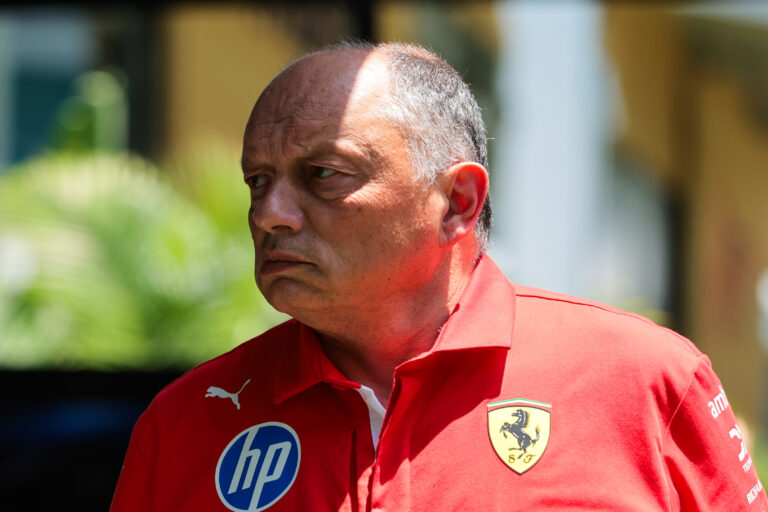
Just one week after a dominant, clean-air victory in Barcelona, Ferrari found themselves on the wrong side of that equation at the 2026 Austrian Grand Prix. Unable to match the blistering pace of Mercedes and Max Verstappen, the Scuderia tried to artificially force their way to the front—a miscalculation that Team Principal Fred Vasseur admits sent their entire Sunday spiraling out of control.
The Danger of Over-Pushing
When a car isn’t fundamentally fast enough to challenge for the podium, the pressure inside the cockpit and on the pit wall compounds exponentially. In his post-race debrief, Vasseur was incredibly transparent about how that pressure forced Ferrari into a compounding series of errors right from lights out.
“I think we are all… all on the edge in this situation, and if you don’t have the pace, you over-push, you take some risks on the strategy,” Vasseur explained. “And when it’s not paying off, you… you have to do the addition of the deficit, and you pay the bill at the end.”

Instead of settling into a sustainable rhythm, Maranello asked their drivers to lean far too hard on the SF-26 during the critical opening stages of the race.
“What’s happened today for us, we… we didn’t have the pace to fight with… with the Mercedes and Max, and we over-pushed the first couple of laps,” Vasseur admitted. “We had to change the strategy, and everything went into the wrong direction, but it’s… it’s a good lesson.”
The Clean Air Paradox and Sizzling Rubber
Ferrari’s strategic unraveling was heavily exacerbated by the brutal nature of the Red Bull Ring’s traffic. Last week in Spain, Lewis Hamilton was able to control his tire degradation beautifully because he was running in uninterrupted space. In Spielberg, however, both Hamilton and Charles Leclerc were violently caught in the dirty air of the pack, which sent their tire temperatures through the roof.
When questioned about Leclerc’s vocal radio frustrations regarding a specific set of tires, Vasseur laughed off the exact stint but immediately validated his driver’s thermal struggles.

“Oh yeah, yeah, he was overheating and depending on where you are on track, then in the fight, then uh you have to take more or less care of the tires,” Vasseur noted.
The tactical goal was to escape the midfield dogfight, a luxury they simply couldn’t afford this weekend.
“I think that target was to be in clean air today. Uh, a bit like uh last week in Barcelona and it paid off for… for Lewis last week because you were able to do uh 80% of the race in clean air, and this weekend it was not the case at all.”
The Ferrari’s Friday Hangover
You cannot execute a flawless Sunday strategy if your Friday data is fundamentally flawed.
Ferrari’s weekend was compromised from the very first practice session. With limited running and unexpected cornering instability, the engineering team failed to build an accurate degradation profile for the Pirelli tires. According to Vasseur, that lack of preparation is what ultimately blindfolded the pit wall on race day.
“That meant that uh… well, let’s uh try to understand exactly what happened all the weekend, that we also we are too paying the price from Friday, that we didn’t do long stints or not enough,” Vasseur concluded.
Without a reliable bank of long-run data to fall back on, Ferrari was forced to guess their way through the Austrian Grand Prix. The resulting tactical collapse serves as a brutal reminder that in modern F1, you cannot out-strategize a slow car—and if you try, the track will eventually make you pay the bill.
Discover more from NAIRAVOICE.COM.NG
Subscribe to get the latest posts sent to your email.