Hannah covers horror, sci-fi, and games at Collider, where she writes news and features, reviews new releases, and interviews the people who make them. She’s helping build out Collider‘s gaming coverage, with Pokémon as one of her specialties. If she isn’t writing about a monster, she’s probably watching one on a tape from her VHS collection.
Before Timothée Chalamet put on a stillsuit, Kyle MacLachlan made his screen debut as Paul Atreides. His introduction to Arrakis came through David Lynch‘s Dune, a movie whose reputation remains complicated more than four decades later. Its strange beauty is part of the appeal, even when the storytelling threatens to leave viewers stranded in the desert.
For audiences introduced to Frank Herbert‘s universe through Denis Villeneuve‘s movies, the earlier adaptation offers a fascinating comparison. Familiar characters inhabit a world with a radically different texture, where elaborate costumes share the screen with grotesque creatures. Lynch’s approach makes even recognizable parts of the story feel unfamiliar.
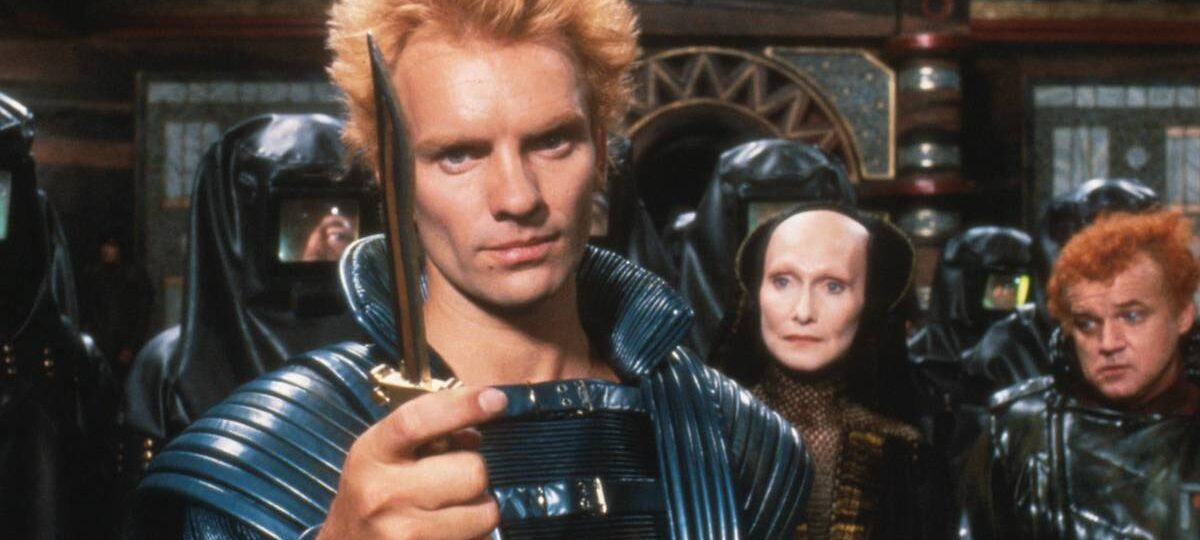
Lynch’s 1984 adaptation of Dune is coming to HBO Max in the United States on Sunday, November 1. Written and directed by Lynch, Dune follows Paul as his family takes control of Arrakis, the desert planet that produces the invaluable spice melange. A betrayal forces him into a struggle that reaches far beyond his family’s survival. The ensemble includes Francesca Annis as Lady Jessica, Patrick Stewart as Gurney Halleck, and Sting as Feyd-Rautha, alongside Sean Young, Virginia Madsen, and Max von Sydow.
Your answers point to the iconic sci-fi hero who shares your instincts, your values, and your particular way of facing the impossible.
You carry a weight most people would crumble under — the knowledge of what you’re capable of, and the burden of what you might have to become.
- You see further ahead than others and you plan accordingly, even when the vision frightens you.
- You are driven by loyalty to your people and a sense of destiny you didn’t ask for but can’t escape.
- Paul Atreides is not simply a hero — he is someone who understands the cost of power and chooses to bear it anyway.
- That gravity, that willingness to carry what others won’t, is exactly you.
You lead with instinct, warmth, and an absolute refusal to accept a no-win scenario — because you’ve always believed there’s a third option nobody else has thought of yet.
- You take the mission seriously without ever taking yourself too seriously.
- Your crew would follow you anywhere, not because you demand it, but because you’ve earned it.
- Kirk’s genius isn’t tactical — it’s human. He reads people, bends rules with purpose, and wills outcomes into existence through sheer conviction.
- That combination of warmth, audacity, and relentless optimism is unmistakably yours.
You are the kind of person who holds the line when everyone else is losing faith — not because you’re fearless, but because giving up simply isn’t something you’re capable of.
- You lead through conviction. Your voice carries because your belief is unshakeable.
- You gave up everything ordinary the moment you chose the cause, and you’ve never looked back.
- Leia is not a supporting character in her own story — she is the moral centre of the entire rebellion.
- That same fierce, principled, unbreakable core is what defines you.
You are not reckless, not grandiose, and not particularly interested in being anyone’s hero — you just refuse to stop when it matters.
- You see threats clearly, you document the truth even when no one listens, and when the time comes you handle it yourself.
- Ripley’s heroism is earned, not performed. She doesn’t have a speech — she has a flamethrower and a plan.
- You share her composure under the worst possible pressure, and her refusal to pretend the monster isn’t there.
- When it counts, you don’t flinch. That’s everything.
You have been through fire that would break most people — and what came out the other side is something the world underestimates at its peril.
- You don’t ask for help, don’t need validation, and don’t wait for anyone to tell you the rules no longer apply.
- Your loyalty, when it finally arrives, is absolute — but it’s earned in silence and tested in action, not in words.
- Max is not a nihilist. He is someone who lost everything and found, against his will, that he still has something worth protecting.
- That bruised, stubborn, ultimately human core is exactly yours.
David Lynch’s ‘Dune’ Still Divides Viewers
<<img src="https://static0.colliderimages.com/wordpress/wp-content/uploads/2024/02/dune-kyle-maclachlan.jpg?q=70&fit=crop&w=825&dpr=1" />
Image via Universal Studios</figure>
The movie currently holds a 36% critics’ score on Rotten Tomatoes, compared with a 65% audience score. Those numbers reflect the distance between its difficult critical reputation and the affection it has earned from viewers willing to embrace its peculiarities. Watching it today, the production design remains a compelling reason to give it a chance. Lynch’s universe feels oppressive before anyone explains its political arrangements. The machinery looks unpleasant to operate, while the interiors suggest immense wealth with very little comfort. Even viewers who struggle with the exposition have plenty to examine.
Herbert’s world also invites questions beyond the immediate plot, including why such an advanced civilization operates without familiar computers. Lynch’s adaptation packs that sprawling universe into a single 137-minute movie, an ambitious undertaking that helps explain both its density and its appeal as an alternative interpretation. The movie has continued finding an audience through subsequent releases, including Arrow’s elaborate 4K edition. Its HBO Max arrival offers another opportunity to approach it on its own terms. Fans of the newer adaptations may recognize the destination, but this version takes an unmistakably different route through the sand.
Dune begins streaming on HBO Max on November 1.
Discover more from NAIRAVOICE.COM.NG
Subscribe to get the latest posts sent to your email.