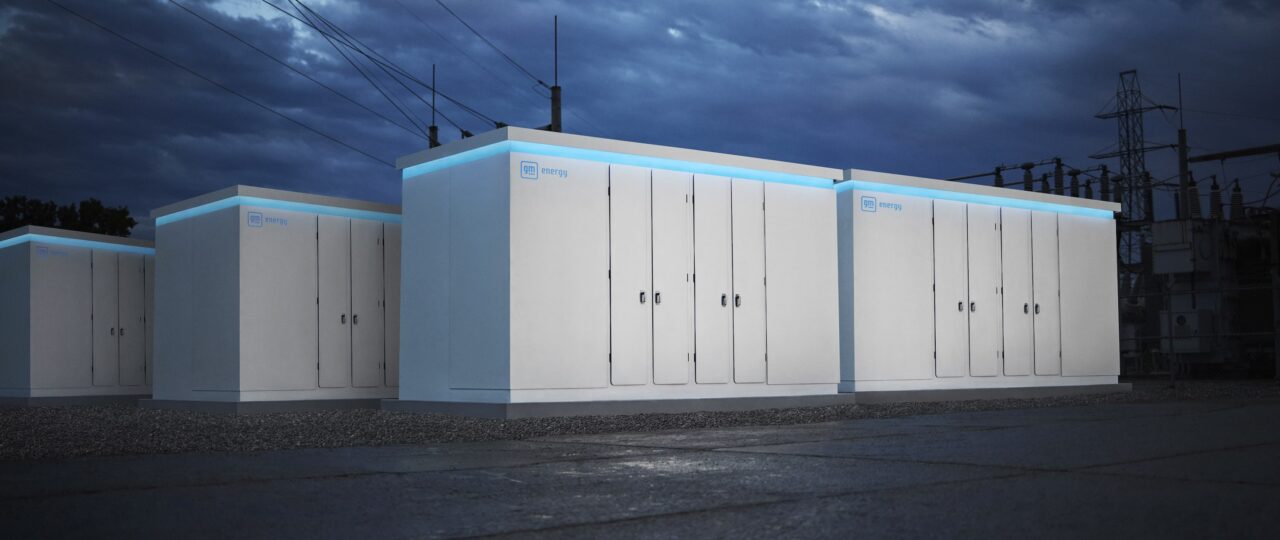
First Tesla, then Ford, and now GM — it seems every automaker wants a slice of the energy storage market.
It’s easy to see why. While EV sales have stagnated in the United States, sales of large, stationary batteries have doubled in the past two years. And they show no signs of stopping.
Despite incentives being gutted in the One Big Beautiful Bill Act, the Solar Energy Industries Association expects annual installations to exceed 110 GWh per year by 2030, about double what they are today.
“There’s a lot of potential for this market,” Kurt Kelty, vice president of battery and sustainability at GM, told TechCrunch.
GM has dabbled in energy storage before, but on Tuesday it took a bigger swing, rolling out an entirely new sodium-ion battery chemistry that’s aimed at the heart of the market.
The skyrocketing energy storage market is being driven higher by the convergence of three trends. The most obvious is the expansion of data centers being built to serve AI. Data center energy demand is expected to nearly triple by the end of the decade. But alongside that growth, entire swathes of the economy, including transportation, manufacturing, and HVAC, are being electrified.
“Data centers are a big part of the growth, but even without data centers, it started to really pick up,” Kelty said.
/* JW Player inline promo A/B test — runs at parse time before the player library loads */
(function() {
const bucket = window?.jwPlayerPromoBucket;
if ( bucket === ‘hide’ ) {
const el = document.currentScript.parentNode;
if ( el.classList.contains( ‘jw-player-inline-promo’ ) ) {
el.remove();
}
}
})();
https://content.jwplatform.com/libraries/0NX4vsNk.js
var playerInstance_jwplayer_6a2a81880b038 = jwplayer( “jwplayer_6a2a81880b038” );
playerInstance_jwplayer_6a2a81880b038.setup({
playlist: “https://cdn.jwplayer.com/v2/media/ktDoRWHu”,
});
It’s not just automakers that are diving into energy storage. Startups have been raising large rounds to capture a chunk of the market. Base Power raised a $1 billion Series C in October to expand beyond Texas, while Lunar Energy raised $232 million to sell batteries to homeowners. Others, like Lightship, are pivoting somewhat. The electric RV manufacturer is now selling a mobile battery for job sites and other locations that need temporary power.
So far, Tesla has taken the lion’s share of the energy storage market. Of the 57 gigawatt-hours installed last year, Tesla was responsible for 82% of those installations. The company’s annual revenue from energy generation and storage has doubled since 2023, largely due to growth in Megapack and Powerwall installations. Tesla’s gross profits for the segment are around 30%, about double what it makes selling EVs and at least three times higher than typical automaker margins. GM’s gross margin over the last 15 years has averaged just over 11%.
But despite the market’s potential, GM isn’t exactly rushing in. Rather, its first major product, the sodium-ion cells, won’t be ready until later this decade. “We’re going to develop a family of cells that is appropriate for this market,” Kelty said.
Kelty and his team point to sodium-ion’s strengths as reason enough for waiting: The materials are cheap and abundant, it doesn’t require an active cooling system, and it can withstand many more charge-discharge cycles than lithium-ion batteries.
It doesn’t hurt that China has yet to corner the market on materials for sodium-ion batteries, like it has with other chemistries. Nearly all of the world’s cobalt is processed by Chinese companies, for example.
“It gives us a path towards supply-chain resilience and low-cost materials,” Andy Oury, business planning manager at GM, told TechCrunch. “Sodium-ion is very much in its infancy with the opportunity for the supply chain to grow anywhere people want to invest in it.”
GM could have taken a path of lesser resistance by simply repackaging the lithium-ion cells it’s currently pumping out at its gigafactories, like Tesla and Ford have done. But the automaker is still bullish on the future of EVs, and it doesn’t want to reassign its lithium-ion manufacturing capacity for fear of being caught flat-footed if there’s a resurgence in the EV market.
“It’s one thing to build cells when there’s excess capacity,” Oury said. “It’s another thing when we return to a high-growth mode and every new battery you want needs a new plant.”
Such a resurgence could be partly under GM’s control. The company is developing an entirely new chemistry, lithium-manganese-rich (LMR), that’s set to debut in 2028. LMR promises to deliver most of today’s range while cutting the cost of a new EV by about 10%. That would bring EVs near parity with fossil fuel vehicles, eliminating one of the main hurdles to adoption.
After LMR, sodium-ion is another chemistry that could disrupt the automotive industry. Chinese automakers have already begun to dabble with it. EVs powered by sodium-ion packs are heavier and have less range, but they’re cheaper and less prone to catching fire. Plus, they have the potential to charge rapidly. Altogether, that makes for an attractive combination for lower-cost EVs.
“Is this the right play for EVs in the long run? That’s yet to be decided,” Kelty said. “It does give us the advantage that if we want to go that direction, it’ll be very easy for us because we’re going to be right doing a lot of research on this anyway. We’re not ruling it out.”
The risk in moving more deliberately than its competitors, of course, is that the AI bubble bursts, data center construction halts, and GM misses the wave. Paul Menson, director of energy storage commercialization at GM, thinks the bet on sodium-ion will pay off even if that happens. “No market grows indefinitely forever,” he said. “That’s why you have to have the best product. Because if you have the best product, it doesn’t really matter what happens in the market contraction because you still have the best product.”
Even still, Kelty has a sense of urgency. “We’re actually exploring other ways to get in the market faster,” he said. “We’re definitely going to try and go as fast as possible.”
Discover more from NAIRAVOICE.COM.NG
Subscribe to get the latest posts sent to your email.