Beatriz (Bea) Valero de Urquia is a Books & Literature author at Collider, where she focuses on Lists surrounding recent bestsellers, classical novels, and everything in between. She is a historian by training and a bilingual reader, moving between English and Spanish literature.
Beatriz began her career as a technology writer at a startup in the UK. Almost a decade later, journalism has taken her to five cities across three continents and into business reporting, cultural criticism, and live TV commentary. She joined Collider in 2026.
Beatriz has a passion for travelling and loves keeping an eye on the books headed to the screen. One of her favorite pastimes is critiquing the historical accuracy of period movies. She also once volunteered for the Charles Dickens Museum. Beatriz also has a core belief that a book is always better than the movie, but she has been happy to have been proven wrong in a couple of occasions.
When she isn’t reading, Beatriz is watching musicals, stage managing Shakespeare plays with a local theater group or doing historical research. She enjoys tracing family trees for her history and genealogy TikTok, creating databases for historical analysis and sifting through 17th-century stories for the novel she is currently in the process of writing.
The trailer for Greta Gerwig‘s upcoming take on C.S. Lewis‘ classic book series, The Chronicles of Narnia, has introduced the general audience to Digory Kirke and Polly Plummer, portrayed by David McKenna and Beatrice Campbell. These two are the protagonists of The Magician’s Nephew, the last book in the series and the first story chronologically. The choice to focus on Digory and Polly’s story allows audiences to be dazzled by Gerwig’s “rock opera” take on the classic book, without being blinded by the nostalgia that surrounded the beloved four Pevensie siblings. What’s more, it highlights one of the most-often forgotten Narnia heroes.
Each of the books in The Chronicles of Narnia has a different main character. Some share the spotlight with other heroes, but there is always one whose arc carries the story. Everyone loves brave Lucy Pevensie, but who remembers Eustace Scrubb, Lucy’s obnoxious cousin who got turned into a dragon? Netflix‘s purchase of the rights to the seven Narnia books could allow audiences to fall in love with some of these lesser-known heroes. Until then, here is how each book’s protagonist measures up, ranked from least to most compelling.
7
King Tirian (‘The Last Battle’)
<<img src="https://static0.colliderimages.com/wordpress/wp-content/uploads/2025/12/narnia-thelastbattle-bookcover.jpg?q=70&fit=crop&w=825&dpr=1" />
Image via HarperCollins</figure>
It is difficult to make an entrance during a finale. The final book in the Narnia series, The Last Battle, is a story about the end of a world. King Tirian plays a role in its narrative, but he is not its hero. Unfortunately, his story was overshadowed by the bigger narrative of the end of Narnia and the discussions regarding who is worthy of entering Aslan’s kingdom, widely understood to be Paradise. When Eustace Scrubb and Jill Pole come into the picture, Tirian begins to fade into the background. By the time (most of) the Pevensie siblings make an appearance, King Tirian has long been forgotten by readers.
The last king of Narnia, Tirian is the only hero in the list whose trials start after becoming a monarch, not before. Because of this, Tirian portrays the challenges of ruling and the importance of being faithful to one’s morals, even if the rest of the world has forgotten theirs. That said, he also has some great moral failings, like the rage that leads him to murder two unarmed Calormene soldiers to avenge the Talking Trees. Still, his stance at the battle of Stable Hill is a great moment of bravery. And who can forget his companion, Jewel the Unicorn?
6
Digory Kirke (‘The Magician’s Nephew’)
<<img src="https://static0.colliderimages.com/wordpress/wp-content/uploads/2024/06/narnia-magicians-nephew-polly-digory-pegasus.jpg?q=70&fit=crop&w=825&dpr=1" />
Image via HarperCollins</figure>
Digory Kirke is a surprising hero. Readers and fans of the series will already know him as the mysterious Professor in whose house the Pevensie siblings stay during the Blitz, and the owner of that wardrobe. In The Magician’s Nephew, however, readers meet young Digory, a prideful and overly curious boy who discovers his uncle’s magical rings that allow him to travel between worlds. Alongside his friend Polly, Digory explores a lifeless world called Charn and awakens its only surviving resident, Queen Jadis (to be portrayed in the movie by Emma Mackey), who will later become the White Queen. Jadis follows Digory and Polly into London, causing havoc, before Digory takes her to the new world Aslan has created. In doing so, Digory allows Evil to enter Narnia, setting up the events of the following books in the series.
Few heroes, in children’s books or otherwise, are responsible for this much damage. Nonetheless, his struggle in choosing between using a magical apple to save his dying mother or to protect Narnia from Jadis is a powerful moment that tears into anyone’s heart. C.S. Lewis’ own experience of having lost his mother young makes Digory’s wish to help his — and his ultimate decision — all the more powerful.
5
Prince Caspian (‘Prince Caspian: The Return to Narnia’)
 Image via Walt Disney Studios Motion Pictures
- Image via HarperCollins
- Image via Disney
- Image via Disney
- Image via Walt Disney Studios Motion Pictures
 Image via Walt Disney Studios Motion Pictures
 Image via HarperCollins
 Image via Disney
 Image via Disney
 Image via Walt Disney Studios Motion Pictures
- Image via Walt Disney Studios Motion Pictures
- Image via HarperCollins
- Image via Disney
- Image via Disney
- Image via Walt Disney Studios Motion Pictures
 Image via Walt Disney Studios Motion Pictures
 Image via HarperCollins
 Image via Disney
 Image via Disney
 Image via Walt Disney Studios Motion Pictures
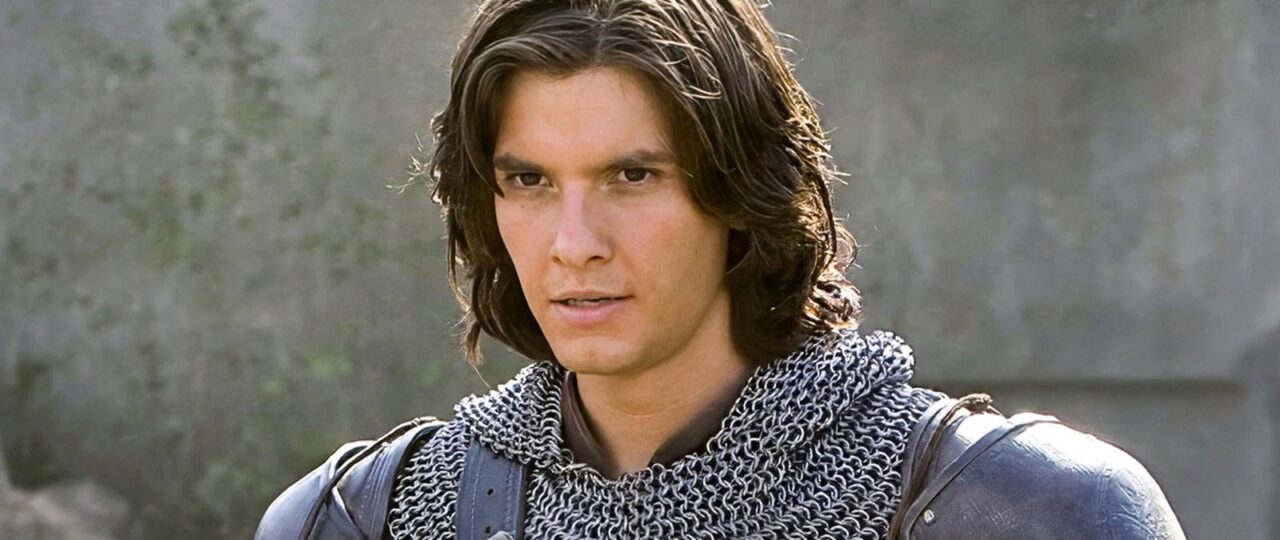
Prince Caspian (later, King Caspian X) is the most widely recognizable and beloved monarch of Narnia, after the four Pevensie siblings. This was helped by his aged-up portrayal in Walden Media’s 2008 and 2010 films by the beloved English actor and singer Ben Barnes, also of Westworld and Shadow and Bone. However, the differences in his characterization in the movies and the books are the cause of his ranking this low.
Raised by his uncle Miraz, Caspian grows up in a very different Narnia than the one the Pevensies left. More than a century has passed, and the old Narnians have been forced to hide away to avoid persecution, so much so that few remember that they ever existed. After a failed assassination attempt, Caspian flees the castle where he was brought up and decides to join the old Narnians and fight for their freedom — and his crown.
Similar to Tirian, Prince Caspian is overshadowed by the Pevensies. The return of Peter, Susan, Edmund, and Lucy to Narnia as kids, after having ruled it as adults, and their crisis of faith is so compelling that it turns Prince Caspian into a supporting character in his own story. When it comes to dueling Miraz, it is Peter Pevensie who fights him, not Caspian. After all, he is 13 in the books, not 20. The movie even creates a rivalry between Peter and Caspian to make up for this age change. The romantic tension with Susan is also a TV addition. And when Caspian returns as king in the following book, The Voyage of the Dawn Treader, he is once again relegated to the background to make room for another character that ranks higher on this list.
4
Shasta (‘The Horse and His Boy’)
<<img src="https://static0.colliderimages.com/wordpress/wp-content/uploads/2025/12/narnia-horseandhisboy-bookcover.jpg?q=70&fit=crop&w=825&dpr=1" />
Image via HarperCollins</figure>
Walden Media chose to follow the publication order of the Narnia books when making its movie adaptations. In doing so, audiences lost the chance to meet Shasta, the protagonist of The Horse and His Boy. The fifth book in the series to be published takes place during the events of the first, The Lion, the Witch and the Wardrobe, while the Pevensies are Kings and Queens of Narnia. Raised by a fisherman in Calormen, Shasta flees his hometown to avoid being sold into slavery with the help of a talking horse named Bree. The two of them embark on an adventure that eventually leads them to discover Shasta’s true identity as the eldest son of King Lune of Archeland.
Unlike Prince Caspian and King Tirian, Shasta is undoubtedly the book’s hero. Adult Susan, Edmund, and Lucy Pevensie do make brief appearances, but the story is clearly centered around Shasta’s adventures and his journey of self-discovery. His travels introduce readers to the rich world where Narnia is located, although some portrayals of Calormen and its people rely on Orientalist stereotypes that have not resisted well the passing of time. Shasta’s companions, vain Bree and brave Aravis, also threaten to steal the spotlight. Compared to them, Shasta is neither brave nor confident. But when other people, and even whole kingdoms, depend on him, he rises up to meet the challenge. The revelation that all the hardships he endured were a direct result of Aslan’s actions is one of the series’ most impactful moments.
Four worlds and four completely different ideas of what a good life
looks like. This is where you belong, what it would ask of you, and what you would get back in
return.
You belong somewhere old enough that the mountains have names and
somebody can still tell you who gave them. Middle-earth is for people who think the right
thing is worth doing even when it will not be finished in their lifetime.
- This is the only world on the list where doing good is understood as a very long defeat,
fought anyway, by people who will never see how it ends. - You are drawn to grandeur, to white cities and deep forges and the sense that almost
everything you touch is older than your entire family line. - The Rings of Power is set in the last good age before it all goes wrong, which gives
every quiet scene in it a slightly unbearable weight. - You would take the hard road, and you would take it on foot.
You want the sea, a crew, and absolutely nobody telling you where
you are allowed to go. The Grand Line is the world for people whose main ambition in life is
finding out what is over there.
- One Piece has run for decades on one very simple engine, which is a group of people who
each want something impossible and have decided to go and get it together. - You collect people. Your ideal crew is a set of misfits who were each written off
somewhere else before you turned up and offered them a better idea. - The world is enormous and deliberately ridiculous, and the emotional gut punches land
harder because of that rather than in spite of it. - You would set sail knowing the map runs out, which is more or less the entire point of
it.
You would rather be feared and useful than liked and useless. The
Continent is a world where the monsters are the straightforward part of the job and the
people are where it all gets complicated.
- Witchers get paid to do what nobody else will and resented for existing at all, which is
a trade most people would refuse and you would probably accept. - You have no real illusions about which side is the good one, largely because on the
Continent that question tends to have a disappointing answer. - The best of these stories are not about the fighting. They are about somebody with a
rigid code being repeatedly cornered into caring about people. - You would take the coin, finish the job properly, and be out of town before the story
got told wrong.
You want the myths to be real and loose in the actual world, and
you want to find out at about thirteen that you were never anywhere near as ordinary as
everybody kept telling you.
- Percy Jackson takes the oldest stories we have and drops them into car parks and diners,
which makes the gods considerably funnier and a great deal worse. - You would be the kid every school gave up on, who turns out to have been built for
something nobody thought to test for. - The series is genuinely about friendship rather than destiny, and it says so out loud
every time a prophecy tries to get in the way. - Camp Half-Blood is the real fantasy here: a place where the thing that made you
difficult everywhere else is the thing that makes you belong.
3Enjoying this article? Support our work with a small crypto donation.
Jill Pole (‘The Silver Chair’)
<<img src="https://static0.colliderimages.com/wordpress/wp-content/uploads/2025/12/narnia-silverchair-bookcover.jpg?q=70&fit=crop&w=825&dpr=1" />
Image via HarperCollins</figure>
Jill Pole is one of Narnia’s most unlikely protagonists. Readers meet her crying outside the gym after having suffered bullying at her school, which Eustace Scrubb also attends. Jill is frightened and insecure, traits that will be challenged when Aslan tasks her with finding now-King Caspian’s son, Prince Rilian, who has been kidnapped. Jill is asked to remember the four signs that will help her find Prince Rilian and repeat them every night. When she fails to do so and instead daydreams about hot baths, their mission is derailed.
Jill is a compelling protagonist due to her flaws. As opposed to Caspian or Lucy, her faith in Aslan is not unwavering, and she makes very human mistakes. During her adventure, Jill grows up and learns to face her fears, such as her claustrophobia. It is precisely her failures that allow her to become better. She also learns to survive in the wilderness and to defend herself. When push comes to shove, and the Lady of the Green Kirkle tries to convince the group that the world beyond her kingdom does not exist, Jill holds onto her memories and convictions. By the time she returns to Narnia for The Last Battle, Jill stands up for herself and even questions King Tirian’s decisions, before becoming a true Queen of Narnia.
2
Eustace Scrubb (‘The Voyage of the Dawn Treader’)
<<img src="https://static0.colliderimages.com/wordpress/wp-content/uploads/2025/12/narnia-votdt-bookcover.jpg?q=70&fit=crop&w=825&dpr=1" />
Image via HarperCollins</figure>
There are few lines in children’s books as brilliant as the opening of The Voyage of the Dawn Treader: “There was a boy named Eustace Clarece Scrubb, and he almost deserved it.” Indeed, this Pevensie cousin (portrayed in the 2010 movie by Will Poulter) is cowardly, selfish, and mean-spirited. Upon arriving on the ship named Dawn Treader, commanded by now-King Caspian, Eustace complains, steals, and ridicules others. The turning point arrives when his greed gets the best of him, and he steals a dragon’s gold bracelet, causing him to transform into a dragon. What follows is a self-reflection journey in which Eustace learns to help his crew and friends. He eventually realizes his wrongs, confessing that he was “a better dragon than a boy” before choosing to change.
Eustace Scrubb is ranked second on this list because he embodies one of the most important themes of C. S. Lewis’ fiction writings: redemption. This is something that is usually associated with Edmund Pevensie’s choice to betray his siblings for Turkish delights. However, while Edmund has to atone for a sin, Eustace Scrubb has to completely transform himself, starting with his core values and beliefs. Having an unlikable protagonist is hard to pull off, but with Eustace Scrubb, Lewis writes a masterful character arc. The scene where Aslan sheds off his dragon skin is incredibly powerful, as it reminds readers that kindness is not something people are born with, but a choice to be made every day.
1
Lucy Pevensie (‘The Lion, the Witch and the Wardrobe’)
<<img src="https://static0.colliderimages.com/wordpress/wp-content/uploads/2023/09/lucy.jpg?q=49&fit=crop&w=825&dpr=2" />
Image via Buena Vista Pictures, Walden Media</figure>
If there is a single (human) character that embodies Narnia, that is none other than Lucy Pevensie, portrayed by Georgie Henley in the Walden Media movies. Of the seven novels, Lucy Pevensie appears in five. She is a main character in three (The Lion, the Witch and the Wardrobe, Prince Caspian, and The Voyage of the Dawn Treader) and has a minor role in two (The Horse and His Boy and The Last Battle). Crowned Queen Lucy the Valiant, the youngest of the Pevensie siblings is the one who first discovers the world hiding inside the wardrobe. When her siblings refuse to believe her, Lucy stays strong in her knowledge of what she has seen. She is the first to befriend Mr Tumnus and the beavers, and always approaches the world with an open heart. Although Peter, Edmund, and Susan are also main characters in this book, the story would not exist without her. Throughout the series, Lucy Pevensie is the one who never doubts Aslan, and therefore the truest Queen of Narnia.
Although we will not meet Lucy Pevensie in Greta Gerwig’s movie, it is plain as day for anyone who reads the books that she is much more than the hero of the first book to be published in the series, which was not by accident dedicated to a real-life Lucy, C.S. Lewis’ goddaughter. Aslan might be the anchor of the world of Narnia, but Lucy Pevensie is its true heart.
Narnia: The Magician’s Nephew
-
<
David McKenna
Digory Kirke
-
<
Beatrice Campbell
Polly Plummer
-
<
Jadis / The White Witch
-
<
Carey Mulligan
Mabel Kirke


Discover more from NAIRAVOICE.COM.NG
Subscribe to get the latest posts sent to your email.