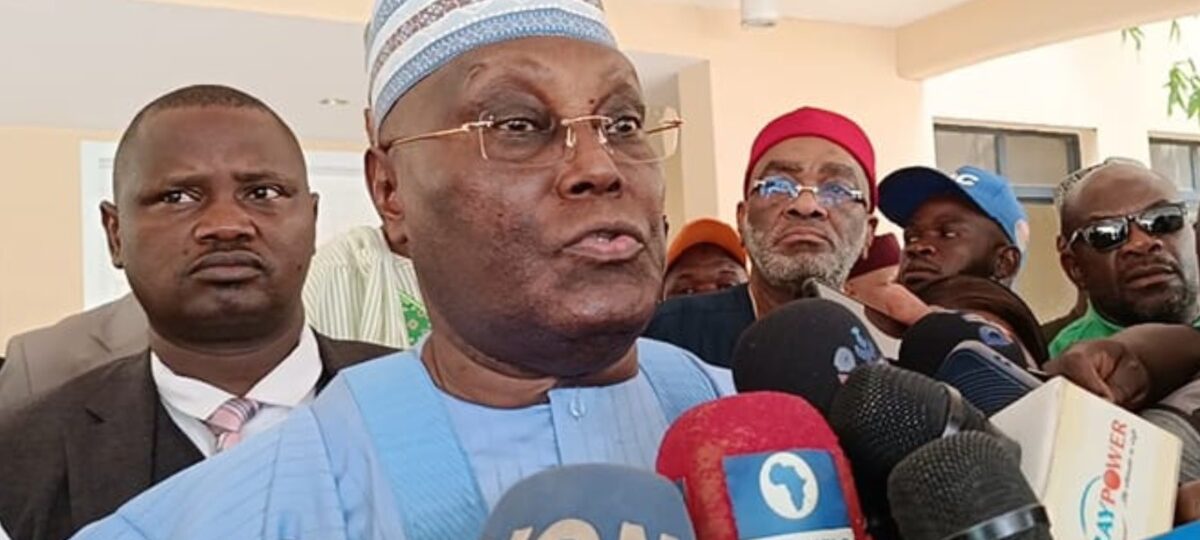
Atiku Abubakar, the presidential candidate of the African Democratic Congress, ADC, has once again tackled President Bola Ahmed Tinubu over high energy costs.
In a statement by Phrank Shaibu, Atiku’s spokesperson, the former Vice President slammed Tinubu for causing factories to shut down over the high price of diesel.
According to Atiku, instead of the Tinubu administration focusing on reducing high energy costs, it is proposing a Vienna-listed bond arrangement.
He described the proposal as another disturbing sign of a government that keeps expanding its appetite for borrowing while refusing to give Nigerians a clear account of what has happened to record revenues, subsidy savings and the windfall from higher crude oil prices.
Atiku stressed that it is indefensible that, at a time when Nigerian factories are spending as much as half of their operating costs simply to keep the lights on, the Federal Government is again looking overseas for more financing without first explaining why vastly improved revenues have failed to reduce its dependence on debt.
“This is the central contradiction Nigerians are entitled to question. The government says revenues are up. It says subsidy removal has saved enormous sums. Oil prices are substantially above the benchmark used for the 2026 budget. Yet borrowing is accelerating, factories are suffocating under energy costs, and ordinary Nigerians are still struggling to afford the basics.
“Before the Tinubu administration goes to Vienna in search of more money, it must first tell Nigerians what has happened to the money already coming in.
“Consider what that means for a factory in Lagos, Kano, Aba or Nnewi. Before the manufacturer pays workers, buys raw materials, transports finished products, services bank loans or makes a profit, a huge part of the operating budget has already disappeared into simply keeping the machines running.
“No economy can industrialise under those conditions. A manufacturer spending half of his operating costs on energy will eventually have to raise prices, cut production, lay off workers or close the factory. Whichever option he takes, ordinary Nigerians pay through higher prices, fewer jobs and reduced household income.
“The Vienna transaction, therefore, cannot be treated as an obscure technical arrangement known only to officials, bankers and financial advisers,” he stated.
Discover more from NAIRAVOICE.COM.NG
Subscribe to get the latest posts sent to your email.