
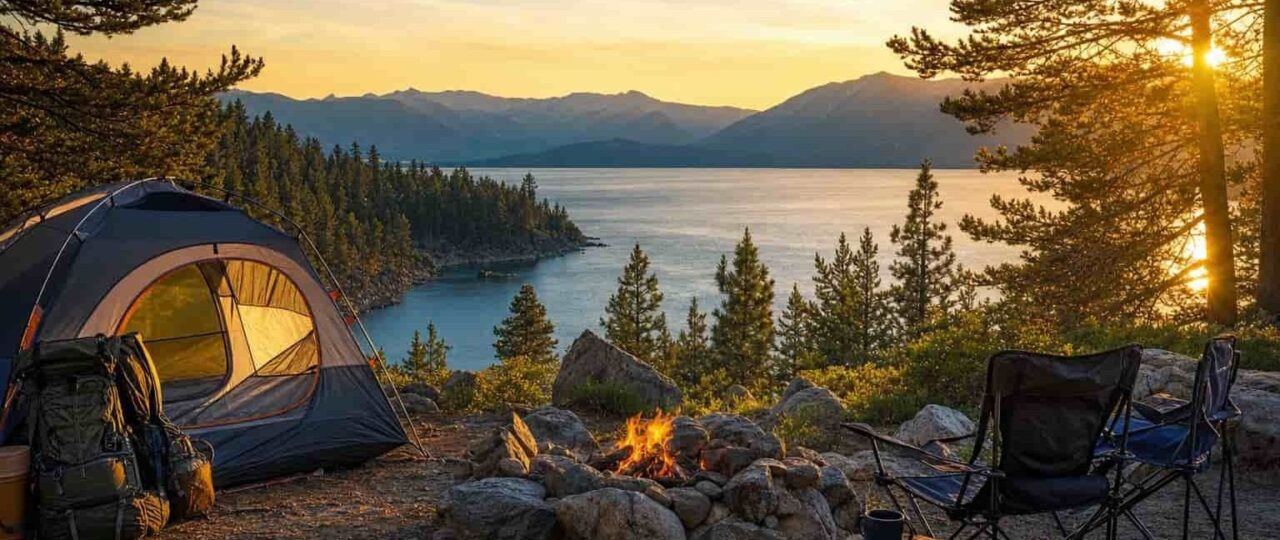
The best places to camp in California include Yosemite for granite cliffs, Big Sur for ocean bluffs, Joshua Tree for desert boulders, Redwood National and State Parks for ancient forests, Emerald Bay for Lake Tahoe views, and Catalina Island for coastal adventure. California is not a one-style camping state; it offers beach camping, mountain camping, desert camping, redwood camping, lake camping, RV camping, primitive camping, and backpacking within one road-trip-friendly state.
California camping should be planned by region, season, and reservation system. State park campsites generally open on ReserveCalifornia six months in advance, while many federal campgrounds use Recreation.gov and may follow park-specific booking windows.
Quick Answer: Top Camping Spots by Trip Style
Trip Style
Best Place
Best For
First-time California camping
Yosemite Valley
Iconic scenery, waterfalls, shuttle access
Ocean-view camping
Kirk Creek, Big Sur
Bluff campsites above the Pacific
Desert camping
Joshua Tree
Rock formations, stargazing, climbing
Giant trees
Redwood National and State Parks
Old-growth redwoods and coastal forest
Lake camping
Emerald Bay, Lake Tahoe
Blue water, kayaking, Rubicon Trail
Family beach camping
Leo Carrillo, Malibu
Tide pools, beach walks, shaded campground
Southern California beach camping
Crystal Cove
Ocean-view bluff camping near Laguna Beach
Remote island camping
Catalina Island
Boat access, hiking, beach camps
Backpacking coast camp
Point Reyes
Hike-in coastal sites
Winter desert camping
Death Valley
Warm-season escape, huge desert scenery
Volcanic mountain camping
Lassen Volcanic
Lakes, hydrothermal areas, quieter trails
Eastern Sierra camping
Alabama Hills
Free permit, desert rocks, Sierra views
Giant sequoia camping
Sequoia & Kings Canyon
Sequoia groves, mountain rivers, high country
1. Yosemite National Park
Yosemite National Park is one of the best places to camp in California because it combines dramatic granite walls, waterfalls, river access, forested campsites, and some of the most famous hikes in the United States. Upper Pines is especially practical for first-time visitors because it sits in Yosemite Valley and offers paved roads, flush toilets, drinking water, picnic tables, fire rings, food lockers, and shuttle access near Curry Village.
Yosemite campsites require early planning. Non-lottery campground reservations are released at 7 a.m. Pacific Time, many sell out within minutes, and the main Valley campgrounds such as Upper Pines, Lower Pines, and North Pines normally release sites five months in advance on the 15th of each month.
Best campgrounds in Yosemite are Upper Pines for convenience, Lower Pines for Valley access when open, North Pines for a more scenic river setting when available, Wawona for Mariposa Grove access, Hodgdon Meadow for a quieter west-side base, and Tuolumne Meadows for high-country summer camping. Yosemite does not offer hookups at campsites, and sleeping in a vehicle is allowed only in a registered campsite.
Best time to camp in Yosemite is late spring through early fall for most visitors. Spring brings waterfalls, summer brings full access but heavy demand, and fall brings cooler nights with fewer crowds. Food storage is serious here: every campsite has a food locker, and food, trash, and scented items should be locked away whenever not in use.
2. Big Sur: Pfeiffer Big Sur State Park and Kirk Creek Campground
Big Sur camping is perfect for travelers who want redwoods, rugged coastline, river access, and Pacific Ocean views in one trip. Pfeiffer Big Sur State Park is the better choice for families and first-time Big Sur campers because it has developed camping in a forested inland setting, while Kirk Creek Campground is the better choice for dramatic ocean-view camping on an exposed bluff.
Pfeiffer Big Sur State Park is extremely popular, and reservations can fill six months ahead even outside peak summer. The park uses ReserveCalifornia, and campsites cannot be reserved online or by phone within a 48-hour arrival window.
Kirk Creek Campground is one of California’s most scenic coastal campgrounds because it sits on an open bluff about 100 feet above sea level. The campground has spectacular ocean views, vault toilets, no potable water, and limited first-come availability, so bringing your own water and reserving early is essential.
Best time to camp in Big Sur is spring through fall. Coastal fog can appear in summer, winter storms can affect roads and access, and fire restrictions may change quickly. Big Sur campers should always check road conditions, fire rules, and campground alerts before driving Highway 1.
3. Joshua Tree National Park
Joshua Tree National Park is one of the best places to camp in California for desert scenery, boulder fields, climbing, photography, and night skies. Jumbo Rocks is the classic campground for campers who want to sleep among massive rock formations, while Indian Cove is popular for climbers and campers who want a dramatic desert-wall setting.
Joshua Tree reservations are required at Indian Cove, Black Rock, Jumbo Rocks, Ryan, Cottonwood, Sheep Pass Group, Cottonwood Group, and Indian Cove Group campgrounds; reservations can be made through Recreation.gov up to six months in advance. Hidden Valley, Belle, and White Tank are first-come, first-served campgrounds.
Joshua Tree is busiest for camping from October through May, and park campgrounds usually fill on weekends during that season. Sleeping overnight in vehicles along roadsides or pullouts is not allowed, so campers without a campsite must use legal BLM land outside the park, private campgrounds, or lodging in gateway towns.
Best time to camp in Joshua Tree is fall, winter, and spring. Summer camping is possible for experienced desert campers, but daytime heat can be intense, shade is limited, and water planning becomes critical.
4. Redwood National and State Parks
Redwood National and State Parks are among the best places to camp in California for ancient trees, cool coastal air, fern-covered trails, elk sightings, and quiet forest nights. The park system has four developed campgrounds managed by California State Parks, and reservations are strongly recommended, especially in summer.
Redwood camping works best for campers who want a slower, forest-focused trip rather than a packed sightseeing schedule. Jedediah Smith is ideal for river and old-growth forest access, Elk Prairie is great for prairie and wildlife viewing, Gold Bluffs Beach gives access to coast and Fern Canyon, and Mill Creek works well for campers exploring the Del Norte Coast area.
Redwood backcountry camping is also available for more solitude. The park has seven designated backcountry campsites along roughly 200 miles of trails, and a free permit is required. Hammocks, ropes, and similar equipment are not allowed because they can damage redwood bark.
Best time to camp in the redwoods is late spring through early fall. Summer brings the best odds of open facilities, while spring and fall offer fewer people and lush forest conditions.
5. Emerald Bay State Park, Lake Tahoe
Emerald Bay State Park is one of the best places to camp in California for lake views, kayaking, hiking, and classic Sierra scenery. Eagle Point Campground gives access to the Rubicon Trail area, while the Emerald Bay Boat-In Camp offers lakefront camping on land with access by boat, kayak, canoe, or paddleboard.
Emerald Bay camping reservations can be made six months in advance through ReserveCalifornia, and campground rules include quiet hours, check-in and check-out times, vehicle limits, leash requirements, and food storage rules. Black bears are active in Emerald Bay, and food, drinks, toiletries, ice chests, and trash must be stored in the provided bear lockers day and night.
Emerald Bay Boat-In Camp has no vehicle access, and campers should plan to arrive before dark. The boat-in campground has lakefront land campsites and buoys, but there is no designated boat launch inside Emerald Bay.
Best time to camp at Emerald Bay is summer through early fall. Snow and seasonal closures affect access, and nights can be cold even when daytime weather feels warm.
6. Sequoia and Kings Canyon National Parks
Sequoia and Kings Canyon National Parks are top California camping destinations for giant sequoias, mountain rivers, granite canyons, high-elevation hikes, and quieter alternatives to Yosemite. Lodgepole is one of the most convenient campgrounds for Sequoia visitors because it sits near the Giant Forest area and gives good access to trails, services, and sequoia groves.
Sequoia and Kings Canyon camping should be reserved in advance through Recreation.gov when available. Dispersed camping is not allowed inside the national parks except for permitted backcountry trips, and some nearby Sequoia National Forest areas also restrict dispersed camping.
Lodgepole Campground campers should follow reservation rules carefully because a campsite that remains vacant for 24 hours after the arrival date may be canceled and released.
Best time to camp in Sequoia and Kings Canyon is late spring through fall. Lower-elevation campgrounds can work earlier in the season, while higher-elevation campgrounds depend on snowmelt and road openings.
7. Crystal Cove State Park, Orange County
Crystal Cove State Park is one of the best places to camp in Southern California because it offers bluff-top ocean camping near Laguna Beach, hiking in Moro Canyon, and easy access from Orange County. Moro Campground has ocean-view camping with both hookup and non-hookup options, while the primitive backcountry sites provide a more rugged hike-in experience.
Crystal Cove offers two main camping styles: coastal bluff-top camping and primitive camping. The park does not offer sandy beach camping, and primitive campers must hike inland about three miles, mostly uphill, while packing in all supplies including water.
Moro Campground has family campsites, restrooms, showers, picnic tables, RV/trailer sites, and tent-friendly low-impact sites. Wood and charcoal fires are not permitted in the park, and primitive sites do not have drinking water or trash cans.
Best time to camp at Crystal Cove is almost year-round, with spring and fall offering the most comfortable balance of weather and availability. Summer is beautiful but highly competitive.
8. Leo Carrillo State Park, Malibu
Leo Carrillo State Park is one of the best places to camp in California for families who want beach access without giving up shade, showers, and developed campground amenities. The park has 1.5 miles of beach, tide pools, coastal caves, reefs, surf fishing, swimming, surfing, windsurfing, and a campground shaded by giant sycamores.
Leo Carrillo is especially good for campers traveling with children because beach exploring, tide pooling, short hikes, and evening campground routines all fit into one easy weekend. The park lists tent camping, hike-and-bike campsites, remote camping, RV access, restrooms, showers, drinking water, a camp store, and accessible facilities among its overnight and visitor amenities.
Best time to camp at Leo Carrillo is spring, early summer, and fall. Summer weekends are popular, and coastal mornings may be foggy before clearing later in the day.
9. Catalina Island
Catalina Island is one of the best places to camp in California for campers who want a trip that feels far away without leaving Southern California. Camping options include Hermit Gulch near Avalon, Two Harbors Campground, Little Harbor, Black Jack, Parsons Landing, and boat-in campsites along the coast.
Catalina campground reservations open online every year on January 5 at 8 a.m. Pacific Time for the upcoming year. Campers can hike between campgrounds, use limited gear-haul services at certain locations, and find potable water at every campground except Parsons Landing.
Little Harbor is a standout for beach-style island camping, Black Jack is an inland campsite near Mt. Orizaba, and Parsons Landing is a secluded primitive beach camp accessible by hike or kayak.
Catalina campers must know the rules before arriving. Fires are allowed only in designated fire ring or BBQ areas at specific campgrounds, pets are not allowed at Two Harbors or Hermit Gulch, and wildlife such as bison should be viewed from a safe distance.
10. Point Reyes National Seashore
Point Reyes National Seashore is one of the best places to camp in California for hikers who want coastal backcountry camping close to the Bay Area. Point Reyes does not offer car camping or RV camping inside the national seashore; camping is hike-in, bike-in, or boat-in only.
Point Reyes campgrounds include Coast, Sky, Wildcat, Glen, and boat-in camping on Tomales Bay. Coast Camp is the easiest and most beach-friendly choice because the shortest approach is about two miles from the Laguna Trailhead, and the beach is roughly 200 yards from camp.
Point Reyes campground reservations use three-month and 14-day release windows, with sites released at 7 a.m. Pacific Standard Time. Hike-in and bike-in sites have picnic tables, food storage lockers, centrally located vault toilets, and drinking water, and pets are not permitted.
Best time to camp at Point Reyes is spring through fall, though coastal weather can be windy, foggy, and cool any month of the year.
11. Death Valley National Park
Death Valley National Park is one of the best places to camp in California during the cooler months because it offers vast desert scenery, dark skies, dunes, salt flats, canyons, and easy winter sun. Furnace Creek is the main reservable NPS campground, while most other NPS campgrounds operate first-come, first-served.
Furnace Creek accepts reservations for the October 15 through April 15 season, and sites can be booked through Recreation.gov up to six months in advance. Sunset Campground, Stovepipe Wells Campground, and Texas Springs Campground typically operate from late fall to April 15, while Furnace Creek remains open year-round.
Best time to camp in Death Valley is November through March. Summer camping at low elevations is not recommended for most travelers because heat can become dangerous.
12. Lassen Volcanic National Park
Lassen Volcanic National Park is one of the best places to camp in California for campers who want mountain lakes, volcanic landscapes, hydrothermal areas, and fewer crowds than Yosemite or Tahoe. Manzanita Lake is the best all-around campground for many visitors because it offers lake access, forested sites, and a convenient north-park base.
Lassen requires reservations for all campgrounds except Juniper Lake and Southwest Walk-in, and park staff recommend reserving before arrival because phone and internet service can be spotty or unavailable inside the park.
Lassen campground options include Manzanita Lake, Summit Lake North, Summit Lake South, Southwest Walk-In, Butte Lake, Warner Valley, and group sites. First-come, first-served options are limited, and the park notes that FCFS sites are more available before noon and on weekdays.
Best time to camp in Lassen is usually summer through early fall. Snow can linger late, so campground opening dates and road access should be checked before departure.
13. Anza-Borrego Desert State Park
Anza-Borrego Desert State Park is one of the best places to camp in California for desert wildflowers, palm canyons, dirt roads, stargazing, and winter camping. It is California’s largest state park, with 500 miles of dirt roads, numerous camping opportunities, 12 wilderness areas, and many miles of hiking trails.
Anza-Borrego has developed and more primitive camping choices. Borrego Palm Canyon offers tent and RV options, Tamarisk Grove operates seasonally, and Bow Willow, Mountain Palm Springs, Sheep Canyon, and Fish Creek offer simpler desert camping at lower fees.
Best time to camp in Anza-Borrego is late fall through spring. Summer heat can be extreme, and some campgrounds close seasonally from June through September.
14. Alabama Hills National Scenic Area
Alabama Hills is one of the best places to camp in California for photographers, van campers, climbers, and road-trippers who want dramatic Sierra Nevada views from a high-desert landscape. Rounded rock formations, natural arches, film-location history, wildflowers, and Mt. Whitney views make this one of the most memorable camping areas in the Eastern Sierra.
Alabama Hills camping now requires a free permit for designated camping. The permit does not reserve or guarantee a campsite, and all designated camping is first-come, first-served.
Alabama Hills campers should use designated campsites only, plan for limited services, and handle waste carefully. The BLM notes that nearby developed options such as Tuttle Creek, Lone Pine, and Portuguese Joe campgrounds are often the best camping choices because they provide bathrooms, picnic tables, and larger sites for RVs and trailers.
Best time to camp in Alabama Hills is spring and fall. Winter can be cold, and summer can be hot and exposed.
15. Lake Tahoe State Park Camping Beyond Emerald Bay
Lake Tahoe camping is best for campers who want alpine water, hiking, paddling, biking, and cool summer nights. Emerald Bay is the most iconic option, but nearby state park and national forest campgrounds around the basin can work better when Emerald Bay sells out.
Lake Tahoe campers should expect bear-country rules. At Emerald Bay, all food, beverages, toiletries, ice chests, and trash must be stored in bear lockers day and night, and similar food-storage discipline is smart across the Tahoe Basin.
Best time to camp around Lake Tahoe is June through September. Early-season trips can be affected by snow, and fall trips can be excellent but colder at night.
16. Malibu and Orange County Beach Camping Route
Malibu and Orange County beach camping is one of the best California camping ideas for travelers who want ocean access without long wilderness logistics. Leo Carrillo works well for tide pools and family beach activities, while Crystal Cove works well for bluff-top ocean views, hiking, and a more polished Southern California coastal setting.
Southern California beach camping should be reserved as early as possible. Weekends, holidays, and summer dates can disappear quickly, and many state park reservations follow the six-month rolling window through ReserveCalifornia.
How to Choose the Best California Campground
The best California campground depends on the experience you want. Choose Yosemite, Sequoia, Kings Canyon, Lassen, or Tahoe for mountains. Choose Big Sur, Crystal Cove, Leo Carrillo, Point Reyes, or Catalina for coastal camping. Choose Joshua Tree, Death Valley, Anza-Borrego, or Alabama Hills for desert landscapes and stargazing.
The best campground for RVs is not always the most scenic campground. RV travelers should check maximum vehicle length, hookups, dump stations, road restrictions, and generator rules before booking because many iconic California campgrounds have small pads, no hookups, or narrow access roads.
The best campground for families should have drinking water, toilets, clear site boundaries, short activities nearby, and reasonable driving time. Leo Carrillo, Crystal Cove’s Moro Campground, Yosemite’s Upper Pines, Jedediah Smith, Elk Prairie, and Manzanita Lake are strong family options.
The best campground for solitude is usually not the most famous one. For quieter trips, consider Lassen, Point Reyes hike-in sites, Redwood backcountry sites, Anza-Borrego primitive areas, Sequoia National Forest campgrounds near the parks, or weekday trips to popular destinations.
Best Time to Camp in California
California camping is year-round when you match the region to the season. Summer is best for the Sierra Nevada, Tahoe, Lassen, and high-elevation campgrounds. Fall is best for Big Sur, Yosemite, Joshua Tree, Alabama Hills, and many coastal campgrounds. Winter is best for Death Valley, Anza-Borrego, Joshua Tree, and lower-elevation beach campgrounds. Spring is best for waterfalls, wildflowers, green hills, and moderate desert temperatures.
California camping reservations are most competitive from late spring through early fall, on holiday weekends, and anywhere near the coast. Desert campgrounds often become more competitive in winter and spring because temperatures are more comfortable.
Booking Tips for California Campsites
California campsite booking works best when you create accounts before release day, save payment details, know your campground loop, and search flexible dates. Yosemite campers should be logged into Recreation.gov before 7 a.m. Pacific Time because non-lottery reservations can sell out within minutes.
California State Parks campers should use ReserveCalifornia and remember that most campsite and lodging reservations can be made up to six months to the day before arrival, with new dates opening at 8 a.m. Pacific Time.
California federal campground campers should use Recreation.gov for many national park, national forest, and BLM sites. Some campgrounds use six-month rolling windows, while others use special windows, lotteries, first-come systems, or seasonal rules.
What to Pack for California Camping
California camping gear should match the region. Coastal campers need layers, wind protection, and fog-friendly clothing. Sierra campers need bear-safe food storage, warm sleeping bags, and snow-season awareness. Desert campers need extra water, sun protection, shade, and reliable navigation. Redwood campers need rain layers, waterproof storage, and patience with damp conditions.
Essential camping items include a tent, sleeping bag, sleeping pad, headlamp, stove, cookware, first-aid kit, water containers, trash bags, food storage, map access, warm layers, sun protection, and campground reservation details. Campfires are never guaranteed, so a gas stove with an on/off switch is the safest cooking plan in many areas.
Pet Rules for California Camping
Pet rules in California campgrounds vary by park and land manager. Many developed campgrounds allow leashed dogs, but beaches, backcountry trails, wilderness areas, and hike-in camps often restrict pets.
Crystal Cove allows dogs on paved areas only and does not allow dogs on the beach or in the backcountry. Point Reyes does not permit pets at hike-in camping sites. Catalina does not allow pets at Two Harbors or Hermit Gulch but allows them at several Conservancy campgrounds.
Fire, Food, and Wildlife Safety
California campfire rules change often because of drought, wind, wildfire risk, and local restrictions. Campers should never assume wood fires are allowed, and many parks limit fires to official rings or prohibit wood and charcoal entirely.
Bear-country camping requires strict food storage. Yosemite provides food lockers at every campsite, and Emerald Bay requires food, beverages, toiletries, ice chests, and trash to be stored in bear lockers day and night.
Desert wildlife safety is different but just as important. Campers should keep distance from snakes, scorpions, coyotes, bighorn sheep, bison on Catalina, and all protected wildlife. Food scraps and unsecured trash create problems in every ecosystem.
Best Places to Camp in California: Online Gaming on Rainy Days
Online gaming on rainy days can be a relaxing backup activity when your California camping plans are slowed down by wet weather, especially in coastal areas, redwood forests, or mountain campgrounds where sudden showers can change the day’s schedule. Campers who prefer staying inside a tent, RV, cabin, or nearby lodge can use this quiet time to play mobile games, stream entertainment, read travel guides, or explore adult gaming options such as real money online slots, as long as they are of legal age and follow responsible gaming habits.
This kind of indoor activity should not replace the outdoor experience, but it can make a rainy camping day feel more enjoyable until the weather clears and the trails, beaches, lakes, and scenic viewpoints are ready to explore again.
Discover more from NAIRAVOICE.COM.NG
Subscribe to get the latest posts sent to your email.