Some of the greatest sci-fi authors, like Isaac Asimov and Philip K. Dick, do not shy away from running their imagination wild. Yet, even when they dabble with bizarre and high-concept ideas, they ensure their stories feel consistent and realistic through well-established rules and lived-in worlds. One of the greatest 21st century sci-fi shows is not based on Isaac Asimov or Philip K. Dick’s stories.
Instead, the show in question serves more as a reboot of a cult ’90s sci-fi movie. Like some of the best hard sci-fi stories, though, the show, 12 Monkeys, brilliantly executes its time travel plot. Time travel can often be one of the trickiest plot devices in sci-fi due to the paradoxes and logical loopholes it usually comes with.
In 12 Monkeys, time travel is neither a cheap gimmick nor a plot convenience to fix the past. Loosely adapted from Terry Gilliam’s movie of the same name, Syfy’s 12 Monkeys delivers one of the most complete and narratively sound time travel stories in the history of television. It may not be as mainstream as other big hits of the genre, but it delivers science fiction at its best in its 47-episode runtime.
12 Monkeys Perfectly Incorporates Science & Fiction
<<img src="https://static0.srcdn.com/wordpress/wp-content/uploads/2026/07/cassandra-railly-stands-in-front-of-a-time-travel-device-in-12-monkeys-tv-show.jpg?q=49&fit=crop&w=825&dpr=2" />
Image via MovieStillsDB</figure>
Like most time travel TV shows, 12 Monkeys can get incredibly speculative and imaginative. Still, it finds ways to ground itself in real science to make its fictional elements seem more plausible. The very foundation of the show’s story revolves around familiar biological science when its characters analyze mutations and try to develop vaccines to prevent a plague.
Even 12 Monkeys‘ treatment of time travel is not simple. The sci-fi show’s characters do not merely travel back and forth between timelines with no consequences. Instead, time jumps damage everything from their cellular structure to their sense of memory, forcing them to find ways to prevent these side effects.
12 Monkeys also features causal loops and paradoxes throughout its runtime. These highlight how some things in the past just cannot be changed, and the characters’ efforts to alter past events might eventually become catalysts of the same.
Found an error? Send it info@screenrant.com so it can be corrected.
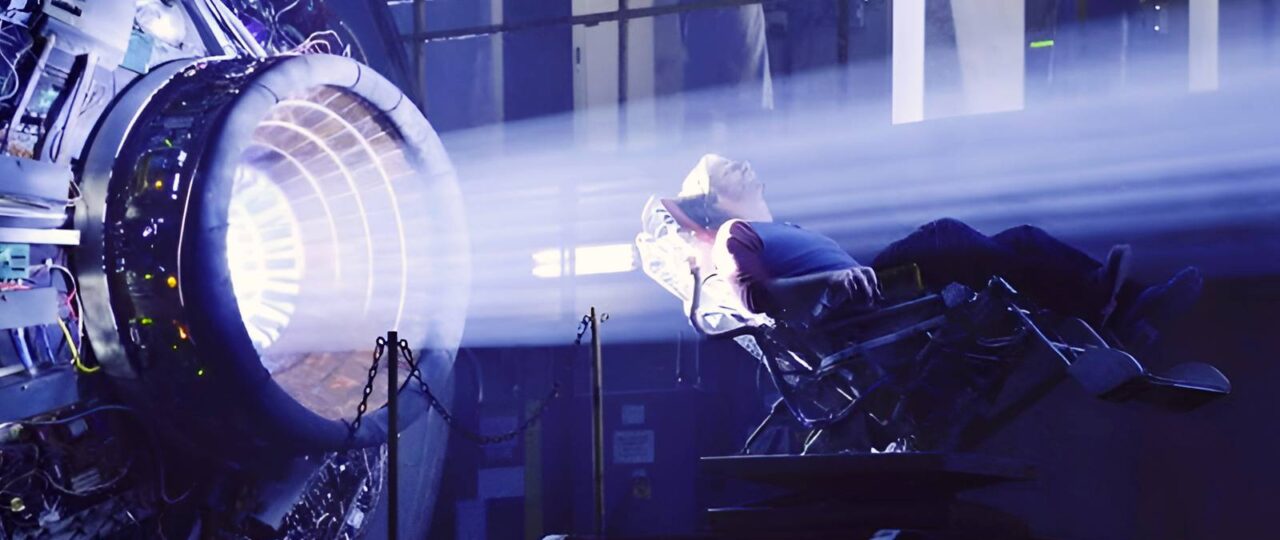
The fictional side of 12 Monkeys becomes all the more evident when it introduces concepts like “splintering.” It involves the disintegration of a person’s matter using a massive machine, which then reassembles them into a different. While this portrayal of time travel somewhat grounds itself in quantum mechanics concepts like entanglement, it is far from reality.
Even the show’s portrayal of how the destruction of time itself can completely eradicate the possibility of death is intriguing on paper but wildly speculative. Yet, the series finds creative ways to ground these ideas in some realism by portraying them as metaphorical debates between fate and free will.
12 Monkeys Is A Rare Example Of A TV Series & Movie Both Being Great
<<img src="https://static0.srcdn.com/wordpress/wp-content/uploads/2025/12/bruce-willis-james-cole-looking-confused-while-in-a-mental-institution-in-12-monkeys.jpg?q=49&fit=crop&w=825&dpr=2" />
</figure>
Interestingly, even 1995’s 12 Monkeys movie is loosely based on another short film from the ’60s, La Jetée. More often than not, remakes and reboots struggle to recreate the magic of their source material. However, both the 12 Monkeys show and the movie do an incredible job of borrowing from their predecessor and expanding their ideas to a massive scale.
Chris Marker’s La Jetée is more of an experimental short film that unfolds primarily through a series of still photographs. Starring Bruce Willis, Terry Gilliam’s 12 Monkeys makes a compelling plot device out of the “photographic story” from the short film, which becomes one of the biggest twists in the movie. At the same time, though, the movie also expands the short film’s vision by giving it a more apocalyptic scale.
The 12 Monkeys show then borrows the apocalyptic premise and basic time travel mechanics from the movie. With this, it gives the original story a hard sci-fi angle, where time is almost treated as a full-fledged physical dimension. Both the sci-fi movie and the Syfy series are perfect examples of how a reboot must evolve its source material instead of merely copying it.
In 2043, scavenger James Cole is sent into the past after a devastating plague wipes out billions of people. His mission leads him to virologist Cassandra Railly, whose future message links the outbreak to the mysterious Army of the 12 Monkeys. Working across different points in time, Cole and Cassie try to identify those responsible and prevent the catastrophe, only to uncover a conspiracy threatening far more than humanity’s survival.
Discover more from NAIRAVOICE.COM.NG
Subscribe to get the latest posts sent to your email.