

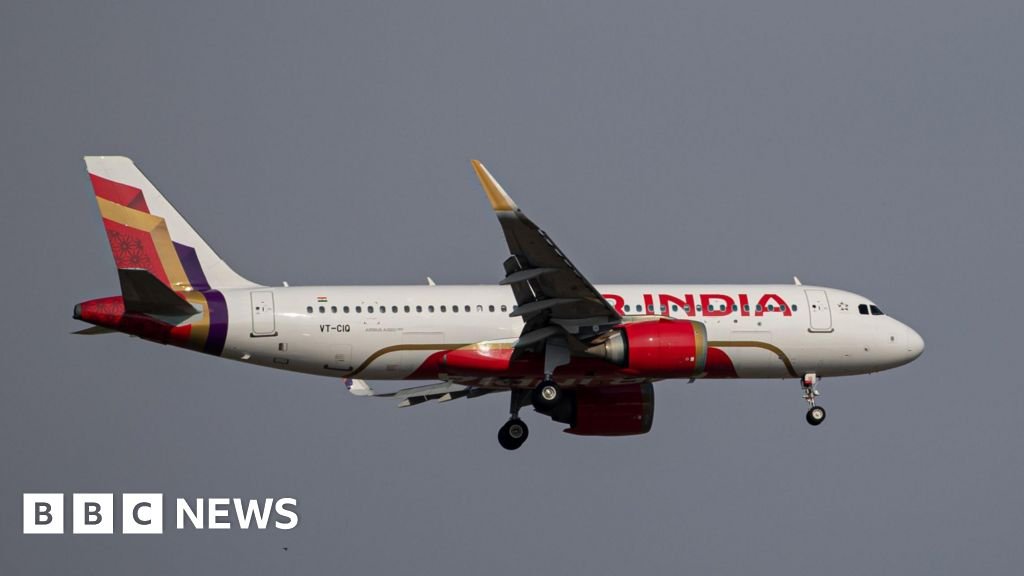
1 hour agoShareSaveAdd as preferred on GoogleNikhil Inamdar

 Hindustan Times via Getty Images
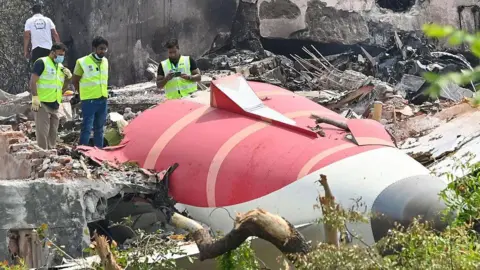
In under a month from now, India’s Aircraft Accident Investigation Bureau (AAIB) is expected to release its final report on the crash of London-bound Air India flight AI‑171 that went down seconds after take‑off from Ahmedabad in western India on 12 June 2025.
As the world awaits the findings on the devastating tragedy that claimed 260 lives, a cascade of formidable challenges has deepened the crisis at Air India.
A leadership vacuum, mounting financial losses, airspace closures and a Middle Eastern fuel shock have put the carrier’s ambitious turnaround into question. A spate of recent incidents have also cast a shadow on the safety and operational track record of the airline.
Last month, Air India’s chief executive officer, Campbell Wilson, resigned midterm as losses for the year ending March 2026 reportedly hit $2.4bn.
Air India is currently the biggest loss-making entity within the Tata Group – which took over the ailing carrier from the government in 2022 – and a point of growing consternation for the Tata board.
According to local media, the board met last week and is said to have discussed several cost-cutting measures and warned staff of “tough times”. The arrival of senior Singapore Airlines leadership at the group’s headquarters in Mumbai city in April, meanwhile, sparked talks of the latter deepening its involvement in the beleaguered carrier. Singapore Airlines is a 25.1% shareholder in Air India.
Air India said it would not comment on the BBC’s detailed questionnaire, but aviation experts say Wilson’s exit creates a void at a time when the airline desperately needs someone to steer it through the turbulence.
“They needed a clear vision right now. Air India had given itself a five-year plan to revamp itself after the privatisation. But one can’t really say that it’s been a happy ride so far. Between their plan and its implementation, there have been big and growing gaps,” Jitendra Bhargava, a former executive director at Air India, told the BBC.
 AFP via Getty Images
Bhargava points to internal and external factors that have compounded the airline’s troubles even as it tries to recover from the Ahmedabad crash.
He says the Tatas had “underestimated the problems they inherited with the legacy carrier”, and Wilson was unable to build a team quickly enough after coming in to set things in order.
Far from improving its brand image, Air India has had to continue answering for an array of embarrassing operational lapses and safety violations in the past year.
In March, its flight from Delhi to Vancouver was forced to return to the Indian capital after flying for nearly eight hours because it did not have regulatory approval to enter Canadian airspace.
Air India merely cited operational reasons for the goof-up but Alok Anand of Acumen Aviation consultancy, previously the head of maintenance for India’s first low-cost carrier Air Deccan, says this is “highly unusual and shows there was definitely a breakdown of process somewhere”.
Last year, India’s aviation regulator also uncovered 51 safety violations at Air India as part of its annual audit of the country’s airlines. Seven safety-related lapses were of the highest level.
Besides internal challenges, a worsening operating environment outside its control has also stymied performance.
The carrier was expected to induct dozens of new planes to its fleet, but deliveries are running late because of supply chain shortages, which has upended the replacement schedule.
Moreover, the number of routes it operates has contracted since 2024, with key services such as Delhi-Washington and Mumbai-San Francisco axed, something that is likely to have contributed to its revenue hit.
Another major issue has been the depreciation in the rupee. The Indian currency is down over 10% against the US dollar, which has been a “major challenge for the turnaround”, given that a large portion of costs of Indian airlines, including for fuel, are linked to the greenback, according to aviation analyst Mahantesh Sabarad.
 AFP via Getty Images
So, what next?
Sabarad says the Tatas and Singapore Airlines will have to step up and infuse more money into the carrier to fund the mounting losses. The $2.4bn figure, if correct, he says is comparable to the steep financial challenge the Tata Group faced after Tata Steel’s buyout of UK’s Corus Steel nearly two decades ago.
“Shareholder support is required. The Tatas didn’t give up then and have experience dealing with such scenarios… but they should start looking at innovative financing arrangements going forward,” he adds.
But things could get worse for Air India before they begin looking up in terms of its financial performance, says Anand.
“My guess is that the projected losses may be on account of payments made for refurbishments which they might have recognised and the costs and penalties paid to lessors after returning older planes, so these are legacy issues coming to the fore,” says Anand.
“The impact of the events of today, including high fuel costs, currency depreciation and route closures, will also be felt more acutely in the months to come.”
The ongoing conflict in the Middle East was a chance for Air India to make a greater dent in the international market, given that the stranglehold of the Gulf carriers has weakened.
But it is a missed opportunity given that availability of aircraft remains a big constraint for the airline.
Going ahead, what the final investigation into last year’s deadly crash potentially reveals will also determine how damaging the consequences will be for the airline and its reputation, say experts.
The liabilities for the carrier would have largely been covered, and no further financial surprises are expected, according to Sabarad.
However, from a reputational point of view, any potentially negative findings in the investigation could damage its image, which will take Air India a lot of effort to repair, he adds.
Follow BBC News India on Instagram, YouTube, X and Facebook.
Air India flight AI171 plane crashAviation safetyAviation accidents and incidentsAir travelIndia
Discover more from NAIRAVOICE.COM.NG
Subscribe to get the latest posts sent to your email.