

In over a decade as a health journalist, I’ve interviewed people about some deeply personal health experiences, but this was a first.
On a video call, Scott Hickle, CEO and cofounder of the startup Throne Science, held his phone up to the camera to show me a detailed diary of his bowel movements.
He pointed to a stretch of blue (“that’s healthy”), then an erratic jumble of colors — yellow (hard), orange (loose), blue again.
These were the findings from the smart camera in his toilet in early January, when he returned from Christmas break to the stress and buzz of preparing Throne’s launch. “Our whole thing is, first of all, let’s establish your baseline and then notice any significant deviations from that baseline,” Hickle told me.
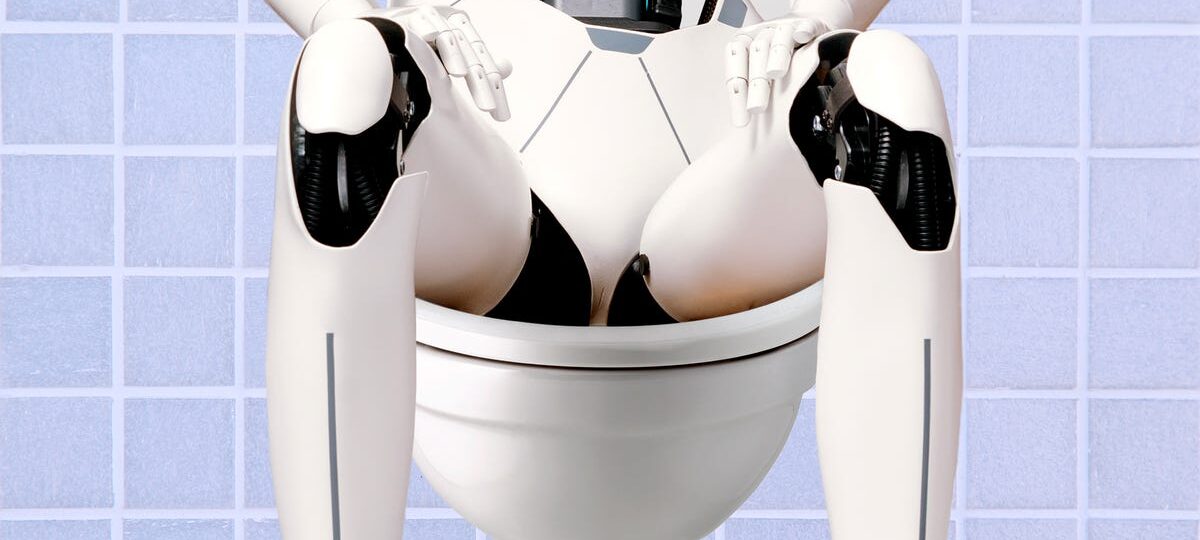
We’re in a toilet tech boom, moving beyond heated seats and bidets to health tracking.
In the last 18 months, industry giant TOTO launched Stool Scan in Japan, which uses LED technology to analyze stool consistency; wellness-tech startup Vivoo launched its Smart Toilet, which analyzes urine and hydration; and Throne shipped to customers and raised $10 million in a Series A funding round last week.
Brian Comiskey, senior director of innovation and trends at the Consumer Technology Association, said the category began taking off in 2023, driven by better sensors and AI, growing concern about digestive health, and the success of wearables.
But this is the year it has come into its own.
The technology appeals to gastroenterologists because patients are notoriously bad at remembering their bowel movements.
Consumers, meanwhile, are increasingly fascinated with gut health amid rising rates of colorectal cancer in younger people and widespread digestive disorders like IBS.
Still, while the technology is getting remarkably good at documenting what happens in the toilet, understanding why it happened — and what you should do about it — is another matter.
If you’re interested in tracking your toilet trips, you have a growing number of options.
Throne, a startup cofounded by WHOOP cofounder John Capodilupo, who has ulcerative colitis, sells a camera that clips onto the toilet bowl.
It analyzes stool consistency and urine color using AI trained with input from gastroenterologists, then maps trends in an app.
Users can also confer with an “AI gut health coach.” (The device uses proximity sensors to your phone to know that it’s you.
When you’re on vacation or at the office, you can manually enter your toilet data into the app.) TOTO’s Neorest models in Japan have built-in sensors that measure stool shape, consistency, color, and volume and relay the findings to an app.
The company aims to debut this model in the US in early 2027.
Kohler’s Dekoda is a clip-on optical sensor that screens stool for signs of blood and urine for signs of dehydration.
Vivoo’s Smart Toilet focuses primarily on urine and hydration.
Withings’ U-Scan uses a toilet-mounted device to analyze urine.
Comiskey traces the category’s evolution from more sophisticated bidets to early health-monitoring devices that relied on replaceable chemical cartridges.
The latest technology increasingly uses optical sensors, computer vision, and AI instead, reducing the intervention required from users.
For gastroenterologists, the ability to automatically create a diary is compelling. “You have your patient’s perception of what’s going on, but it’s nice to have some objective data to qualify that with,” Kyle Staller, a gastroenterologist at Massachusetts General Hospital and Harvard Medical School, said.
Brennan Spiegel, a gastroenterologist and director of health services research at Cedars-Sinai, agreed.
If a patient showed up with an electronic stool diary, “I would use it,” he said, particularly when changing medication or assessing a response to treatment.
Recording what happens in the toilet is one thing.
Currently, these devices offer basic lifestyle suggestions, such as eating more fiber or drinking more water.
Throne’s AI coach asks users about food, stress, travel, and sleep, and suggests correlations with their bowel habits.
Hickle’s pitch is that long-term tracking can establish an individual’s baseline and eventually help people understand how their bodies respond to changes in diet and lifestyle.
Its system can also look back over previous days for potential triggers, he said.
But this is where the science gets squishy.
Unless your smart toilet is synced with your smartwatch or ring, the AI will rely on your own selective recall of what’s influencing your digestive tract, which might be incomplete or off base.
Even with objective data, it can be a guessing game.
Stress, sleep, medications, travel, hormones, genetics, air quality, infections, and diet can all influence digestive health.
Microbiome research is still evolving, and researchers don’t yet know how to reliably translate sophisticated gut-health data into personalized recommendations.
Bowel habits also vary dramatically among healthy people.
There is no clear definition of “perfect gut health,” and a change in bowel frequency or consistency “could mean any number of things,” Spiegel said — maybe it’s an early sign of colon cancer, or simply that you haven’t been eating enough fiber lately. “There’s really no clear way right now that I’m aware of that’s been validated in the literature that these technologies can distinguish those two situations,” Spiegel said.
Staller sees real utility for people with constipation or IBS.
But for people without significant bowel problems, he worries constant tracking could encourage them to obsess over normal variation. “There’s a potential risk of someone who doesn’t have any issues becoming very obsessed with the data and focusing on things that aren’t necessarily important,” he said.
There is “still more data than what we know what to do with,” Staller added. “The hype is a little bit beyond the science at the moment.” There are settings where simply knowing something has changed could be useful.
Hickle sees potential in assisted-living and memory-care facilities, where residents may not reliably communicate changes in bowel habits, urination, or hydration.
Passive tracking could give caregivers an objective record and flag changes worth investigating.
For now, these smart toilets are wellness devices. “We’re not drawing any significant diagnostic outcomes on this.
It’s more of an awareness of your consistency and the trend line,” TOTO’s president of corporate strategy, Bill Strang, told Business Insider.
Using them to diagnose conditions such as colon cancer or digestive disorders would require FDA clearance, like any other medical test.
But that’s where the category is heading, Comiskey said.
There’s already precedent in wearables, where features such as atrial fibrillation detection have moved from consumer health tracking toward regulated medical applications.
Hickle is clear that this is Throne’s goal.
His shorthand for the long-term vision is that Throne could become a “smoke detector for colon cancer.” The company is developing multispectral imaging to look for microscopic blood and exploring sensors that could someday analyze gases and other biomarkers.
But detecting a signal and diagnosing its cause are very different things.
Spiegel said current technology could identify something visible, such as blood in a toilet.
What it cannot do is determine whether that blood came from hemorrhoids, menstruation, inflammatory bowel disease, or cancer.
If toilets eventually join watches, rings, and other sensors in constantly measuring our bodies, doctors will inherit another problem: what to do with all that information.
Cedars-Sinai has long allowed patients to connect wearable data to their electronic health records, Spiegel said.
But putting Fitbit or Oura data into a medical chart doesn’t tell a doctor how to interpret it.
Still, he thinks passive monitoring is part of medicine’s future.
He calls it “blended intelligence”: pairing AI’s findings with the judgment of human clinicians.
Toilets have an obvious edge over wearables: You have to use them.
As a TOTO spokesperson put it, you may forget to put on a wearable, but you won’t forget to go to the toilet — making it an “immediate and ongoing interface.” Comiskey expects adoption to be gradual.
It may feel out-there now, but in six to 10 years, he expects mass adoption.
New homes are already being built with smart toilets, he said, while clip-on devices will become smaller and easier to retrofit, with deeper AI integration and sensors capable of assessing both urine and stool. “The best technologies often disappear,” Comiskey said, paraphrasing computer scientist Mark Weiser. “They move seamlessly into everyday life.”
Discover more from NAIRAVOICE.COM.NG
Subscribe to get the latest posts sent to your email.