Perri Nemiroff takes us behind the scenes for a genre-packed lineup at Fantastic Fest 2026!
The stars and creatives for projects like Resident Evil, Victorian Psycho, and The Cycle stopped by Collider’s interview studio in Midnight Manor to celebrate the 21st annual festival.
Get all the exclusive details from every interview as Nemiroff digs into character chemistry, the filmmaking process, and a shared love for all things genre!
At this year’s 21st annual Fantastic Fest film festival in Austin, Texas, Collider’s Perri Nemiroff was boots on the ground to celebrate all things genre — horror, sci-fi, action, and everything in between! Each year, filmmakers, stars, and fans gather to champion cinema that pushes boundaries and lifts new voices. The festival spotlights original stories like Shudder’s The Cycle, starring Daredevil: Born Again‘s Deborah Ann Woll, and highly anticipated projects like Zach Cregger‘s Resident Evil.
While there, Nemiroff had the pleasure of sitting down with some of those teams to dig into the filmmaking process, from the initial spark of creativity down to the creature design and character development. If you weren’t able to make it out for Fantastic Fest, want the insider info on upcoming and current features and shows, or just want to relive all the fun, check out every movie and interview that stopped by Midnight Manor below!
Jessica Rothe Digs Into ‘Beware Boiúna’ Spoilers
If you haven’t seen Beware Boiúna (what are you doing?!), keep scrolling!
<<img src="https://static0.colliderimages.com/wordpress/wp-content/uploads/2026/09/beware-boiu-na-jessica-rothe-kiana-madeira-interview-1.jpg?q=49&fit=crop&w=825&dpr=2" />
Image by Jefferson Chacon</figure>
For Fantastic Fest’s opening night, attendees were treated to the world premiere of Mike P. Nelson‘s (V/H/S/85) creature feature, Beware Boiúna. Nelson returned to the festival after a secret world premiere of Silent Night, Deadly Night at last year’s Fantastic Fest, this time with an Amazonian force not to be reckoned with.
In the movie, scream queen Jessica Rothe (Happy Death Day) co-stars alongside Logan Marshall-Green (The Odyssey) and Kiana Madeira (the Fear Street trilogy) on a medical mission deep into the Amazon rainforest. Here, nature reigns supreme, and while navigating this dense jungle, the Boiúna, a massive ancient predator, awakens to put her domain back in balance.
In this interview with Nelson, Rothe, and Madeira, the trio discusses the movie’s nuanced characters, constructing intricate sets on location, and also dissect one of their most explosive set pieces. Nelson explains how he knew each of the film’s stars was perfect for his creature feature, saying:
“It was getting on those initial calls right off the bat. Obviously I knew Jessica from Happy Death Day, and those are my wife’s and my favorite movies. Those are movies that her and I can relate with. She doesn’t like all the stuff that I like, but when it came down to Happy Death Day, we were, like, totally fanning out. So when I got to have that call, and knowing Jess’s repertoire in horror and knowing that we were going to be doing some crazy things with her character in this movie, I was like, ‘God, this would be so freaking cool.’ And then, of course, she read the script, she talked to me, and she totally got it.
Kiana, very similar. It was just watching those Fear Street movies. I knew who Lena was, and I knew, based on what she did in Fear Street, I was like, ‘I need that edge,’ and I knew that you could bring that. Then, of course, I start talking to her, and you’re just so nice and just so bright, and so I’m like, ‘What’s happening here?’ But you got it, and that was the thing.
Same thing with Logan. It was really great conversations and understanding the gig, honestly. That was such a big part of this, and being able to have a conversation about convincing somebody to be in a giant snake, but literally having a real conversation about how we can make this movie different and unique and how it can be grounded in character, and every single one of them totally latched on and just went for the throat, and I was like, ‘Okay, that’s it. We’re in. You guys get it.'”
Rothe and Madeira also dig into their characters’ unexpected chemistry, the final showdown between Lena and Boíuna, and finally, the three of them share what creature features they’d love to revisit!
00:40 – Which Horror Movies Could the Beware Boiúna Team Survive?
02:43 – Why Beware Boiúna‘s Jessica Rothe, Kiana Madeira, and Logan Marshall-Green Were the Perfect Trio
05:06 – Madeira on Marshall-Green’s Unexpected and Nuanced Performance
06:03 – Rothe and Mike P. Nelson Recall the Intense Bar Scene
07:56 – Rothe Reveals Her Decades-Old Connection to Marshall-Green
09:27 – How the Team Built the Film’s Jungle Sets on Location
11:18 – Inside the Movie’s Explosive One-Take Set Piece
12:22 – Rothe on Alli’s Shocking Death and Her Horror Legacy
14:05 – Unexpected Chemistry Emerged on Set Between Alli and Lena
15:45 – Madeira on Rothe’s Unscripted Romantic Energy
16:57 – How Madeira Built Lena’s Silent Decision to Save Brennan
19:00 – Inside the Film’s Massive Amazon Mud-Pit Sequence
20:05 – Nelson and Madeira Decode Lena and Boíuna’s Final Stare-Down
21:26 – Lena’s Final Confrontation Has a Much Deeper Meaning
23:38 – Nelson Wants to Bring Pumpkinhead Into the Modern Folk-Horror Era
26:11 – Rothe Pitches a Yeti Movie About Monsters and the Darkness Within
The Real Story Behind ‘What Happened to Doris?’ Is Too Unbelievable to Ignore
The movie is based on the 1970s supernatural case of Doris Bither.
Image via Fantastic FestImage via Fantastic FestImage via Fantastic Fest
In recent years, actress Heather Graham has found her stride in the horror genre. Most notably, she acted opposite the legendary Barbara Crampton in Joe Lynch‘s Suitable Flesh (a Fantastic Fest 2023 premiere), stood her ground in the Western horror Place of Bones, and played a satanic cultist in this year’s bloody They Will Kill You. Now, she returns to the festival with a ’70s horror throwback, What Happened to Doris?, from director Nick Simon (Truth or Dare).
The movie is based on a chilling true story of one of the U.S.’s most documented paranormal cases in history. In it, Graham portrays Doris Bither, a single mom living in Los Angeles in 1974, when she begins enduring violent attacks from an invisible entity. When no one believes her claims, Doris reaches out to paranormal investigators for help, launching a famous supernatural investigation. What Happened to Doris? also stars Mimi Rogers (Ginger Snaps), Morgan Peter Brown (Ouija), Kevin Keppy (Smile), and Luke Baines (Truth or Dare).
What Happened to Doris?, according to Simon, is reverent to the supernatural aspects of Bither’s story, but the director says he was especially cognizant of repercussions outside of the ghost aspect as well, and explains why he was “terrified” to tackle this script:
“I was terrified. It’s a great question. I was absolutely terrified of this question because it’s like, how do you tell this story in 2026? The movie, The Entity with Barbara Hershey, was loosely based on this story, so we were like, ‘Okay, everybody knows what that is. That is sort of unremakeable now, so how do you tell this story today?’ And I think the fact that it scared me so much to try to do it was probably why I should have done it.
                <p>Then I think we went to really great lengths to be really sensitive to what story we were trying to tell. And really, it came down to what was so interesting is that nobody believed her, and she didn't want to talk about it. It wasn't like she was trying to go out and say, 'Oh, I have a ghost,' and get attention. She didn't want to talk about it. She really didn't know what else to do.</p>
                <p>I talked to her son in real life, the real son who we got the prints from, who said, 'The single biggest thing for my mom was to keep the family together because she was worried that somebody's gonna take the kids in real life.' She had four kids."</p>
        </blockquote>
“I was terrified. It’s a great question. I was absolutely terrified of this question because it’s like, how do you tell this story in 2026? The movie, The Entity with Barbara Hershey, was loosely based on this story, so we were like, ‘Okay, everybody knows what that is. That is sort of unremakeable now, so how do you tell this story today?’ And I think the fact that it scared me so much to try to do it was probably why I should have done it.
Then I think we went to really great lengths to be really sensitive to what story we were trying to tell. And really, it came down to what was so interesting is that nobody believed her, and she didn’t want to talk about it. It wasn’t like she was trying to go out and say, ‘Oh, I have a ghost,’ and get attention. She didn’t want to talk about it. She really didn’t know what else to do.
I talked to her son in real life, the real son who we got the prints from, who said, ‘The single biggest thing for my mom was to keep the family together because she was worried that somebody’s gonna take the kids in real life.’ She had four kids.”
At the festival, Graham, Simon, and Rogers stopped by Collider’s Midnight Manor to chat with Nemiroff about the eerie and unbelievable truth behind the story that inspired What Happened to Doris. They discuss readapting the details of 1982’s The Entity for a modern retelling without remaking something “unremakeable,” how Graham and Rogers created their on-screen bond, and the family’s story at the heart of this horror. Check out all of this, and Graham’s details on Flanagan’s Carrie series and her upcoming role in Mike White‘s hit HBO series, The White Lotus, in the video below, with time codes provided.
00:25 – The Cast Reveals Which Horror Movies They Could Survive
01:51 – Nick Simon Explains the True Story Behind What Happened to Doris?
02:37 – Simon on the Challenge of Bringing This Story to Modern Audiences
03:51 – Why Doris Bither’s Story Remained Overlooked for So Long
04:41 – Heather Graham and Mimi Rogers on What Drew Them to Their Roles
06:28 – Graham and Rogers Explore Doris and Dr. Ross’s Powerful Bond
08:04 – Graham on Balancing Doris’s Warmth, Humor, and Fear
09:05 – Rogers on Why the Family Story Makes the Movie More Emotional
09:42 – Simon Reveals the Real-Life Incident That Seemed Too Unbelievable to Be True
10:37 – Simon Breaks Down the Practical Effects Behind the Frying Pan Scene
10:53 – The Real Doris’s Photographs Influenced What Happened to Doris?
11:36 – The Cast Reflects on Their Belief in Doris’s Supernatural Experiences
13:03 – The Cast Share Who They Would Turn to If They Were Haunted
13:58 – The Cast Highlights the Movie’s Unsung Heroes
16:13 – How Mr. Whosit Evolved Into What Happened to Doris?‘s Terrifying Creature
17:23 – Simon Reveals the Nightmare That Inspired Mr. Whosit’s Baby Teeth
18:08 – Graham Discusses Working With Alison Thornton in Mike Flanagan’s Carrie
18:56 – Graham on The White Lotus, Her 10-Minute Monologue, and Chris Messina’s Performance
How This $100K Fantastic Fest Pitch Became a Twisted Horror Movie
Play House is an original horror that takes inspiration from sources like Mr. Rogers’ Neighborhood.
<
Image via Fantastic Fest
From first-time co-writer and director Nicolas Curcio and the producers behind M3GAN and Black Phone, Play House is a particularly proud gem for Fantastic Fest as it is the inaugural winner of Fantastic Pitches, which launched just last year. The competition invites new filmmakers to pitch their original ideas to earn a $100,000 prize towards funding a micro-budget genre film.
The pitch that won the hearts of the jury follows Elliot (Will Harrison), who purchases a dilapidated house in hopes of impressing his ex and proving that he really can be a serious adult. While doing renovations on the house, Elliot discovers a collection of VHS tapes of a mysterious, unaired children’s TV show down in the basement. At first, he writes it off as a disturbing but harmless DIY program, but the tapes quickly send Elliot into a maddening spiral of obsession, indicating the house itself may be hiding a sinister past. Play House also stars Jessica Sula (Malum), Jordan Gonzalez (The Long Walk), and James Urbaniak (Oppenheimer).
“We basically started pre-production while we were still at the festival. We stayed the entire time. It was a celebration. It was great. But the next morning there were producers in the bar with us helping. They actually ended up being our EPs, Adam [Hendricks] and Greg [Gilreath]. But at the time, they were just… The horror community just wants to help. So people at the festival were like, ‘Oh, I’m going to make a call for you. I’m going to do this for you.’ People were helping us while we were here, and we started literally making it while we were here.
                <p>In terms of the timing, I mean, everything was really hard, but it's my first film, so I just tried to hire amazing people and great actors, and I leaned on everybody else."</p>
        </blockquote>
“We basically started pre-production while we were still at the festival. We stayed the entire time. It was a celebration. It was great. But the next morning there were producers in the bar with us helping. They actually ended up being our EPs, Adam [Hendricks] and Greg [Gilreath]. But at the time, they were just… The horror community just wants to help. So people at the festival were like, ‘Oh, I’m going to make a call for you. I’m going to do this for you.’ People were helping us while we were here, and we started literally making it while we were here.
In terms of the timing, I mean, everything was really hard, but it’s my first film, so I just tried to hire amazing people and great actors, and I leaned on everybody else.”
Harrison, Urbaniak, and Gonzalez joined Curcio to chat with Nemiroff about the collaborative experience of filming Play House. They discuss everything from the real-life inspiration to how Mr. Rogers’ Neighborhood inspired Urbaniak’s approach to Mr. Morton, and building on and off-screen chemistry. Check out the video below, with time codes provided, for more behind-the-scenes details and which childhood movies and characters traumatized this team to this day!
00:35 – The Play House Team Reveals Which Horror Movies They Think They Could Survive
02:45 – Nicolas Curcio Explains the Twisted Premise Behind Play House
03:10 – These Childhood Movies and Characters Terrified This Team
05:09 – How Abandoned Caltrans Houses Inspired Play House
06:18 – Winning Fantastic Fest’s Fantastic Pitch Turned Play House Into Reality
07:25 – The Cast Praises Curcio’s Collaborative Leadership
08:25 – James Urbaniak Reveals the ADR Note That Helped Him Find Mr. Morton
11:21 – Jordan Gonzalez Reveals How Improvisation Shaped Play House‘s Montage
12:38 – Will Harrison and Gonzalez Discuss Creating a Believable On-Screen Friendship
13:23 – The Cast Recalls the Table Read That Confirmed Their Chemistry
14:04 – Harrison Reflects on Leading His First Feature Film
15:08 – The Cast Reveals Their On-Set Vices During the Grueling Shoot
15:47 – Mr. Rogers Helped Urbaniak Find the Logic Behind Mr. Morton
17:30 – Why Play House Filmed Its Creepy Children’s Show Before Principal Photography
18:42 – How Play House‘s Eerie Puppets Evolved From Concept to Screen
19:45 – The Team Shines a Spotlight on the Film’s Unsung Heroes
How ‘The Shining’ Inspired Maika Monroe’s ‘Victorian Psycho’ Performance
“She has this quality…and I thought that would be perfect for a serial killer.”
<
Image via True Brit Entertainment
Winifred Notty is not your average Persuasion-esque Victorian governess. No, Miss Notty, played by scream queen Maika Monroe, is the Victorian Psycho of your nightmares. Along with big titles like Resident Evil and Carrie, director Zachary Wigon‘s (Sanctuary) third feature was a highly anticipated screening with a twisted take on a period piece.
In the movie, the Pounds family’s new governess, Winifred Notty, is unlike any lady these kids have ever met. When she arrives at their Gothic manor, she’s blunt, eccentric, and off-putting, but that isn’t the worst of it. An unsettling string of events unfolds, leading the Pounds to question who their new governess truly is, and the answer may be more dangerous than they anticipate. Victorian Psycho also stars Thomasin McKenzie (The Testament of Ann Lee), Ruth Wilson (I Am the Pretty Thing That Lives in the House), Jason Isaacs(A Cure for Wellness), Evie Templeton (Return to Silent Hill), and Jacobi Jupe (Hamnet).
While at Fantastic Fest, Wigon stopped by the Midnight Manor to chat with Nemiroff about the unnerving element of screenwriter Virginia Feito‘s script that first convinced him Victorian Psycho had to be put to screen. He also discusses collaborating with Monroe and how her real-life demeanor and personal influences shaped Miss Knotty:
“Every actor has a unique sense of characteristics and a unique sensibility that they bring to the screen, and if you’re trying to create a character who’s really three-dimensional and vivid, you’ve got to be working very specifically with what that specific actor does. So in other words, it’s not like you are having a specific bullseye in mind for the character, and then you just want the actor to do that. The character is three-dimensional. It’s not fully formed until the actor’s cast, and then there’s a sort of like synergistic process of understanding what the character needs, what the story needs the character to represent, and what the actor is naturally bringing to the role. So, each actor’s going to bring something different and specific.
                <p>What Maika brought to it that was so essential was Maika has this very kind of internal quality about her. She has this quality where you're looking at her, and you know that there's something going on in her head, but you can't quite ascertain exactly what it is, and I thought that would be perfect for a serial killer. So when I was shaping the film with Maika, I was thinking about that quality, and then thinking about giving her the opportunity to push in the opposite direction with the more manic and expressionistic style of performance that the role was going to need.</p>
                <p>Luckily, I had read that Michael's favorite actor is Jack Nicholson, and I had thought a lot about Jack Torrance in conceptualizing the sort of manic quality of the character of Winifred."</p>
        </blockquote>
“Every actor has a unique sense of characteristics and a unique sensibility that they bring to the screen, and if you’re trying to create a character who’s really three-dimensional and vivid, you’ve got to be working very specifically with what that specific actor does. So in other words, it’s not like you are having a specific bullseye in mind for the character, and then you just want the actor to do that. The character is three-dimensional. It’s not fully formed until the actor’s cast, and then there’s a sort of like synergistic process of understanding what the character needs, what the story needs the character to represent, and what the actor is naturally bringing to the role. So, each actor’s going to bring something different and specific.
What Maika brought to it that was so essential was Maika has this very kind of internal quality about her. She has this quality where you’re looking at her, and you know that there’s something going on in her head, but you can’t quite ascertain exactly what it is, and I thought that would be perfect for a serial killer. So when I was shaping the film with Maika, I was thinking about that quality, and then thinking about giving her the opportunity to push in the opposite direction with the more manic and expressionistic style of performance that the role was going to need.
Luckily, I had read that Michael’s favorite actor is Jack Nicholson, and I had thought a lot about Jack Torrance in conceptualizing the sort of manic quality of the character of Winifred.”
Wigon also shares his passion for Stephen King and the horror movie he’s confident he could survive! Check it out in the video below, with time codes provided.
Zach Cregger Reveals How a Last-Minute Change Saved the Ending of ‘Resident Evil’
On a scale of Marty McFly to Kevin McCallister, where would you fall in Resident Evil?
Image via Columbia Pictures
Image via Sony
Image via Columbia Pictures
Image via Columbia PicturesImage via SonyImage via Columbia Pictures
One of the biggest titles at Fantastic Fest this year was Cregger’s Resident Evil. Since it was first announced that the Weapons writer-director would be helming, genre fans have been chomping at the bit to see his take on the beloved video game franchise. Before its theatrical and IMAX release on September 18, Nemiroff had the opportunity to sit down with Cregger and star Austin Abrams (Weapons) to discuss the vision and final cut, and fair warning: spoilers below!
Cregger has gone on record saying that his intention with Resident Evil was never to tell a story from the games, but rather create a pulse-pounding big-screen experience that captures the feeling of surviving in the games. In the movie, Abrams plays Bryan Hodukavich, a medical courier on a late-night run to deliver a package to a remote hospital. Soon, however, Bryan finds himself desperately fighting for his life against hordes of mutated creatures — a fight we now know was futile.
At the Midnight Manor, Cregger and Abrams joined Nemiroff to discuss all things Resident Evil, including the major change they made to the original ending. While discussing the audience’s connection to Bryan’s journey throughout and his fight for the cure, Cregger reveals that that wasn’t how it was supposed to end:
“It’s crazy what we did. So we ended up pivoting well after wrap and kind of coming up with a new order of events. I felt like we weren’t seeing Austin enough in the fog. In the original version, once he yanks that lady up into the ceiling, you really don’t see him again until he comes out. I was like, ‘We miss our guy.’
                <p>So, we shot on the stage in LA called Scanline, and basically it's like a dome of, like, a thousand cameras that render you in a 3D surface. So he acted that whole scene out in there, where he's transforming, and then we took that 3D rendering of him, and I put the camera in post where I wanted it to be, and we were able to build all this stuff coming out of him there. So, all of his monster stuff is just him with a hairnet on in LA in Scanline kind of acting all that stuff out, and then Wētā going in and turning him into the monster. So, that was really cool to use this. It's new technology, and it's pretty great."</p>
        </blockquote>
“It’s crazy what we did. So we ended up pivoting well after wrap and kind of coming up with a new order of events. I felt like we weren’t seeing Austin enough in the fog. In the original version, once he yanks that lady up into the ceiling, you really don’t see him again until he comes out. I was like, ‘We miss our guy.’
So, we shot on the stage in LA called Scanline, and basically it’s like a dome of, like, a thousand cameras that render you in a 3D surface. So he acted that whole scene out in there, where he’s transforming, and then we took that 3D rendering of him, and I put the camera in post where I wanted it to be, and we were able to build all this stuff coming out of him there. So, all of his monster stuff is just him with a hairnet on in LA in Scanline kind of acting all that stuff out, and then Wētā going in and turning him into the monster. So, that was really cool to use this. It’s new technology, and it’s pretty great.”
He continues, discussing how important that tethering to Bryan is:
“One of the missteps I made early on was not doing that, and so we reorganized the chain of events. Thank God I shot for this as a contingency plan. It was like my Plan B. Originally in the script, that scientist pulls the needle out. As soon as Austin grabs the woman’s face, he drops it, and it shatters, and then the rest of the movie is just Austin killing the scientists. People were just like, ‘No! It’s over.’
                <p>But I shot that shot of the scientist putting the needle in his pocket just because I had a feeling. I was like, 'I feel like I'm going to need that.' So then we were able to build a new sequence of the end. I shot a contingency of him going for the stab in Prague when we were doing our thing as just, like, 'If I need it, I should just get it,' and <em>thank God</em>, because that's what we ended up using. Because it keeps the stakes all the way until the end. It's like, 'Save him, save him!' Whereas before it was just like, 'Kill them, I guess? Kill them all.' I don't know."</p>
        </blockquote>
“One of the missteps I made early on was not doing that, and so we reorganized the chain of events. Thank God I shot for this as a contingency plan. It was like my Plan B. Originally in the script, that scientist pulls the needle out. As soon as Austin grabs the woman’s face, he drops it, and it shatters, and then the rest of the movie is just Austin killing the scientists. People were just like, ‘No! It’s over.’
But I shot that shot of the scientist putting the needle in his pocket just because I had a feeling. I was like, ‘I feel like I’m going to need that.’ So then we were able to build a new sequence of the end. I shot a contingency of him going for the stab in Prague when we were doing our thing as just, like, ‘If I need it, I should just get it,’ and thank God, because that’s what we ended up using. Because it keeps the stakes all the way until the end. It’s like, ‘Save him, save him!’ Whereas before it was just like, ‘Kill them, I guess? Kill them all.’ I don’t know.”
❤Enjoying this article? Support our work with a small crypto donation.
Support Our Work
Your donation, in crypto, helps us keep going.
The pair also detail their brutal production, from the snowy night shoots in Prague to the stages in L.A., where Cregger was able to fine-tune the ending after their pivot from the original final sequence. They discuss the backstory and on-the-spot decisions that make up Abrams’ performance, the art of the jump scare, and designing the movie’s monsters, including the grotesque Human Tumbleweed. Don’t miss a moment! Check out the video below, with time codes provided.
00:47 – Zach Cregger on Making the Resident Evil Movie He Always Wanted to See
01:55 – Austin Abrams on Finding His Character’s Messy Physicality
03:13 – How Character Backstory Gives Abrams’ Performance Emotional Gravity
04:41 – Abrams Discusses His Character’s Uninhibited Screams
05:48 – Cregger Breaks Down Abrams’ “McFly to McCallister” Performance Scale
07:11 – Cregger and Abrams on the “Jump Street” Sequence and Resident Evil‘s Most Challenging Set Pieces
10:05 – Cregger Digs Into How Resident Evil Blends Practical and Visual Effects
12:56 – Abrams Outs the Biggest Monster “Divas” on the Resident Evil Set
13:53 – The Resident Evil Dog Was Surprisingly Difficult to Film (But a Very Good Boy!)
14:56 – Cregger Reveals His Secret to Crafting the Perfect Jump Scares
16:21 – Cregger Pinpoints His Favorite Frame From Resident Evil
16:50 – How Did Resident Evil Pull Off Abrams’ Transformation Into a Monster?
17:34 – A Last-Minute Contingency Plan Saved Resident Evil‘s Ending
19:51 – These Moments Made Making Resident Evil a Joy to Make
‘The Cycle’s Deborah Ann Woll on Practical Effects and the Craigslist Search for a Corpse
The team honors the late Graham Mackie.
<
Before its Shudder debut on October 23, Jordan Downey‘s (V/H/S/Beyond) new psychological thriller, The Cycle, made waves at this year’s Fantastic Fest. The movie stars Deborah Ann Woll, best known for her roles in shows like Daredevil and True Blood, as a forensic investigator called to the scene of her estranged father’s mysterious death.
The Cycle is written by Downey and writing partner Kevin Stewart (The Head Hunter), and follows Meg (Woll) as she learns of her father’s death after nearly four decades of being MIA. The crime is horrific, and the more Meg uncovers to get to the truth, the more her father’s past begins to unravel in alarming and gruesome detail. The movie also stars Jeffrey Donovan (Burn Notice), Will Hochman (Blue Bloods), and Don Keith Opper (Critters).
In this interview, Nemiroff chats with Downey, Woll, and Donovan about how the co-writer and director combined a supernatural hook with a police procedural for The Cycle‘s original premise, and how they prioritized the art of practical effects, plus personal research for the authenticity of Woll’s character.
As a last-minute and completely unexpected element of the film, actor Graham Mackie was enlisted through a spur-of-the-moment Craigslist ad in search of a nude model. Downey explains how the search came about, and also honors the memory of Mackie, who helped make The Cycle what it became, but passed before its release:
“This is a fascinating story. The corpse in the script is not written to be anything other than a believable human corpse. However, because it’s a supernatural movie, I think there’s a little bit of leeway with the design of that, having just a little lift above what’s believable medically.
                <p>But Patrick Magee, who spearheaded all of the practical effects of the film, including the corpse, early on in my mind, I'm thinking he's going to just sculpt a human body, and at some point he's like, 'Well, yeah, but it's always way better if we life cast someone.' And then it dawns on me, this is only like four weeks before he needs to start doing it, so I'm like, well, we have to life cast someone who's in his 60s, full nude, and he's got to go into this shop over the weekend. So I post an ad on Craigslist looking for: 'Male nude model.'"</p>
        </blockquote>
“This is a fascinating story. The corpse in the script is not written to be anything other than a believable human corpse. However, because it’s a supernatural movie, I think there’s a little bit of leeway with the design of that, having just a little lift above what’s believable medically.
But Patrick Magee, who spearheaded all of the practical effects of the film, including the corpse, early on in my mind, I’m thinking he’s going to just sculpt a human body, and at some point he’s like, ‘Well, yeah, but it’s always way better if we life cast someone.’ And then it dawns on me, this is only like four weeks before he needs to start doing it, so I’m like, well, we have to life cast someone who’s in his 60s, full nude, and he’s got to go into this shop over the weekend. So I post an ad on Craigslist looking for: ‘Male nude model.'”
“He didn’t know anyone. He does creature stuff, but this is a rare type of person that you would need. So, I go on Craigslist, I get way more pictures in my inbox than I need to see pitching themselves for this role.
                <p>Finally, some random person responds to the ad and they say, 'Hey, I'm not your guy, but I know who is. His name's Graham Mackie. Look him up on Facebook.' And so I write this guy named Graham Mackie, who is kind of an old-school actor. He's been in a lot of low-budget movies and things. I get ahold of him, and he's like, 'Yep.' And he looks perfect. He looks kind of similar to who we were going to cast, David Myers Gregory, to play Peter Stump. So, I get ahold of Graham, he takes a bus there, and he does this whole thing.</p>
                <p>Sadly, Graham passed away in the past year, so he'll never get to see it or to know. I don't think he realized what this was going to become, but he's in there all day, smearing the gunk all over. So he is that corpse. He is the corpse."</p>
        </blockquote>
“He didn’t know anyone. He does creature stuff, but this is a rare type of person that you would need. So, I go on Craigslist, I get way more pictures in my inbox than I need to see pitching themselves for this role.
Finally, some random person responds to the ad and they say, ‘Hey, I’m not your guy, but I know who is. His name’s Graham Mackie. Look him up on Facebook.’ And so I write this guy named Graham Mackie, who is kind of an old-school actor. He’s been in a lot of low-budget movies and things. I get ahold of him, and he’s like, ‘Yep.’ And he looks perfect. He looks kind of similar to who we were going to cast, David Myers Gregory, to play Peter Stump. So, I get ahold of Graham, he takes a bus there, and he does this whole thing.
Sadly, Graham passed away in the past year, so he’ll never get to see it or to know. I don’t think he realized what this was going to become, but he’s in there all day, smearing the gunk all over. So he is that corpse. He is the corpse.”
For more on the film, plus which horror movies the trio thinks they could survive, don’t miss the full interview in the video below, with time codes provided.
00:54 – The Cycle Team Reveal Which Horror Movies They Could Survive
01:50 – How The Cycle‘s Central Idea Evolved Into a Supernatural Police Procedural
03:26 – Jordan Downey Discusses Practical Effects and the Challenge of Directing His Largest Cast
04:49 – Deborah Ann Woll and Jeffrey Donovan Praise Downey’s Collaborative Direction
07:14 – Woll Researched to Convincingly Portray a Forensic Anthropologist
09:00 – Donovan on Developing His Character’s Restraint and Relationship With His Son
10:40 – Downey Recounts a Wild Craigslist Search for the Film’s First Corpse
13:38 – Working With the Film’s Practical Corpse Was a Hands-On Experience
15:00 – Woll Reflects on Finally Seeing the Finished Film
15:20 – Downey Shares Advice for Filmmakers Tackling Practical Effects
16:21 – Woll and Donovan Spotlight the Art of Practical Effects
17:43 – The Trio Share Their Horror Franchise Dreams!
Legendary Director Walter Hill Says Filmmakers Must Fight to Tell the Stories They Want
“Tell it in a way that’s hopefully unique to your personality.”
Walter Hillis a screenwriter, producer, and director who made a name for himself as the filmmaker of the cult hit The Warriorsand as a producer on Ridley Scott‘s horror classic Alien that very same year. He remained a driving force behind the entire Alien franchise over the years, and this summer, he hit the streets of Austin, Texas, for Fantastic Fest 2026 to discuss his personal storied history in the business with Nemiroff.
Hill’s name has been synonymous with genre since his career began. In addition to helming 1975’s boxing drama Hard Times and many other action features, Hill wrote and directed episodes of the horror series Tales from the Crypt and earned an Emmy Award for his direction on the critically acclaimed Western series Deadwood. But by far, Hill’s contribution to the horror genre has been serving as a producer on the original Alien films, all the way through to his involvement with Prometheusand Alien: Romulus. Next, Hill is serving as a producer in the highly anticipated upcoming sequel to Fede Álvarez‘sacclaimed Romulus.
At the festival, Nemiroff had the pleasure of sitting down with Hill to discuss his career and what it means to him to receive a Lifetime Achievement Award during Fantastic Fest’s opening weekend, and shares advice for aspiring filmmakers. When asked about how a young writer or director can make their own mark on the industry, Hill said:
“Tell the stories you’re most interested in that will reflect your personality. I mean, what’s the point of all this other than a mechanical approach to the work? It’s the personal element. It’s that the story you tell reflects your taste, and you tell it in a way that’s hopefully unique to your personality.
                <p>Storytelling, I think, from the time that human beings lived in caves and sat around the fire at night, they had a storyteller, and he or she was probably an exaggerator, and that qualifies you to be a film director on the whole. But tell the stories in what seems to you to be the correct manner.</p>
                <p>Usually the financial people distrust when you get out of the box a little late. There's usually pressure on filmmakers to, what I call, 'homogenize' the product, and you have to resist that."</p>
        </blockquote>
“Tell the stories you’re most interested in that will reflect your personality. I mean, what’s the point of all this other than a mechanical approach to the work? It’s the personal element. It’s that the story you tell reflects your taste, and you tell it in a way that’s hopefully unique to your personality.
Storytelling, I think, from the time that human beings lived in caves and sat around the fire at night, they had a storyteller, and he or she was probably an exaggerator, and that qualifies you to be a film director on the whole. But tell the stories in what seems to you to be the correct manner.
Usually the financial people distrust when you get out of the box a little late. There’s usually pressure on filmmakers to, what I call, ‘homogenize’ the product, and you have to resist that.”
In this interview, which you can watch in the video below, with time codes provided, Hill also reflects on the stories he wanted to tell and the people who influenced him along the way.
Kid Cudi Says ‘Pathetic Fallacy’ Gave Him a Role Unlike Anything He’d Ever Played
He also shares exciting details on his upcoming directorial ventures.
<
Image via Fantastic Fest
Pathetic Fallacy is a new indie horror from director Adam Mortimer (Daniel Isn’t Real) that celebrated its world premiere in Austin at Fantastic Fest 2026. The movie marks Mortimer’s return to the big screen after six years, and is penned by Andrew Barrer and Gabriel Ferrari (Transformers One, Ant-Man and the Wasp), about the lengths one man is willing to go to get the love of his life back, all shot on 35mm.
While grieving the loss of his wife, a widower, played by Scott “Kid Cudi” Mescudi (Ti West’s X) in his first-ever leading role, retreats to a mountain town in search of healing and cosmic answers. On his journey, the man encounters a murderer and a forest of demonic spirits, and is faced with a dangerous offer: the ability to cheat death — at a cost. Pathetic Fallacy also stars Jessica Rothe (Happy Death Day), Natasha Lyonne (Poker Face), and Richard Harmon (Final Destination: Bloodlines).
When asked what it was about Pathetic Fallacy that appealed most to the stars, Mescudi explained to Nemiroff that beyond being a starring role, this story was unlike anything he’d ever experienced as an actor or a fan of horror.
“This was my first lead role. I’ve been acting for quite a long time, and this is the first time I’ve got a chance to play a character with so many different parts of them. I’ve played supporting characters, I’ve done things like this, but there’s no real arc. It’s not like I really get a chance to really explore the character. Asher just has so many different beats that he goes through throughout the movie, emotional beats that, for me, that’s the shit that excites me because no one has ever sent me a script like that. I never get those roles, right?
                <p>I remember I got the script from Steven Schneider, and after I read it, I texted him, and I was like, 'Yo, you saying I can have this? If I want this, this is my movie?' He's like, 'If you want it, this is your movie.' And I was like, 'I want to do this. I want to meet with Adam.'</p>
                <p>Because reading the script, I had just never read anything… Putting myself outside of it as an actor, if I wasn't even in this movie, just as a fan of horror, I had never read anything quite like this. We know as actors that it's very rare to get a script that's giving you all the things that you want, that's allowing you to work in ways that you've never worked before. Especially when you've been doing it so long, it's almost like you're like, 'What else can I be challenged on? Because I've done so many roles.' But this is exciting because it's like, oh, wow, there's still creative, original ideas out there, and that's what really got me, man."</p>
        </blockquote>
“This was my first lead role. I’ve been acting for quite a long time, and this is the first time I’ve got a chance to play a character with so many different parts of them. I’ve played supporting characters, I’ve done things like this, but there’s no real arc. It’s not like I really get a chance to really explore the character. Asher just has so many different beats that he goes through throughout the movie, emotional beats that, for me, that’s the shit that excites me because no one has ever sent me a script like that. I never get those roles, right?
I remember I got the script from Steven Schneider, and after I read it, I texted him, and I was like, ‘Yo, you saying I can have this? If I want this, this is my movie?’ He’s like, ‘If you want it, this is your movie.’ And I was like, ‘I want to do this. I want to meet with Adam.’
Because reading the script, I had just never read anything… Putting myself outside of it as an actor, if I wasn’t even in this movie, just as a fan of horror, I had never read anything quite like this. We know as actors that it’s very rare to get a script that’s giving you all the things that you want, that’s allowing you to work in ways that you’ve never worked before. Especially when you’ve been doing it so long, it’s almost like you’re like, ‘What else can I be challenged on? Because I’ve done so many roles.’ But this is exciting because it’s like, oh, wow, there’s still creative, original ideas out there, and that’s what really got me, man.”
At the festival, Nemiroff spoke with Mortimer, Mescudi, and Rothe about the long road of production for this “psychedelic musical odyssey,” from casting to finding the chemistry on and off-screen together. The trio explores Pathetic Fallacy‘s crucial musical elements and the small details that make a big impact, plus Kid Cudi discusses his filmmaking ambitions behind the camera with two upcoming projects as writer and director, Doe and Wrong Number. Don’t miss the full conversation in the video below, with time codes provided.
‘Kung Fu Deadly’ Mixes Irish Culture With Chinese Vampire Lore
The movie stars YouTuber Steven He.
<
Image via Fantastic Fest
Joining the lineup at this year’s Fantastic Fest is director Fergal Costello‘s (Where It Ends) action comedy, Kung Fu Deadly. The movie stars YouTuber and actor Steven He (Ginormo) and Gemma Chua-Tran (Heartbreak High) in an unpredictable romp where martial arts meets the supernatural.
In the movie, Danny (He) and Frank (Michael Tient) run a small pest control company in Dublin, where their relatively mundane lives are upended when a gang of Chinese criminals attempts to reanimate a Jiangshi. The scheme shouldn’t involve them at all, but Lien (Chua-Tran), a Taoist guardian, recognizes that Danny is actually descended from a line of guardians himself, and enlists his help — despite Danny’s utter lack of training. But Danny and Frank do know one thing: Extermination!
At the festival, Nemiroff sat down with He, Chua-Tran, Costello, and Finola Xie (Insidious: Out of the Further) to chat about Kung Fu Deadly. In this interview, they discuss bringing Paddy McDonald‘s (Shrooms) vision to screen, the stunt-heavy shoot, the costume designs, and filming in Dublin. Particularly on filming in Dublin, Costello shares why he was honored to work on the film, and the surprising influences behind McDonald’s script that made this production that much more special:
“What I thought was interesting was I came into it and Paddy’s script was already kind of ready to go. What I was excited about was making a film set in Ireland, in the city where I lived, and that it was referential to Mr. Vampire, Big Trouble in Little China, and Encounters of the Spooky Kind, and I had never seen that mash-up before — certainly never set in Ireland…Just the idea of setting this story with this kind of culture, a multicultural story told by a multicultural crew in Dublin, that was just such a rare opportunity. Like, it never happens, and it was just tremendously exciting to get on board with that.”
</blockquote>
“What I thought was interesting was I came into it and Paddy’s script was already kind of ready to go. What I was excited about was making a film set in Ireland, in the city where I lived, and that it was referential to Mr. Vampire, Big Trouble in Little China, and Encounters of the Spooky Kind, and I had never seen that mash-up before — certainly never set in Ireland…Just the idea of setting this story with this kind of culture, a multicultural story told by a multicultural crew in Dublin, that was just such a rare opportunity. Like, it never happens, and it was just tremendously exciting to get on board with that.”
The crew also share the horror movie franchises they’d love to join, plus Xie pitches her Insidious character’s spin-off, and more!
00:39 – The Cast Reveals Which Horror Movies They Think They Could Survive
03:52 – Fergal Costello Gives a Brief Synopsis of Kung Fu Deadly
04:41 – Costello on Bringing His Perspective With the Theme of Brotherhood
05:59 – Steven He Reflects on How the Pandemic Rerouted His Acting Career
07:38 – He Discusses His Evolving Acting Career and Plans to Expand His YouTube Channel
08:26 – The Team Discusses the Rare Combination of Kung Fu Action, Horror, and an Irish Setting
09:10 – Costello Explains Why Setting the Film in Dublin Was Important to Him
10:25 – Gemma Chua-Tran on Designing Her Character’s Signature Suit
12:23 – Finola Xie Recalls Seeing Her Elaborate Costume and Prosthetics for the First Time
13:49 – Costello Explains How the Team Developed the Supernatural Creatures’ Designs
15:18 – Xie Discusses Her Stunt Training and Performing Her Own Wire Work
17:30 – Xie Explains How Her Heavy, Restrictive Costume Affected Her Stunt Work
18:00 – He Says Michael Tient Was the Perfect On-Screen Partner
19:28 – Chua-Tran on Working With Max Huang and His Comedic Talents
21:05 – Kung Fu Deadly Is Chua-Tran’s First Major Stunt-Heavy Project
22:08 – Chua-Tran Teases What Makes Jim Nichols’ Gundam Uniquely His
22:59 – He and Chua-Tran Discuss Costello’s Instinct to Prioritize “Cool” Shots
24:37 – Xie Teases Her Brief Experience Working on J.T. Mollner’s Skeletons
25:52 – The Cast Picks the Horror Franchises They’d Love to Join
26:40 – Xie Pitches Her Insidious Spin-Off
Robert Pattinson Wanted to “Obliterate Himself” in A24’s ‘Primetime’
“He’s a very important, powerful… One of the best actors of our time.”
Image via A24
Image via A24
Image via A24
Image via A24Image via A24Image via A24
One of Fantastic Fest 2026’s most anticipated screenings was A24’s Primetime, starring Robert Pattinson(The Odyssey), who portrays journalist Chris Hansen during the rise of NBC’s divisive segment To Catch a Predator. The movie is the debut narrative feature by documentary filmmaker Lance Oppenheim (Ren Faire), who stopped by Collider’s studio to speak with our own Perri Nemiroffabout the movie.
Inspired by these true events, Primetime chronicles Hansen’s ambitious-to-a-fault crusade as his Dateline segment earns a coveted spot on primetime television. Along with his producer Andie Bender (Merritt Wever), Hansen lures online predators into televised confrontations and subsequent arrests, using entrapment techniques that got the series called into question in the first place, with questionable ethics. The movie also stars Skyler Gisondo (Superman), Grammy Award-winning musician Phoebe Bridgers, Matthew Maher (The Bride!), Bokeem Woodbine (Halo), and Alex Winter (Adulthood).
In this interview at the Midnight Manor, Oppenheim discusses how his documentary filmmaking experience influenced his approach to Primetime and why Pattinson, who also served as producer for the film, was the perfect person to play Hansen. He tells Nemiroff:
“I felt like there was something in him. He wanted to do something so different than anything he had done before. He wanted to sort of, like, obliterate himself, and find a way, I guess, to talk about some of his own experiences as an actor. I mean, I’d be curious to hear how he would position or talk about this stuff, but I think so much of the movie, it comes from, oddly, a personal place for all of us, but especially for him being somebody who kind of became an overnight celebrity when he was pretty young, and then suddenly the world had an opinion of him, and that he had to kind of fit into it. That’s sort of some of the dilemmas that Chris Hansen as a character has to deal with in this film.”
</blockquote>
“I felt like there was something in him. He wanted to do something so different than anything he had done before. He wanted to sort of, like, obliterate himself, and find a way, I guess, to talk about some of his own experiences as an actor. I mean, I’d be curious to hear how he would position or talk about this stuff, but I think so much of the movie, it comes from, oddly, a personal place for all of us, but especially for him being somebody who kind of became an overnight celebrity when he was pretty young, and then suddenly the world had an opinion of him, and that he had to kind of fit into it. That’s sort of some of the dilemmas that Chris Hansen as a character has to deal with in this film.”
Oppenheim also discusses his approach to working with the actors, his collaboration with cinematographer David Bolen (Some Kind of Heaven) on the visual style, and embracing a chaotic, feverish aesthetic. Check out the full conversation in the video below, with time codes provided.
00:36 – Which Horror Movies Could Lance Oppenheim Survive?
02:34 – A24’s Primetime Was the Right Narrative Feature Directorial Debut
06:50 – Robert Pattinson Helped Save the Primetime Script
08:46 – Why Pattinson Was the Only Actor Oppenheim Wanted to Play Chris Hansen
11:31 – Oppenheim Used His Cast’s Lived Experiences to Shape Primetime


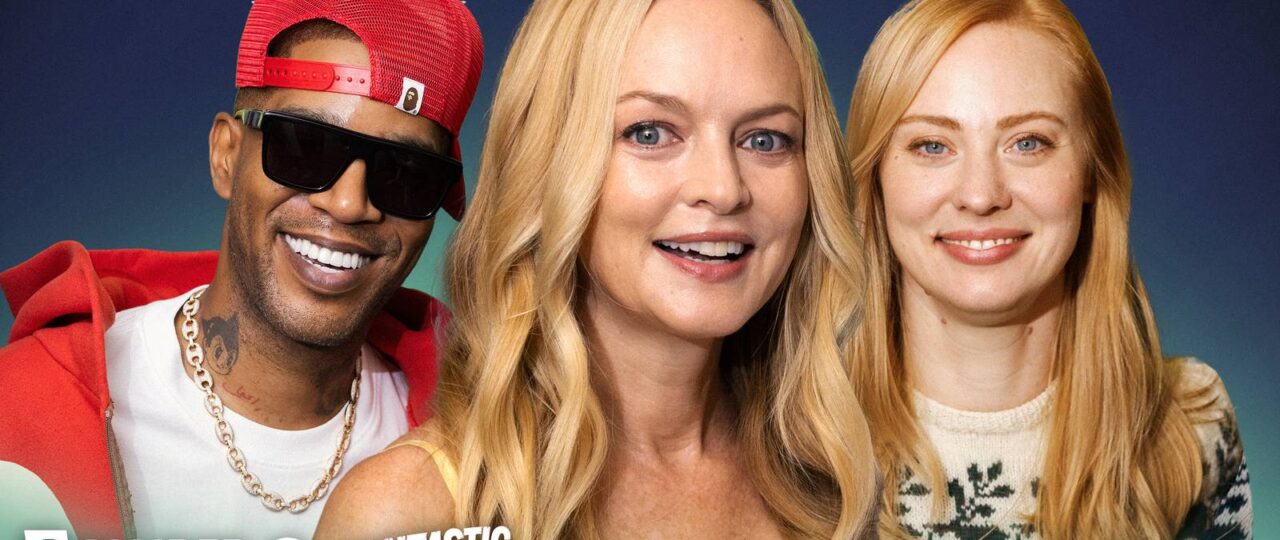
 Image via Fantastic Fest
 Image via Fantastic Fest
 Image via Fantastic Fest
Image via Columbia Pictures


 Image via Columbia Pictures
 Image via Sony
 Image via Columbia Pictures


 Image via A24
 Image via A24
 Image via A24