
With its nostalgically-painted, golden-maned horses, wistful French chanson music wafting as it turns, the Carrousel de St Pierre, by the venerated Sacre Coeur Church, is a firm favourite amongst tourists to Paris. But recently, as I watched the merry-go-round rotate to those romantic French tunes, more than anything else, it reminded me of Brexit.
It’s 10 years since the UK voted to leave the European Union. Almost immediately, from an EU perspective, the UK collapsed inwards, embarking on what would be years of political crisis as the country splintered, fought and went round and round in circles – not unlike the painted carousel.
Seven UK prime ministers in this post Brexit-vote decade – after Sir Keir Starmer announced his resignation on Monday. And the fraught – seemingly circular – EU debate: to what extent the UK should edge closer to Brussels economically – is very much back on the UK domestic political agenda, launched by Starmer’s Labour government.
Shocked a decade ago at the apparent social and political implosion following Britain’s vote to leave (the UK parliament had traditionally been regarded as the European Union’s most stable and venerated), EU partners say they’ve since got used to the roller-coaster that is modern-day UK politics.
Frankly, if you look at big EU players France and Germany, their domestic political scene is hardly what you’d describe as a sea of calm either.
But doesn’t UK political volatility impede the new negotiations with the EU, launched by Starmer, in a declared attempt to tear down post Brexit red tape and boost Britain’s ailing economy?
Brussels assumes these talks will continue under his successor, though it said on Monday it was reviewing whether to go ahead with a summit planned with the Starmer government for late July.
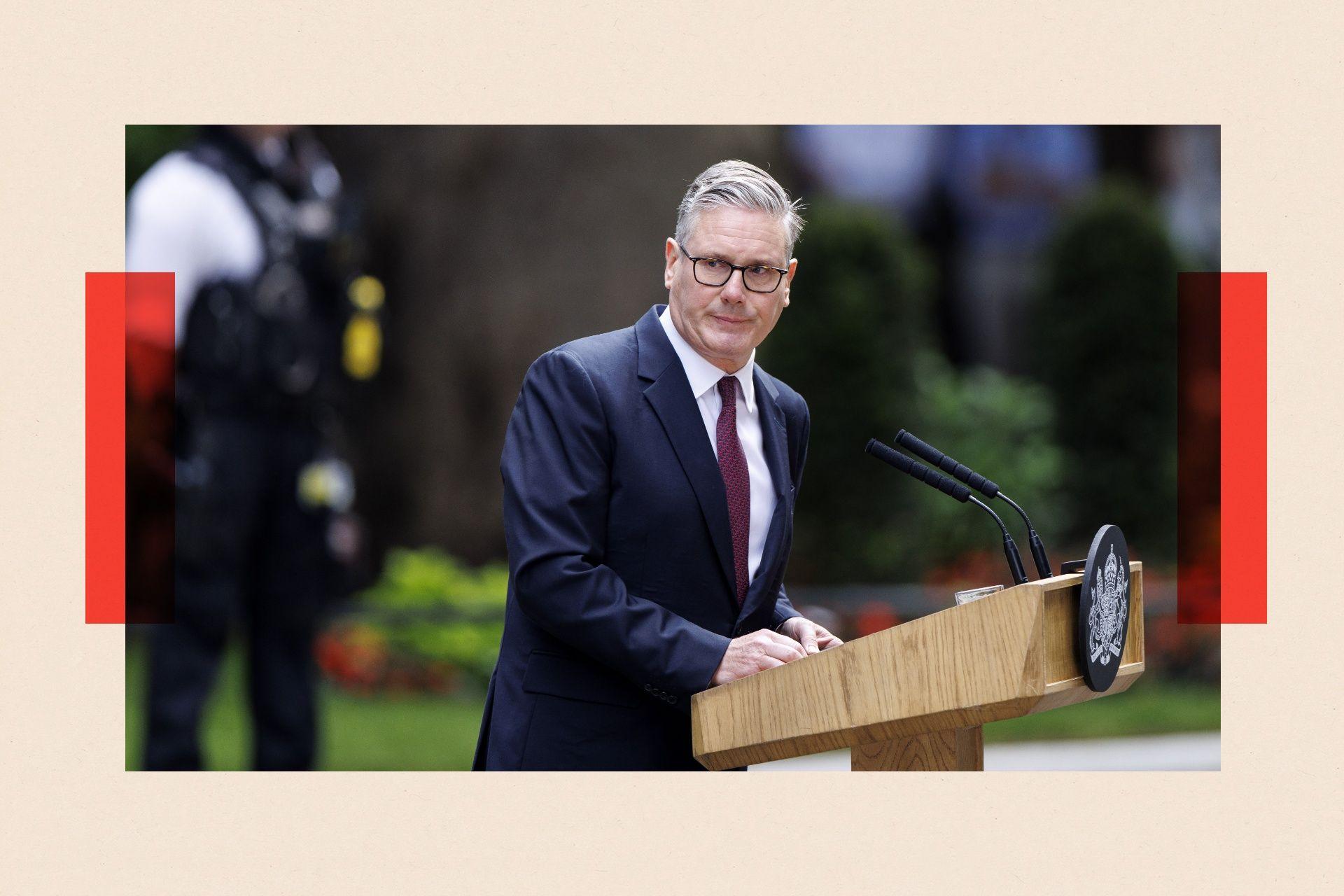 Image source, EPA/Shutterstock
Sir Keir Starmer’s government’s declared intention to “reset” relations with the EU
Michel Barnier was the EU’s chief negotiator throughout the years of often bitter Brexit talks. Nowadays, he’s still a big cheese in French politics – a centre-right MP who was briefly PM two years ago and is expected to throw his hat into the ring in the country’s upcoming presidential election.
I met Barnier at his compact office adjacent to the French parliament. His attitude is essentially that the EU must take the outstretched hand of whomever the UK puts on the dancefloor to represent them.
“We have to deal with this situation and respect it,” he told me. There will be a (new) UK prime minister and we will work with them. Look at what happened during the (Brexit) negotiations. I faced in four years four different UK negotiators. That was also a situation of instability, but we… deal with it.”
During those long years of often fractious Brexit talks, Barnier was famous amongst us journalists for printing up a coffee mug emblazoned with the phrase: Keep Calm and Carry on Negotiating, a rather cheeky play on the Keep Calm and Carry On catchphrase that originated in Britain in 1939 as a government-planned World War II propaganda poster, designed to keep up public morale and determination.
Barnier was also famous for being seemingly implacable in the face of British demands for a ‘special deal’ from the EU.
And, not unlike that Paris carousel, similar UK arguments seem to have come round once again with the Labour government looking to get much closer to parts of the EU single market, yet without sending too much money across the Channel, or accepting the free movement of EU workers to the UK, where an immigration debate rages.
This is the “cherry-picking” Brussels said 10 years ago it wouldn’t entertain. The UK couldn’t leave the club and still keep its favourite perks.
I reported for the BBC on all the twists and turns of those negotiations but the world outside has changed dramatically since.
Europe’s former best friend, the United States, has become unpredictable, even aggressive towards its presumed allies under Donald Trump. Then there’s Russia, conducting a kinetic war on European soil in Ukraine, and a hybrid war, in terms of disinformation, sabotage and more, across much of the rest of the continent. And who can forget China?
Europe’s mainstream believes the EU faces an existential threat from within the bloc too, with eurosceptic parties performing strongly in many countries.
Would increased synergy with the UK – Europe’s second-largest economy and a military power, despite its well-documented problems – not be advantageous for the EU under these new circumstances? Closer defence ties have been well under way for some time now. So what about the economy?
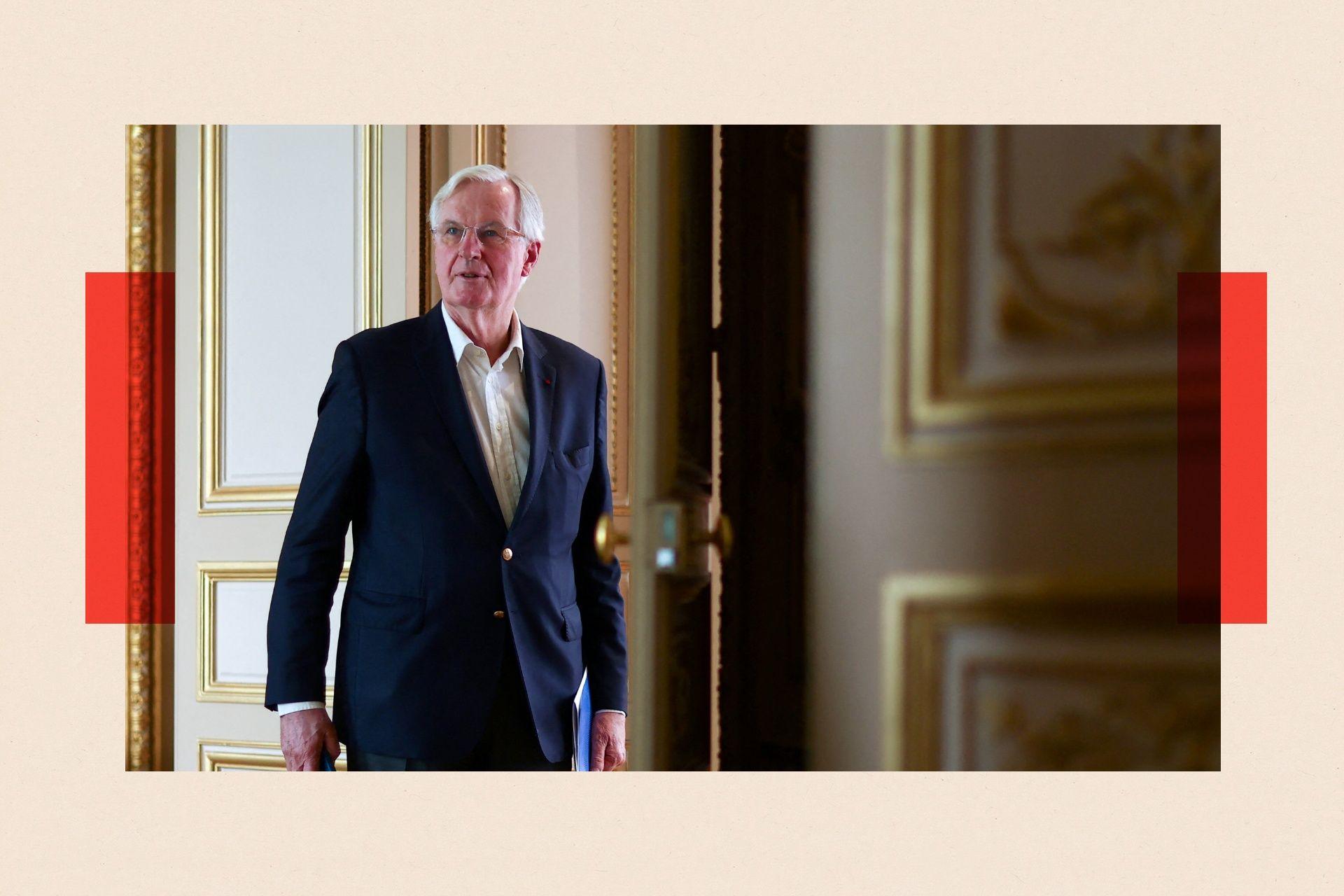 Image source, Reuters
Michel Barnier was the EU’s chief negotiator during the Brexit talks
Speaking to me shortly before Sir Keir Starmer’s resignation, Michel Barnier told me that in his view the EU “sincerely welcomed” any UK request for closer relations.
He said he still viewed the British decision to leave the single market as “lose-lose” for both parties. But he was as insistent as ever that the single market was the jewel in the EU crown. Especially in view of the challenging times Europe now found itself in, Barnier insists Brussels couldn’t and shouldn’t compromise its biggest asset to make special deals with the UK.
“We are in a much more dangerous, unstable, fragile world, and we need to keep our assets and keep our unity. This is the point for us. There is no aggression, no spirit of revenge with the UK, but the UK must understand that it will not be possible to unravel or to fragilise the single market… We can’t take the risk.”
Barnier then went on to describe what he sees as the added threat to the EU from within its own ranks, drawing parallels with the leader of the UK’s Reform party, Nigel Farage, who before Brexit was a member of the European Parliament (MEP). Farage was famous for campaigning long and hard for the UK to leave the bloc.
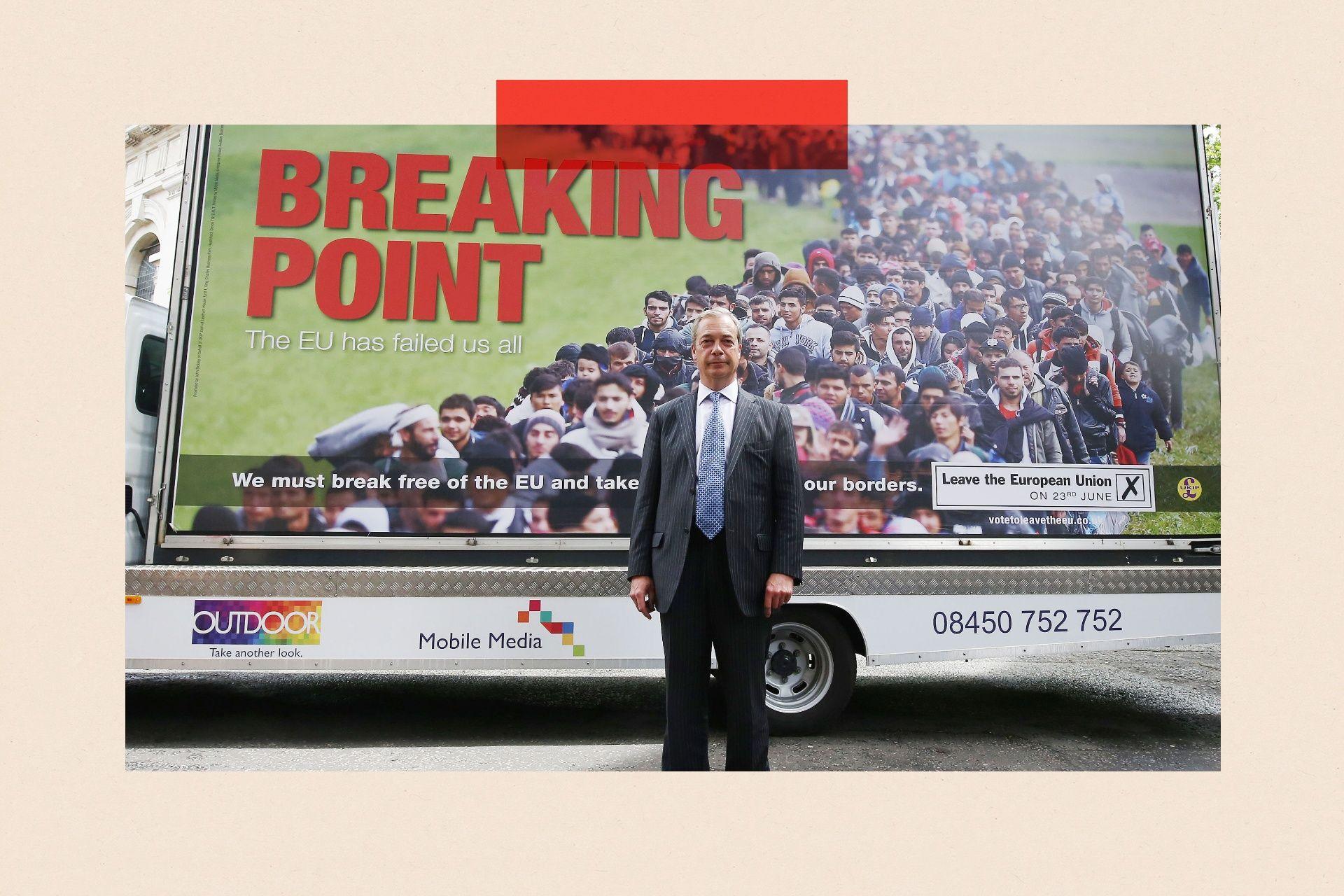 Image source, PA
Nigel Farage, a former MEP, spent years campaigning for the UK to leave the European Union before Brexit
“In many of our countries we have our Farage, like Mrs Le Pen or Mr Bardella [Rassemblement National’s presidential candidate if Le Pen is unable to run because of corruption charges] in France from the far right,” mused Michel Barnier. “There are many Farage’s in Europe who want to destroy us. No way, no way.”
Farage has often said he “hates” the EU though he loves Europe. He’s denied his aim is to destroy the EU altogether.
What Michel Barnier frets about (and he is far from a lone voice in EU circles) is that if you compromise Brussels’ rules and you make attractive economic deals with non-member nations, like the UK, that strengthens eurosceptic parties calling for their countries to leave the EU or to drastically weaken common rules and regulations that bind EU countries together.
That’s exactly what Fabrice Leggeri has in mind. He is an MEP for Marine Le Pen’s hard right National Rally (RN) Party and very close to the party leadership. I chatted to him in the gossip-filled, overcrowded cafe at the European Parliament in Brussels. He was very upbeat.
“We are confident that 2027 is going to be a very important year, a turning point, if we win the elections in France,” he told me.
Opinion polls suggest that Marine Le Pen’s eurosceptic party is better positioned than ever before to win France’s presidency. The French President holds huge sway over foreign policy, including EU affairs. As the EU’s most high-profile nation, alongside Germany, that could have a massive impact on Brussels.
Leggeri told me the RN wants the EU to be far tougher on non-EU migration and to roll back ambitious green regulations, which he describes as “nonsense” and damaging to European industry. His party wants to reduce France’s contributions to the EU budget. It has long opposed sending military aid to Ukraine.
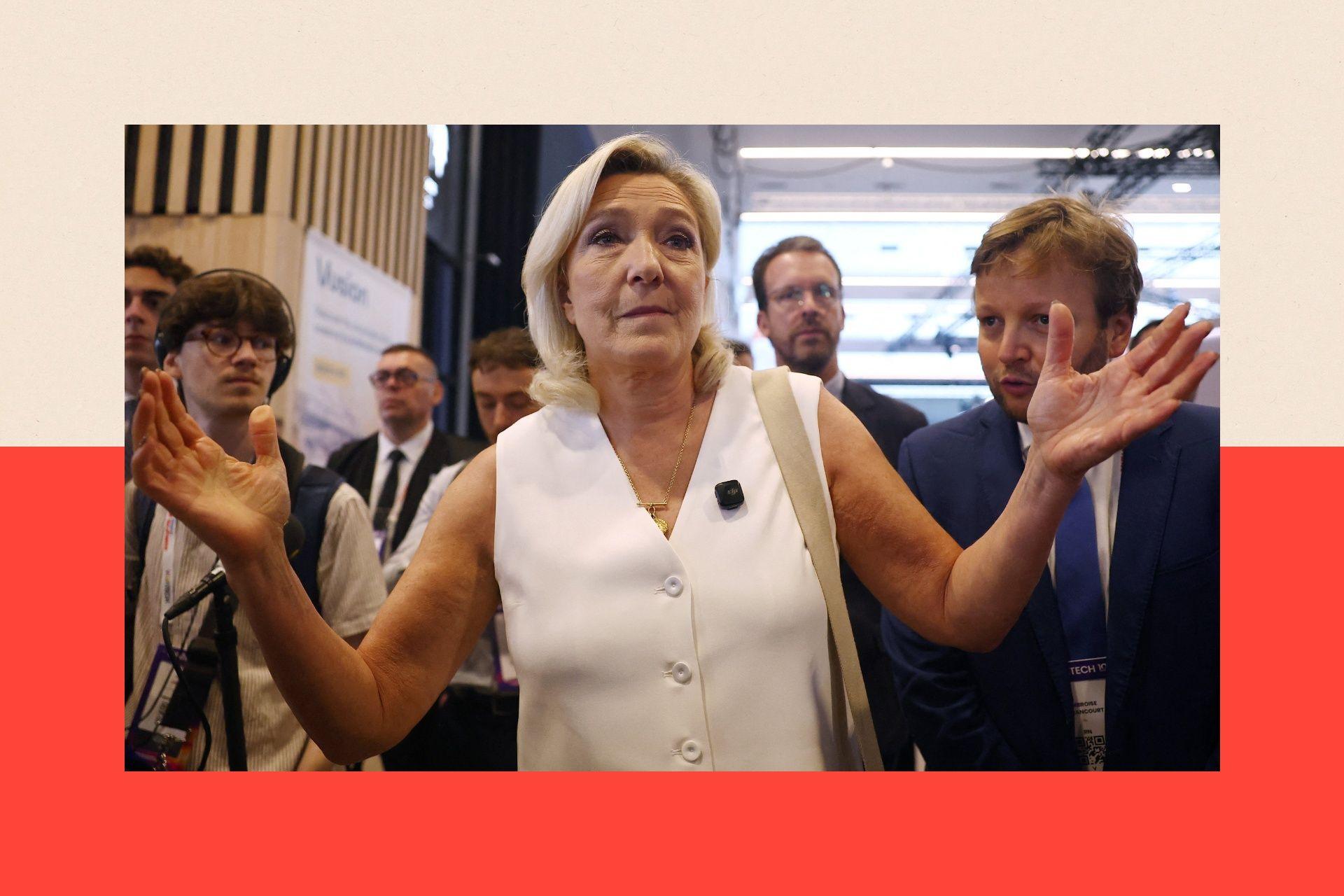 Image source, Reuters
Opinion polls suggest Marine Le Pen’s eurosceptic party is in its strongest position yet to win the French presidency
Across Europe, 2027 is a mega election year. Leggeri and the RN hope like-minded eurosceptic parties will win majorities or significant roles in coalition governments in big EU powers Italy, Spain and Poland as well as France.
Together we have the possibility to change the EU from the inside, says Leggeri.
Even alone, France could bring the EU to its knees in many respects.
Just consider how the heavily eurosceptic former prime minister of far smaller Hungary, Viktor Orban, was able to freeze and frustrate common EU decisions in the past.
“We are preparing [for] the future,” Mr Leggeri told me confidently. “I had the honor to accompany Mr Bardella to London, when he met Mr Farage, before Christmas. If Mr Farage becomes the next British prime minister, and if Rassemblement National is going to rule France next year, I can tell you that I see a lot of possible cooperation.”
Nigel Farage’s political fortunes are being watched here. Much as the EU would like the UK to be closer economically, Brussels wants to know definitively what a strong majority of British people desire from the EU and will cede in return.
Only then, I’m told, will the EU consider making really significant deals with a UK prime minister. Until then, apart from those EU countries that do most trade with the UK (like Ireland, Belgium and the Netherlands) and therefore suffer from Brexit red tape too, most say they are satisfied with the status quo – the Trade and Cooperation Agreement (TCA) signed by the EU and UK at the close of their post Brexit negotiations.
As for changes to the EU itself, what’s fascinating is that in 2016, after the UK’s Brexit vote, there was widespread prediction of a “domino effect”. Italy would leave next, then Denmark or Sweden. France would go too. The EU’s burgeoning eurosceptic parties called for Frexit, Swexit, Italexit and more. But that didn’t happen.
Why? According to the German conservative MEP David McAllister, EU voters saw the UK dissolve into crisis after voting for Brexit; they witnessed the long and painful ensuing negotiations with the EU and decided it just wasn’t worth it.
A decade after Brexit, a new survey from the Pew Research Centre suggests the vote that severely strained UK unity may have helped bring the EU closer together. Across the UK and seven EU member states, tracked consistently since 2016, 62% of respondents now have a positive view of the EU, compared with 49% a decade ago.
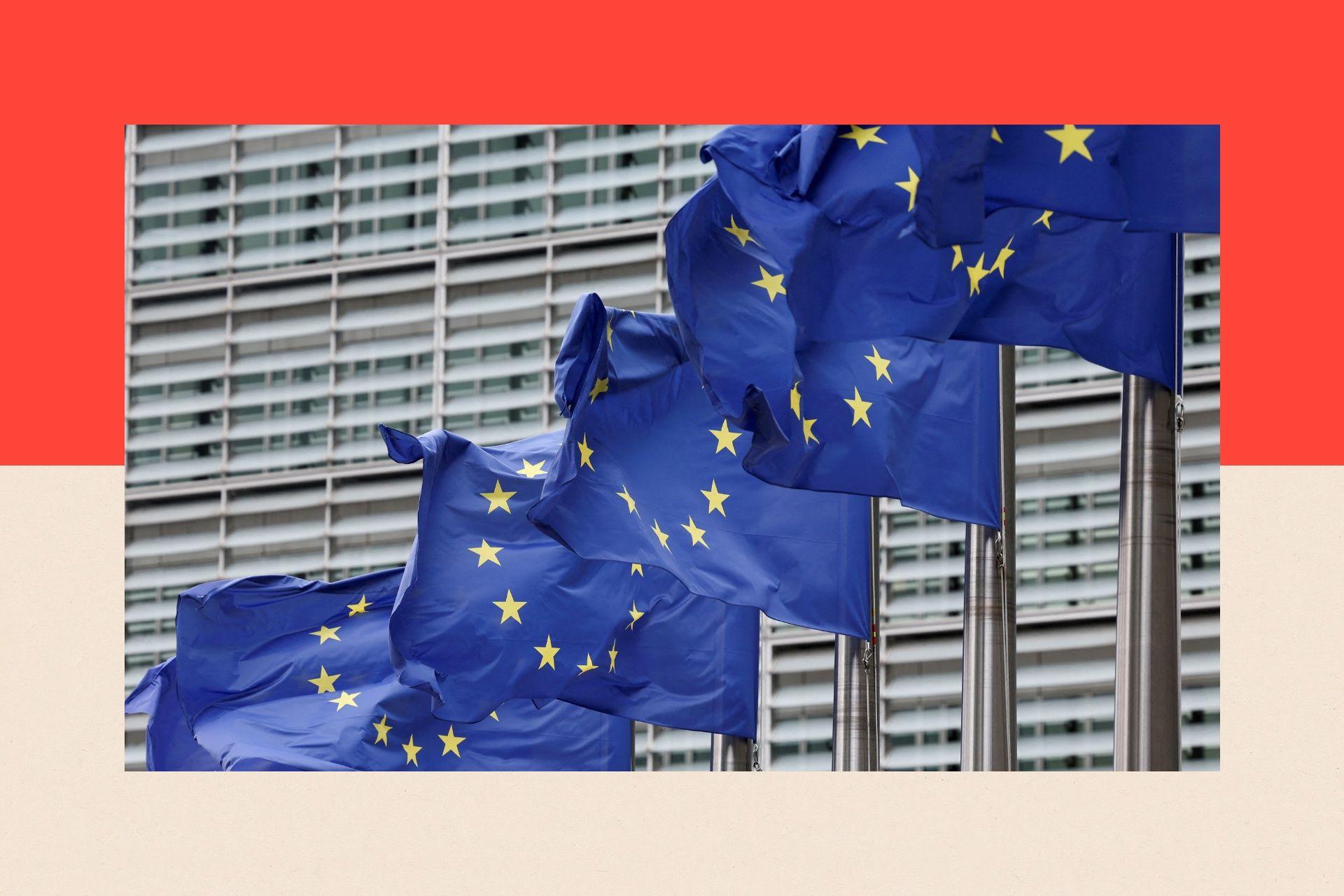 Image source, Reuters
A new Pew Research Centre survey suggests Brexit may have helped strengthen EU unity over the past decade
Armida van Rij from the Centre for European Reform points to re-invigorated efforts by a long list of European countries clamouring to join the EU’s ranks – none more insistently than Ukraine.
At the same time, as we’ve discussed, amongst existing EU member states, nationalist eurosceptic parties are popular. While more traditional European leaders from Germany’s Merz, to France’s Macron and Poland’s Tusk look beleaguered, even weak.
Most Europeans say they believe the EU is far from perfect but, especially after Russia’s 2022 invasion of Ukraine, they’ve decided that in our turbulent world, there is safety in numbers. Better to stick together.
France’s RN, Germany’s AfD, Austria’s Freedom Party and others have adjusted their slogans to appeal to as many voters as possible.
Brexit as a topic is history, Michel Barnier told me. The potential power of EU eurosceptics going forward has Brussels worried. Really worried.

BBC InDepth is the home on the website and app for the best analysis, with fresh perspectives that challenge assumptions and deep reporting on the biggest issues of the day. Emma Barnett and John Simpson bring their pick of the most thought-provoking deep reads and analysis, every Saturday. Sign up for the newsletter here
Get in touch
Are you personally affected by the issues raised in this story?
Discover more from NAIRAVOICE.COM.NG
Subscribe to get the latest posts sent to your email.