The crime genre has always been and remains one of the most exciting and varied in the medium of film. Some of the most beloved films of all time fall within the crime genre, like The Godfather Part 1 and 2, and many of Martin Scorsese‘s gangster classics. Some crime films are thrilling and fun, whilst others are soul-crushing and heavily emotional affairs that explore the dark side of human nature and the way greed can corrupt a person’s soul.
In the interest of highlighting the versatility of the genre, here are eight great crime films that aren’t quite as well-known as those from directors like Francis Ford Coppola or Quentin Tarantino, for instance. Each film listed here is compelling and memorable in its own way, and is worth tracking down for fans of movies that deal with the always fascinating, often dangerous theme of crime.
8
‘Pixote’ (1980)
Pixote is a Brazilian crime drama that’s divided into two halves. One shows the life of several boys at a viciously cruel youth detention center, and the other half shows their lives on the run, as they break out of the center and turn to a life of petty crime as a way to survive in a world that’s just as uncaring and dangerous as the place they escaped.
Pixote is a tragic and despairing film, and it depicts the existence of its characters in a way that’s brutally honest and confronting. It speaks to real-world issues of injustice and poverty, and viewing it makes for a heavy experience, but one that’s sure to stick with anyone who gives it a shot.
7
‘Miracles’ (1989)
Jackie Chan’s directed and starred in a host of great movies, both during his time in the Hong Kong film industry and within Hollywood. Miracles stands as one of his most unexpected and underrated, as it’s a gangster romantic-comedy with a few great action scenes spread throughout, because you can’t have a movie starring (arguably) the best action star of all time without action.
While it riffs on classic gangster movies and has a plot that involves Chan’s character getting mixed up with a violent gang, it also owes a good deal to the screwball comedy, a sub-genre popular in Hollywood during the 1930s and 1940s. It makes for a unique watch, and as director and lead actor, Jackie Chan handles the conflicting genres pretty well, ensuring Miracles ends up being a very entertaining watch.
6
‘All Through the Night’ (1942)
Hollywood legend Humphrey Bogart was in so many good movies throughout the 1940s that it’s inevitable some will get buried by the others. All Through the Night is one such underrated Bogart flick. Made right in the middle of WW2, it’s a surprisingly light-hearted crime film about a gang of gamblers getting wrapped up in the conflict, in turn becoming something of a war-thriller on top of being a crime-comedy.
It’s interesting to watch a movie like this from a historical perspective, as it’s clear now that there were some propagandist intentions behind the story. At least it still feels fun that any on-the-nose elements can be mostly forgiven, and overall, it makes for a very fast-paced, unpredictable, genre-bending viewing experience.
5
‘Outlaw: Gangster VIP’ (1968)
<<img src="https://static0.colliderimages.com/wordpress/wp-content/uploads/2022/05/Outlaw-Gangster-VIP.jpg?q=49&fit=crop&w=825&dpr=2" />
Image via Nikkatsu</figure>
A fast and ferocious gangster film from Japan, Outlaw: Gangster VIP is a crime-thriller that follows a young man engaged in the yakuza lifestyle as he deals with the consequences that befall him as a result of his violent lifestyle.
It’s a pretty relentless viewing experience, and it packs a whole heap of violence, betrayal, conflict, and drama into its brief 94-minute runtime. It spawned several sequels, and was a modest hit in Japan, but remains fairly under-seen outside its country of origin. It deserves more recognition for sure, and stands as one of the best and most accessible yakuza films ever made.
Your answers have pointed to one Oscar Best Picture winner above all others. This is the film that was made for the way your mind works.
You are drawn to films that operate on multiple levels simultaneously — that begin in one genre and quietly, brilliantly migrate into another. Bong Joon-ho’s Parasite is a film about class, desire, and the architecture of inequality that manages to be darkly funny, deeply suspenseful, and genuinely shocking across a single extraordinary running time. Your instinct is for cinema that hides its true intentions until the moment it’s ready to reveal them. Parasite is exactly that — a film that rewards close attention and punishes assumptions, right up to its devastating final image.
You want it all — and this film gives you all of it. The Daniels’ Everything Everywhere All at Once is one of the most maximalist films ever made: action comedy, multiverse sci-fi, family drama, existential crisis, and a genuinely earned emotional core that sneaks up on you amid the chaos. You are someone who responds to ambition, who doesn’t want cinema to choose between being entertaining and being meaningful. This film refuses that choice entirely. It is overwhelming by design, and its overwhelming nature is precisely the point — because the feeling of being crushed by infinite possibility is exactly what it’s about.
You are drawn to cinema on a grand scale — films that understand history not as a backdrop but as a force, and that place their characters inside that force and watch what happens. Christopher Nolan’s Oppenheimer is a film about the terrifying gap between what we can do and what we should do, told with the full weight of one of the most consequential moments in human history behind it. You want your films to feel important without feeling self-important — to earn their ambition through sheer craft and the gravity of their subject. Oppenheimer does exactly that. It is enormous, complicated, and refuses easy comfort.
You are drawn to films that foreground their own construction — that make the how of the filmmaking part of the what it’s about. Alejandro González Iñárritu’s Birdman, shot to appear as a single continuous take, is cinema examining itself through the cracked mirror of a fading actor’s ego. You respond to formal daring, to the feeling that a film is doing something that probably shouldn’t be possible. Michael Keaton’s performance and Emmanuel Lubezki’s restless camera create something genuinely unlike anything else — a film that is simultaneously about creativity, relevance, self-destruction, and the impossibility of ever truly knowing if your work means anything at all.
You are drawn to cinema that trusts silence, that refuses to explain itself, and that treats dread as a form of meaning. The Coen Brothers’ No Country for Old Men is a film about the arrival of a new kind of evil — implacable, arbitrary, and utterly indifferent to the moral frameworks we use to make sense of the world. It is one of the most formally controlled films ever made, and its controlled restraint is what makes it so terrifying. You want your films to haunt you, not comfort you. You are not interested in resolution if resolution would be dishonest. No Country for Old Men is honest in a way that most cinema never dares to be.
4
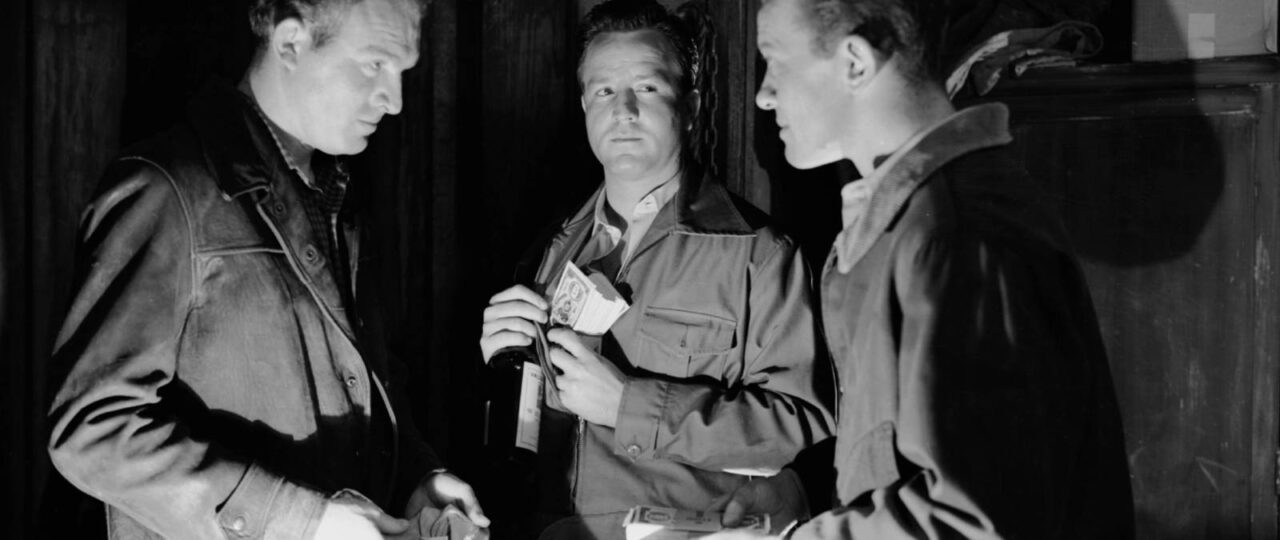
‘Armored Car Robbery’ (1950)
<<img src="https://static0.colliderimages.com/wordpress/wp-content/uploads/2022/03/Armored-Car-Robbery.jpg?q=49&fit=crop&w=825&dpr=2" />
Image via RKO Radio Pictures</figure>
A super lean, down-and-dirty heist movie that stands at only 67 minutes long, presumably so it could be shown back-to-back with another, similarly short film as a double feature at the time of its release. The title promises an armored car robbery, and that’s what ends up happening. A group of criminals thinks they’re about to execute the perfect robbery (like always), but the plan unravels and derails, and the film turns into a fight for survival, as the law (and maybe karma itself) catches up with them all.
It’s satisfying to see a movie like this waste no time in delivering crime-related thrills. Is it deep? And are the characters particularly memorable? No, to both questions, but that doesn’t matter. It gives you an armored car robbery and its fallout. What more do you need?
3
‘Murder on a Sunday Morning’ (2001)
In recent years, true-crime documentaries have become longer and longer. After the success of Making A Murderer, it felt like every true-crime story began getting told in a miniseries format. Sometimes that approach works, but sometimes it leads to a bloated runtime and endless repetition, as the filmmakers struggle to get their story to maintain momentum for upwards of six hours.
That’s why a film like Murder on a Sunday Morning is so satisfying. In under two hours, it outlines a single crime and focuses on its ensuing trial, perfectly pacing itself in the process and having just enough time to properly develop the people it follows. It gives a great insight into how lawyers function, and how easily the justice system can slip up and charge a person who’s actually innocent. It’s a suspenseful and absorbing watch, and arguably one of the best courtroom films of all time, period.
2
‘Going in Style’ (1979)
<<img src="https://static0.colliderimages.com/wordpress/wp-content/uploads/2022/09/going-in-style.jpg?q=49&fit=crop&w=825&dpr=2" />
Image via Warner Bros.</figure>
Forget the Zach Braff-directed remake. Sure, Michael Caine, Alan Arkin, and Morgan Freeman are all entertaining actors, but that 2017 film has nothing on the original. 1979’s Going in Style tells the same story of three bored old men who decide to try robbing a bank, but does so far more effectively.
The remake is very gentle and tame, but the original Going in Style is as much an emotionally heavy film about the struggles of growing old as it is a quirky crime-comedy. The shift from comedy to drama happens suddenly but seamlessly, and is sure to surprise just about any viewer. It’s a remarkably simple but surprisingly sad film in the end, and a brilliantly distinct movie within the heist sub-genre.
1
‘Battles Without Honor and Humanity’ (1973)
<<img src="https://static0.colliderimages.com/wordpress/wp-content/uploads/2022/05/Battles-Without-Honor-and-Humanity.jpg?q=49&fit=crop&w=825&dpr=2" />
Image via Toei</figure>
The original Battles Without Honor and Humanity is perhaps the classic yakuza film, and ended up spawning a franchise, with eleven films total in the series. It explores the lives of an enormous number of characters throughout, all in various crime families, with all families engaged in a huge, sprawling yakuza war in Hiroshima.
It’s hard to follow and chaotic, but that’s by design. Betrayals in the yakuza world are common, and violence is shown to break out at any place, at almost any time. The film captures a violent, ruthless, messy world, and it’s that experience that sticks with viewers, rather than the exact mechanics of the complex narrative itself. As long as you go in accepting you’re probably going to be overwhelmed, jerked around, disturbed, and surprised at many points throughout, Battles Without Honor and Humanity is great stuff.
-
<
Bunta Sugawara
Shozo Hirono
-
<
Hiroki Matsukata
Tetsuya Sakai
-
<
Kunie Tanaka
Masakichi Makihara
-
<
Eiko Nakamura
Suzue Kunihiro
Discover more from NAIRAVOICE.COM.NG
Subscribe to get the latest posts sent to your email.