In recent decades, antiheroes have become a defining component of prestige television drama: complex and challenging protagonists whose amorality is explored over the course of multiple seasons. Brilliantly portrayed by Bryan Cranston, Walter White is something of an icon in this space, with Breaking Bad tracking his grim evolution from a suburban family man and chemistry teacher to a cruel and conniving international drug lord. The series’ five-season arc is one of the most compelling television has ever seen, a frightfully bleak descent into moral corruption, ego-fueled destruction, and ruthless ambition. But does Walter White stand as the most confronting and ferocious TV antihero of all time?
Granted, it is difficult to find other lead characters who share his egomaniacal villainy, brutal moral compass, and such a complete transition from the beginning of the story to the end, but there are some unsavory small-screen icons who can mount a convincing case as being the best and wildest antihero in television history. Ranging from cunning criminal conspirators like Walter White to corrupt cops, callous killers, and even a superhero-slaying psychopath, these antiheroes mark some of the most unrestrained characters to have ever graced our screens.
5
Vic Mackey
‘The Shield’ (2002–2007)
<<img src="https://static0.colliderimages.com/wordpress/wp-content/uploads/2025/08/the-shield-michael-chiklis.jpg?q=70&fit=crop&w=825&dpr=1" />
Image via FX</figure>
The 2000s were the golden era of crime television, with the decade producing masterpieces en masse, many of them defined by the complexity and impact of their major characters. Despite being outrageously underrated, The Shield‘s Vic Mackey (Michael Chiklis) is undoubtedly one of the medium’s defining antiheroes. As the protagonist of the series, he heads the Strike Team, an elite police unit operating in a district of L.A. riddled with street crime and gang violence. However, beneath his decorated career and reputation as a hard-edged cop, Mackey and his crew routinely resort to illegal methods to uphold the law, and they never shirk an opportunity to line their own pockets from the crimes they fight.
In many respects, The Shield posits a daring question about the ends justifying the means. There is no doubt that Mackey is effective at his job, and his view that the streets he patrols are too dangerous to be handled with due process is grounded in a pragmatic understanding of the criminal underbelly. But where does his coarse practicality become outlandish and unchecked corruption? The Shield asks this question constantly throughout its seven-season run, forcing viewers to grapple with their own morality, especially as it depicts Mackey not as a dutiful officer who feels compelled to implement such violent methods, but as an adrenaline-junkie who enjoys crossing the line. Combining this confronting view of police work with his unflinching loyalty, particularly to his family, Mackey is both monster and man, and he stands tall among the most volatile and confounding characters television has ever seen.
4
Ray Shoesmith
‘Mr. Inbetween’ (2018–2021)
<<img src="https://static0.colliderimages.com/wordpress/wp-content/uploads/2023/06/scott-ryan-in-mr-inbetween.jpg?q=49&fit=crop&w=825&dpr=2" />
Image via FX</figure>
So often, as is the case in Breaking Bad, antiheroes are presented as understandable and relatable characters who stray off the course of traditional morality in pursuit of ambition, revenge, or wealth and power. This approach is always compelling as it forces viewers to examine their own values of right and wrong and decide which lines they can accept being crossed, and which are irredeemable to tread over. That being said, sometimes it is just rewarding to sit back and watch a character like Ray Shoesmith (Scott Ryan), an unashamedly amoral hitman working in Sydney’s criminal underbelly.
There is certainly a comedic inflection to his demeanor. Bereft of the egomaniacal self-indulgence that many other television antiheroes exude, Ray is a pragmatic, low-key gun-for-hire who navigates his life and his violent career with a simplistic practicality. There’s no existential dread to him, no pretentious delusions of his own moral clarity, no fluff, no frills, no fuss. In lieu of this self-imposed complexity, Ray Shoesmith presents a raw Australian grit undercut by dry humor and a deep, tender love for his family. Additionally, it is impossible not to feel a sense of satisfaction when Ray takes a vested interest in ensuring those who hurt women and children face a very cathartic retribution. He is the most likable of antiheroes, a villain with a noble heart and a rigid, albeit skewed, moral code, and his appetite for poetic violence makes Mr. Inbetween both erratic and strangely endearing.
3
Dexter Morgan
‘Dexter’ (2006–2013)
<<img src="https://static0.colliderimages.com/wordpress/wp-content/uploads/2025/07/dexter-michael-c-hall-4.jpg?q=70&fit=crop&w=825&dpr=1" />
Image via Showtime</figure>
A forensic analyst for the Miami Metro Police Department by day, and an at-large, serial-killing vigilante by night, Dexter Morgan (Michael C. Hall) is one of the most macabre and captivating lead characters television has ever seen. The divide that Dexter so brilliantly presents in its titular character is one of morality and compulsion. Dexter can’t resist the urge to kill, but he channels his unyielding bloodlust into targeting violent criminals who slip through the justice system and get away with their heinous crimes unscathed.
There is plenty of fun to be had in accessing the inner life of a sociopathic mastermind, with Dexter exuding a wicked, forbidden suspense as it encourages viewers to actively cheer on a deranged murderer. That thrilling, boundary-pushing allure is only enhanced by the frenetic and unrelenting thrill of watching Dexter orchestrate his professional duties and his violent obsession in careful, precise harmony, knowing that even the slightest misstep from him could spell his downfall. The series is smart to still imbue Dexter with human desires; he yearns for love and connection, and some of the most compelling scenes come when Dexter himself contemplates his own capability of feeling and expressing real emotion. The combination of depth and bloodlust makes for one of TV’s greatest protagonists and a fascinating antihero who skirts the line between savagery and purpose with aplomb.
Four criminal masterminds. One of them was always going to be yours.
Here is who comes for you, why they picked you out of everyone available, and what they want from
the encounter.
Your nemesis does not want to beat you. He wants to know you
completely, and he is patient enough to wait for it. The frightening part is how good the
conversation is.
- Lecter is the most dangerous kind of opponent: the one who finds you interesting. He
never raises his voice, because he has never needed to. - You keep a great deal to yourself and you are careful about what you show. That reserve
is exactly the door he would knock on. - The films understood something other thrillers missed. The horror is not the violence.
It is being perfectly understood by the wrong person. - He would be unfailingly polite about all of it. That is the worst part.
Your nemesis is not after money, territory or revenge. He is
after a demonstration, and you are the person he has chosen to prove his point on.
- The Joker only picks opponents who believe in something. Your decency is not a defence
against him. It is the entire reason he showed up. - He has no plan you can predict and nothing you can take away, which removes every tool
you would normally reach for. - His whole argument is that you are one bad day away from being him, and you would spend
the rest of your life proving him wrong. - He would call it a magic trick. You would call it the worst night of your life.
Your nemesis respects you, which sounds flattering until you work
out what it means. He chose you because nobody else was worth his time.
- Moriarty is the original criminal mastermind, the template every later one borrows from:
a mind the equal of the hero’s, pointed the wrong way. - You enjoy being the cleverest person in the room. He is counting on exactly that, and he
has already built the room. - This is the rare nemesis who would be genuinely disappointed if you lost badly. He needs
the game to be worth playing. - It ends the way these things always end. Two people, one problem, and only one way down.
Your nemesis has no personal interest in you whatsoever, and that
is precisely what makes him unsurvivable. You are not a rival. You are a stop on the way.
- Chigurh does not negotiate, gloat or explain. He arrives, he asks one question, and the
answer was decided long before you opened your mouth. - You trust yourself to handle things. He is the one problem in the world that has no
interest in how capable you are. - No Country for Old Men rewrote the screen villain by removing the thing audiences
quietly rely on: the sense that talking might work. - Call it. He will wait.
2
Billy Butcher
‘The Boys’ (2019–2026)
<<img src="https://static0.colliderimages.com/wordpress/wp-content/uploads/2026/03/the-boys-season-5-jack-quaid-karl-urban-interview.jpg?q=49&fit=crop&w=825&dpr=2" />
Image via Prime Video</figure>
Anyone who is even the slightest bit familiar with Amazon Prime’s subversive superhero satire will be well aware of the fact that, above everything, The Boys aspires to be shocking. It transpires in a world where superheroes not only exist, but they are widely adored pop-culture figures whose valor and bravery inspire millions. However, their public image is merely a construct of the woefully corrupt Vought International. Under the command of the erratic, ultra-violent, completely depraved, and wildly unpredictable Billy Butcher (Karl Urban), the Boys operate as a covert group striving to expose the superheroes for what they truly are as Vought’s ambitions shift from commercial success to political influence.
Butcher is the prototypical antihero, a morally questionable and jaded figure who uses violent methods to bring great evil to some form of poetic justice. He is a bad guy indulging in his proclivity for chaos to fight the worse guys. As the series goes on, it is revealed that his destructive win-at-all-costs mentality is grounded in personal tragedy and an insatiable appetite for revenge. The earlier seasons of The Boys are particularly brilliant when it comes to exploring Butcher’s extremity with a wry and wicked glee, making him a comedic though compelling character as he resorts to vicious lengths to unveil Vought’s evil operations, often manipulating, betraying, and endangering his own colleagues in the process.
1
Tony Soprano
‘The Sopranos’ (1999–2007)
<<img src="https://static0.colliderimages.com/wordpress/wp-content/uploads/2026/04/the-sopranos-1999-tony.jpg?q=49&fit=crop&w=825&dpr=2" />
Image via HBO</figure>
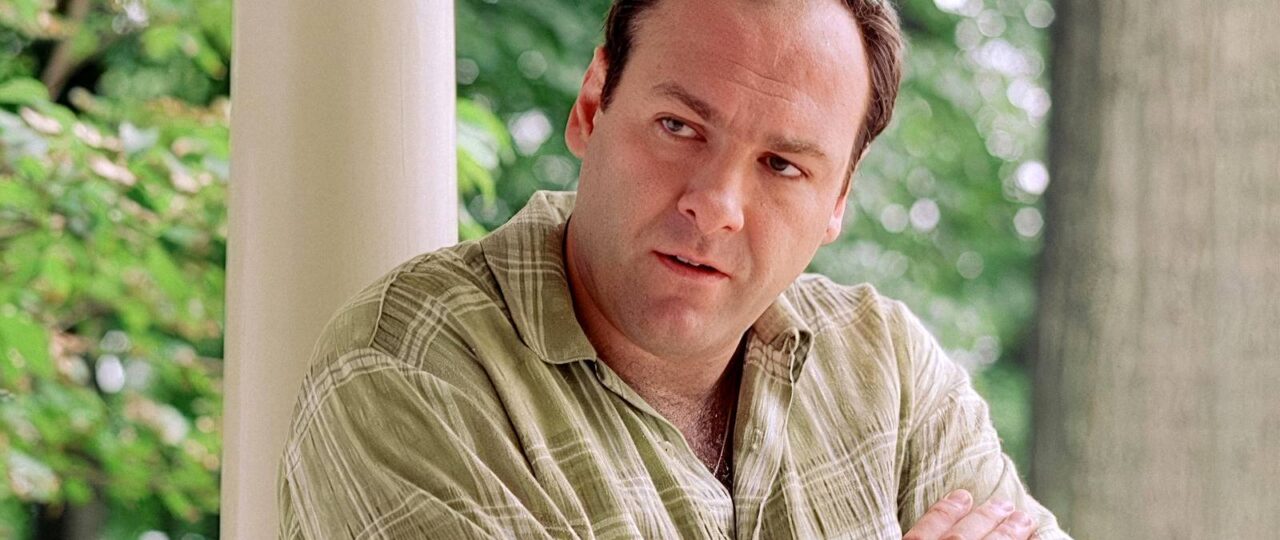
Tony Soprano (James Gandolfini) is the first true antihero in television history, and to this day, he remains the best. Over the course of six sensational seasons, The Sopranos follows the New Jersey-based mobster as he rises up the ranks of the mafia. Between the mounting pressures of his criminal operation and the rapidly changing dynamic of his family environment as his children become teenagers, Tony begins seeing a psychiatrist in secret to help him manage his stress.
What The Sopranos does better than any other series with regard to presenting an antihero is that it finds ways to pry into his psyche. Extended sequences between Tony and Dr. Melfi (Lorraine Bracco) are pivotal in this regard, allowing Tony’s complex thoughts and views to unwind in a natural procession of impulsive remarks and quieter contemplations, but the series also delves into Soprano’s inner turmoil through surrealist dream sequences and the way he handles both professional and personal matters. The trademark mob-boss ruthlessness is evident from the moment viewers see him, but beneath that hulking presence is a tender vulnerability, a man struggling to find his place between modernity and tradition. David Chase‘s outstanding writing and Gandolfini’s spectacular performance combine to make for what is still, even almost 20 years after The Sopranos concluded, the single greatest character in the history of small-screen drama.
Discover more from NAIRAVOICE.COM.NG
Subscribe to get the latest posts sent to your email.