7. Perfectionism can make failure harder to handle
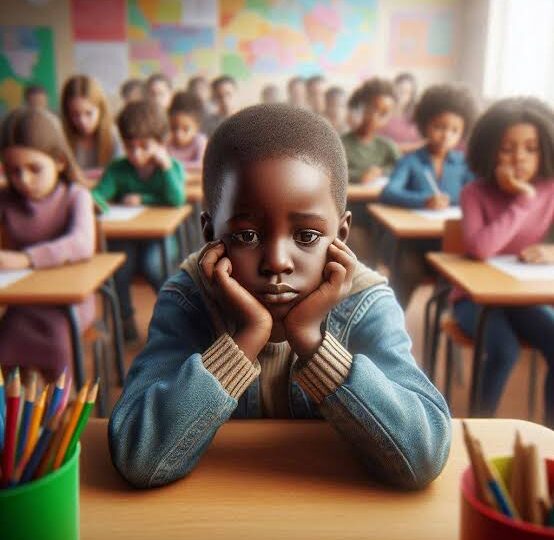
Some high-achieving students struggle with failure precisely because they are accustomed to performing well. When they make a mistake, they may feel that their entire reputation has been damaged.
This can create perfectionism, where students become so afraid of getting something wrong that they avoid challenging tasks altogether. A student may choose an easier project because they are more confident of getting a high mark rather than attempting something difficult that could teach them more.
Learning involves uncertainty. Students will encounter questions they cannot answer immediately and subjects that require several attempts before they become clear.
Accepting that mistakes are part of the learning process can make students more willing to attempt difficult work. The goal is not to lower standards, but to understand that excellence is not the same as never making mistakes.
8. A failed plan does not mean the goal is wrong
Failure can sometimes make students abandon a worthwhile goal too quickly.
A student may want to study a particular course but perform poorly in the relevant examination. Another may hope to build a career in a competitive field but struggle to secure an early opportunity. The setback may require a change in strategy, but it does not automatically prove that the original goal was unrealistic.
Students need to learn the difference between changing a goal and changing the route to that goal.
Sometimes the best response to failure is to try again. Sometimes it is to acquire additional skills, seek better guidance, change a method or take a different route towards the same objective. The ability to adjust without immediately giving up is an important part of resilience.
9. What happens after failure matters
The failure itself is only one part of the story. What happens afterwards can determine whether the experience becomes a lesson or simply a painful memory.
Two students can receive the same disappointing result and respond differently. One may avoid the subject, blame everyone else and repeat the same approach. The other may examine the result, ask questions, change their preparation and try again.
This does not mean students should be expected to recover immediately from every disappointment. Failure can hurt, and students need time to process difficult experiences.
However, reflection eventually needs to become part of the process. Students should be encouraged to look at what happened without excessive self-blame and identify what is within their control.
That shift from “I failed, so I am incapable” to “I failed, so I need to understand what happened” can change how a student approaches future challenges.
10. Failure is not the opposite of success
Perhaps the most important lesson students learn too late is that failure and success are not always opposites.
A student’s education is rarely a straight line from one achievement to another. There may be poor grades, rejected applications, difficult subjects, unsuccessful projects and unexpected changes along the way.
Success does not require a person to avoid every setback. What matters is the ability to learn, adapt and continue making informed decisions.
This is particularly important in a rapidly changing world. The World Economic Forum’s Future of Jobs Report 2025 found that employers expect significant changes in the skills required by workers by 2030, with analytical thinking remaining among the most important core skills and resilience, flexibility and agility also identified as increasingly important.
These qualities are not developed simply by succeeding every time. Students need opportunities to confront difficulty, reconsider their approaches and learn from experiences that do not produce the result they wanted.
Learning to fail without giving up
Schools and families have an important role to play in helping students develop a healthier relationship with failure. If every low mark is treated as a crisis or every mistake attracts harsh criticism, students may learn to hide failure rather than learn from it.
A better environment allows students to discuss mistakes without being humiliated. Teachers can help students understand where they went wrong and what they can do differently. Parents can focus conversations not only on the result but also on preparation, effort, strategy and improvement.
Students, meanwhile, need to understand that learning from failure does not mean pretending that poor performance does not matter. A failed examination may have real consequences. A rejected application may mean losing an opportunity. A missed deadline may create genuine problems. Taking failure seriously is different from allowing it to define one’s identity.
There is also a difference between resilience and simply telling students to keep trying indefinitely. Sometimes reflection should lead to persistence, while at other times it should lead to a change in strategy or direction. Learning from failure means becoming better at deciding what to do next.
Ultimately, students do not need an education that promises them a life without failure. Such a promise would be impossible to keep. They need an education that prepares them to respond intelligently when things go wrong.
Failure can teach a student to prepare differently, ask for help, manage expectations, reconsider strategies and recognise progress. It can reveal weaknesses that success might have hidden and encourage a level of self-awareness that cannot be developed through grades alone.
The student who learns this early is not necessarily the one who never fails. It is the one who can look at a setback honestly, separate the result from their identity, learn what the experience is showing them and decide what to do next. That is one of the most valuable lessons education can offer.
Discover more from NAIRAVOICE.COM.NG
Subscribe to get the latest posts sent to your email.