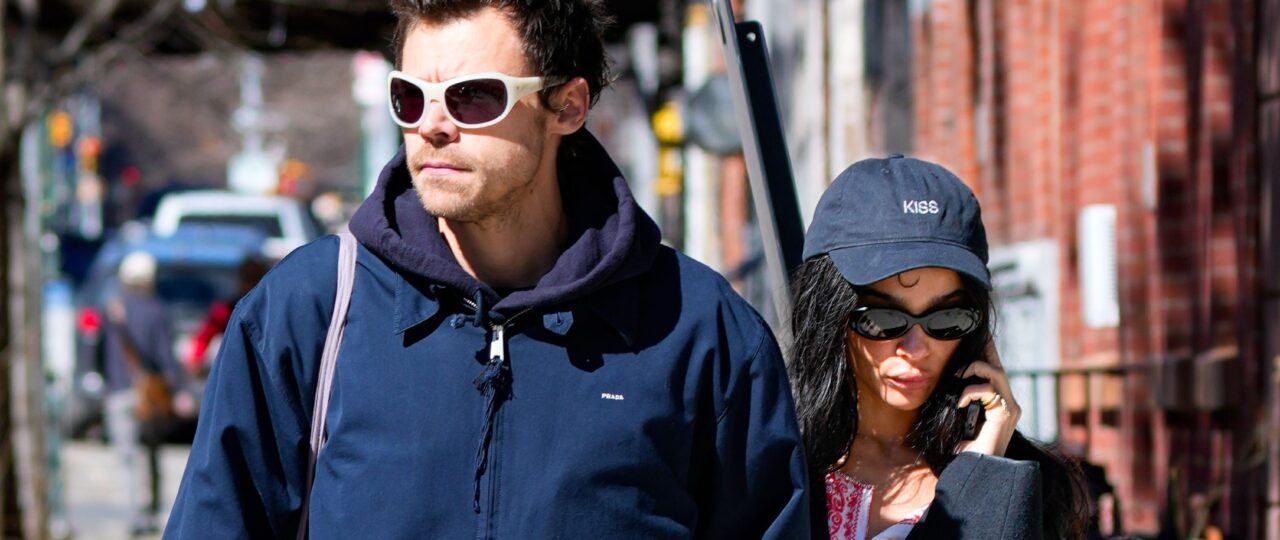
The internet did what the internet does. Half swooned. Half rolled their eyes and started a countdown. Both reactions miss the point.
Because here’s the thing about the early months of a relationship that nobody tells you. The sky really does look brighter. Flowers really do bloom more vibrantly. Food tastes better. And your body, somewhere underneath all the giddy laughter and the slow looking, starts whispering something quieter and far more serious.
This is the one I’m hoping will meet my emotional needs.
Of course you’d want to put that on your skin.
The Honeymoon Brain Is Writing Contracts
What people call the honeymoon phase isn’t just chemistry. It’s not just dopamine. Something deeper is happening underneath the giggles and the all-night phone calls.
You meet someone, and after a few weeks of living in that bright-flowers, good-food world together, your nervous system starts doing something almost legal. It’s drafting a contract. An unspoken one. You are going to be the person I let in. You are going to be the one who answers when I’m scared.
That’s not silly. That’s biology.
In my opinion, we’re an interdependent species. Our first need, before food, before shelter, is to be emotionally bonded to a good enough other. That was true a hundred thousand years ago on the African savannas, and it’s true for Zoë and Harry in a Soho tattoo studio.
The trouble isn’t wanting permanence. The trouble is what I call fiat relationships, where people start printing affection they cannot yet back with action. Promises issued faster than the relationship has earned them. I love you. I’m sorry. I promise. Forever. Beautiful words, but in the early months, often underbacked.
Inflation teaches us that nothing holds value, so consume it now. When you apply that same high time preference to love, you get a tattoo before you’ve had your first real fight. You get performance instead of presence. You get the feeling of connection without paying the cost of vulnerability.
I’m not saying that’s what’s happening here. I have no idea. I’m saying that’s the cultural water we’re all swimming in, and even very famous, very wealthy people swim in it too.
Why Even Smart People Rush
This is where I have to be honest about myself. Throughout my teens and twenties and into my thirties, even into my early forties when I met my wife Teale, I lived out exactly this pattern. Serial monogamist. Fall fast. Try to be the perfect boyfriend. Collapse into shame when it broke.
I wasn’t stupid. I was a baby in love.
Because here’s what we don’t say out loud. It doesn’t matter how grown up you are when it comes to love. You’re still a little baby. Physiologically the exact same as the infant you once were, who needed a good enough other on the other side of your birth or you would have died. Nothing has fundamentally changed.
So when you meet someone who feels like the one, your body wants to seal the deal. Lock it in. Make it real. Make it permanent. A ring. A tattoo. A house. A baby. Anything that says please don’t leave me, please see me, please let me matter.
That’s not neediness. It’s the oldest software in the human animal. If you want to understand the particular intensity of early love and where it tips into something more obsessive, what limerence really is explains a lot of what gets confused for soulmate certainty.
Want to know what pattern your own body runs in the first months of a relationship? You can get your free relationship assessment and at least see your own choreography on the page.
What Actually Backs the Promise
Here’s where I want to be careful, because I’m not here to scold anyone for falling hard. Falling hard is gorgeous. Falling hard is the whole point.
But a tattoo is a symbol. It isn’t repair. It isn’t the moment at 2am when one of you says something light and the other hears it through the ledger of their entire childhood, and suddenly there’s a fight that has very little to do with what was actually said.
Most of the hurt in a relationship comes from impact without intention. You say something offhand. Your partner’s body translates it into an old wound. Their reaction hits your shame. Your shame fires up your protector. Their protector wakes up to meet yours. And now you’re in it.
Nobody is unreasonable. Everybody is wounded.
What actually backs a promise isn’t ink. It’s the willingness to stay in the room when your partner reaches for closeness and you want to retreat, or when they pull back and you want to chase. It’s learning that what kept you safe as a child cannot build intimacy with an adult. Protecting is not the same as connecting.
Some of this looks romantic from the outside and corrosive on the inside, which is why understanding the science behind red flags in a relationship matters more than the grand gestures everyone posts about.
The couples I see who make it aren’t the ones who rushed the symbols. They’re the ones who learned to translate each other’s protests for closeness and bids for distance as the same underlying request. Please be a good enough other on my side of this.
What I Actually Hope for Them
I hope Zoë and Harry are exactly as in love as they seem. I hope the tattoo ages into a sweet little story they tell their grandkids. I hope nobody has to laser anything off.
And I hope, somewhere between the engagement and the matching ink, they get to have the unglamorous moments too. The misread tone. The small repair. The night one of them feels too much and the other feels too exposed, and they find their way back without needing a symbol to prove it happened.
That’s the part nobody tattoos. That’s the part that holds.
Figs O’Sullivan and his wife, Teale, are couples therapists in San Francisco, relationship experts to the Stars and Silicon Valley, founders of Empathi, and built Figlet, our AI relationship coach, an AI relationship coach trained on their clinical work.
Discover more from NAIRAVOICE.COM.NG
Subscribe to get the latest posts sent to your email.