
The 2026 FIFA World Cup turned out to be one memorable event, but it was hardly a stand-alone global extravaganza.
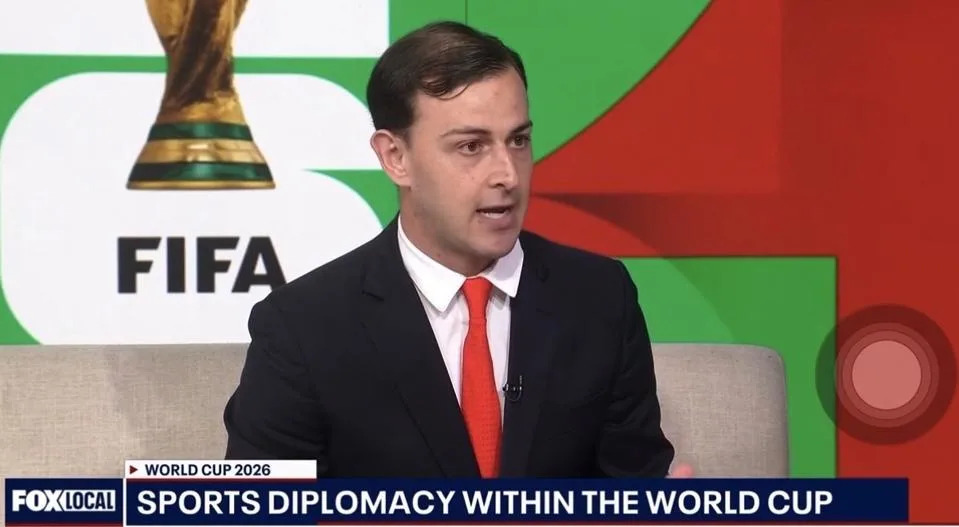
As it turns out, the quadrennial tournament is positioned to kick off a pivotal decade of international sporting championships in the United States, says strategic advisor and Harvard Fellow Samuel Hymes.
He noted that the U.S. faces an unprecedented opportunity, and if the powers that be do the right things, mostly off the playing field, it could go a long way in helping what he calls sports diplomacy.
“The recently introduced American Decade of Sports Act reflects a growing recognition that these events should not be treated as isolated spectacles, but as part of a longer national strategy,” Hymes said recently, which he also wrote in a paper looking at the future.
Over the next eight years, the U.S. will host several major sporting world championships. Here is the impressive list of events:
- 2027 Military World Games (for military sportspeople) in Charlotte, N.C.
2028 Summer Olympics and Paralympics in Los Angeles
2034 Winter Olympics and Paralympics in Salt Lake City
A sixth world championship is expected to be added to the list by FIFA at its Extraordinary Congress in Zurich, Switzerland on Nov. 23. The U.S., along with co-hosts Mexico, Costa Rica, and Jamaica, are the lone candidates.

METLIFE STADIUM, EAST RUTHERFORD, NEW JERSEY, UNITED STATES – 2026/06/16: A giant screen displays the word ‘Attendance 80,545’ during the FIFA World Cup 2026 Group I football match between France and Senegal. France won 3-1 over Senegal. (Photo by Nicolò Campo/LightRocket via Getty Images)
Sports diplomacy, which is essentially soft power, can go a long way in helping a country solidify better relationships with the rest of the world.
“That strategy matters because the benefits could be far greater than ticket sales and television ratings,” Hymes stated. “If handled well, this decade of sports could help the country strengthen global relationships, improve public diplomacy, attract investment and tourism, support American business, expand cultural influence, and build people-to-people ties that outlast any single event. In a moment when America’s image abroad is often filtered through political polarization and geopolitical competition, major sporting events offer a different kind of stage—one where competence, openness, and cultural confidence can speak louder than official messaging.”
Before this year’s tournament, which was co-hosted by Mexico, Canada and the USA, Hymes stated that “the World Cup is one of the few events powerful enough to shape how a nation is seen in real time.”
Hymes felt that the 2026 World Cup was a prime example. Due to the exorbitant ticket price controversy that dominated headlines before the tournament, there was much trepidation about how the World Cup would be received by the U.S. and the rest of North America.
A record 6,810,966 spectators attended games in 104 matches in 16 venues across the USA, Mexico and Canada.
“I think people can take a sigh of relief that the World Cup was a resounding success,” Hymes said. “Prior to the World Cup, for my research, many media were afraid to even talk about this World Cup, even from specific sports publications. They actually spoke more about the World Cup leading into Qatar 2022. But the one about our backyard made a lot of us very nervous, specifically. So, I think after looking back, this is so exciting. And I love how we’re already talking about the excitement of 2038, which I think just shows how great and how excited we are.”
Hymes meant there has been talk of the U.S. hosting the 2038 World Cup, three cycles down the road. But we’ll deal with that in a while.

NEW JERSEY, UNITED STATES – JULY 05: Erling Braut Haaland of Norway celebrates with team mates at full time by banging a drum and doing the viking row after the FIFA World Cup 2026 Round of 16 match between Brazil and Norway at New Jersey Stadium (MetLife Stadium) in East Rutherford, New Jersey, USA, on July 05, 2026. (Photo by Abdulhamid Hosbas/Anadolu via Getty Images)
Beyond Spain winning its second World Cup behind an impressive, new-look defense that was almost impossible to crack, Hymes felt that the biggest victories came off the playing field.
Many cities embraced teams, and foreign spectators embraced many cities. For example, Algerian, Argentine, and English fans were welcomed by the citizens of Kansas City, and the states of Kansas, and Missouri.
Visiting fans sometimes stole the show and headlines with their conduct and enthusiasm. Whether it was a march to the game, invading or taking over Times Square in New York City by the dozens or hundreds, or the Scottish supporters drinking Boston dry, some of the most entertaining and unforgettable moments came well off the pitch.
During and after games, Norway‘s fans performed the Row With Me routine, which the team recreated after the final whistle. And who was beating the drum? Team leader Erling Haaland.
“It’s just everything, even from players really embracing the American culture,” Hymes said. “I think Haaland really embraced Texas. He was one of the people that really embraced the American culture the best.”

EAST RUTHERFORD, NEW JERSEY – JULY 19: Shakira performs during the Topps Final Halftime Show the FIFA World Cup 2026 Final match between Spain and Argentina at New York New Jersey Stadium on July 19, 2026 in East Rutherford, New Jersey. (Photo by Lars Baron/Getty Images)
And speaking of culture, Hymes said the halftime show at the final at MetLife Stadium in East Rutherford, N.J. on July 19 turned out to be a success. Halftime for players usually lasts around 15 minutes. The halftime show lasted 27 minutes.
Madonna, Shakira, BTS and Justin Bieber were among the performers.
“The halftime show was really something that very traditional soccer fans were worried about,” he said. “But now I think that’s going to be something that’s going to happen again moving forward because of how powerful it was. It had the great Ronaldinho and Ronaldo. You had Madonna there. I think it’s going to be something that’s going to be more of a demand for the next time they have it.”
Hymes added the three host countries worked seamlessly together before and during the competition. The U.S. was home to 11 venues, Mexico three and Canada two.
“I thought we were able to work really well together,” he said. “It definitely helped. Especially there is no better tool than sport to connect other countries. I know in the past there may have been other places of poor relationships, but this really brought all three countries together. Especially at the end when we had all the leaders handing out the medals. I think it was really symbolic of a great relationship that is going to progress moving forward.”
U.S. President Donald Trump, Mexican President Claudia Sheinbaum, and Canadian Prime Minister Mark Carney handed out medals at the final.

Cape Verde’s goalkeeper Vozinha celebrates with his national flag at the end of the 2026 World Cup Group H football match between Spain and Cape Verde at the Atlanta Stadium in Atlanta on June 15, 2026. (Photo by ROBERTO SCHMIDT / AFP via Getty Images)
The World Cup also enabled Americans to learn a little more about the world.
The surprising success of Cape Verde turned many heads. The African side drew their three group stage matches. That included playing eventual champion Spain to a scoreless draw. Cape Verde also made Lionel Messi and Argentina sweat before succumbing in extra time in the Round of 32. An expanded World Cup, from 32 to 48 teams, allowed Cape Verde to compete in the tourney for the first time.
“Cape Verde is one of the exciting, great stories from having more teams in the World Cup,” Hymes said. “Many people did not know where it was on the map. They made a strong presence. It’s such an inspirational story. It’s one of the feel-good stories. More countries were able to be on center stage in the world, and people wanted to learn more about their country.”

SEATTLE, WASHINGTON – JUNE 19: Alex Freeman of the United States celebrates with teammates after scoring his team’s second goal during the FIFA World Cup 2026 Group D match between USA and Australia at Seattle Stadium on June 19, 2026 in Seattle, Washington. (Photo by Jamie Squire/Getty Images)
also pitched in on the pitch
The U.S. Men’s National Team’s success also helped the World Cup reach a higher level, and Americans bonded while watching the team, whether it was at home or at Fan Fests. Hymes attended Fan Fests at the National Mall in Washington, D.C. and noted the capacity crowds and passionate responses. The U.S. team won twice in the opening round for only the second time in cup history, and recorded three victories in a tournament for the first time, while reaching the knockout round. The USA, however, was eliminated by Belgium in the Round of 16, in a 4-1 loss.
“I loved seeing the United States national team play together,” Hymes said. “You can see the passion throughout the group stage. I think it really was symbolic of how to build the country better from a soccer perspective. Soccer has been the most played sport since the 70s by the youth. But because we have all these different options, people stray away from it. People were coming to different destinations to not only see the games but to be outside the stadiums, go to FIFA fan cities with FIFA Fan Zones to watch them on a larger screen.”
When FIFA awarded the U.S. the 1994 World Cup in 1988, the U.S. Soccer Federation needed to create a First Division after the tournament. In 1996, Major League Soccer debuted with 10 teams. It has grown to 30 clubs.
Asked what the impact of the 2026 event could have on American soccer, Hymes replied, “I think it’s going to show players from overseas that we have a serious fan base here, especially players that are not leaving. They might not be in their prime, but they’re still exciting. They want to come here when they’re considering they have all these great options and places to go.”
FIFA reportedly will make in the neighborhood of $15 billion from the World Cup. Hymes felt that U.S. Soccer should get some of the money back.
“Absolutely, I think it should go back to the host country,” he said. “I think that’s very important because we want to grow the game here and make it more of a priority. We have more options in other countries. We have football, basketball, track and field, baseball and all the other sports that we are dominant in.
“If FIFA made billions of dollars, we should get some of those billions too.”

Samuel Hymes wouldn’t be surprised if the U.S. winds up hosting the 2038 World Cup.
And about the 2038 World Cup. There’s talk of the tournament returning to the USA sooner than expected.
“Well, no country should have it back-to-back years,” Hymes said. “I think the best part about the game of soccer is it’s global, and it should go to other countries as well. We are currently in the third-longest drought in our country’s history of not hosting a global sporting event. The last event we had was the Salt Lake City Olympics in 2002. Because we’re in the new decade of sport, it’s a great and perfect timeline from this World Cup to the next one.
“It also has shown that projections show that soccer is going to be even more popular at the time. It’s going to be even more of an exciting time.”
With 2038, however, we’re getting just a bit ahead of ourselves over the next decade. Hymes stated that with the six and perhaps seven big-time sporting tournaments that the U.S. will host, the next 10 years present a unique opportunity that cannot be missed.
“This is what makes the American decade of sports such an important national opportunity,” he added. “At its best, it could help the United States modernize how it thinks about public diplomacy, strengthen coordination between government and the sports industry, create economic and civic benefits in host communities, and project a more confident and connected image to the world. It could also encourage the country to treat sport not as a distraction from serious affairs, but as one of the arenas in which serious affairs now play out.
“But that outcome is not automatic. A decade of major events only becomes a national advantage if the country has the imagination to see sport as part of a broader strategic agenda. That is the challenge embedded in the American Decade of Sports Act and in the larger conversation [I’m] trying to bring into the mainstream. The World Cup is the beginning, not the end. The question is whether the United States is ready to use this opening moment to build something bigger – for its global standing, its economy, and its sense of national purpose.”
Michael Lewis, the sixth recipient of the Clay Berling Media Career of Excellence Award in 2025, can be followed on X an Bluesky at @Soccerwriter. His 10th soccer book, Around the World Cup in 40 Years: An American sportswriter’s perspective, has been published.
This article was originally published on Forbes.com
Discover more from NAIRAVOICE.COM.NG
Subscribe to get the latest posts sent to your email.