

 BBC
BBCFootball World Cups are rarely completely politics-free but never has the beautiful game navigated a geopolitical high-wire act of this kind. The main host is at war with a participant, whose team must commute in on match days from another country.
Add to that the quite astonishing coincidence of the US, Canada and Mexico, the three co-hosts of the 2026 World Cup, being in the midst of an epic trade war. Indeed, in the period in between the opening ceremony at the Estadio Azteca, and the final in New Jersey’s MetLife Stadium, the three will be renegotiating the USMCA, the North American free trade area.
Donald Trump is extremely focused on the tournament, its sponsors and the impact from his return to the White House last year. The US president has even joked that his loss to Joe Biden in the 2020 election had the great benefit of allowing him to return for this World Cup, and the Los Angeles Olympics in 2028.
After renewed hostilities between Tehran and Tel Aviv, Trump was rather direct in calling for an end to attacks. And as the minutes ticked down towards the tournament’s kick off on Thursday night, he appeared to call off new air strikes and seemingly promised that a deal to end the war was close at hand. Earlier in the day he had vowed to hit Iran “very hard”. As ever with Trump, much can change very quickly.
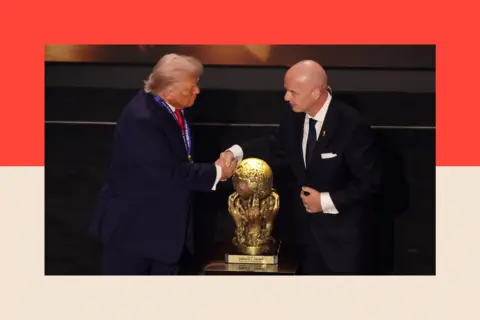
He has already controversially accepted a Peace Prize from FIFA, before initiating the war with Iran that has led to a significant global energy and economic shock. There is even a chance the US and Iran could play each other in the knockout stage on the weekend of the US’ 250th independence celebrations.
 PA Wire
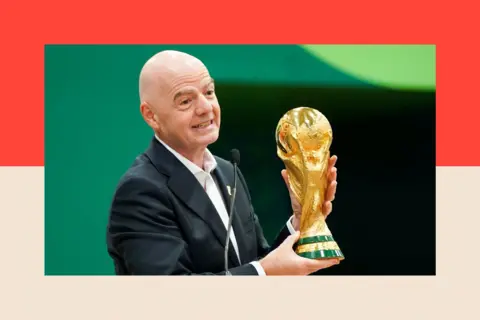
Gianni Infantino, president of FIFA, has previously called for ceasefires during World Cups. If the World Cup helps quicken the pace of moves to de-escalate, there could be a material impact on energy prices, supplies and the world economy.
Whether the World Cup can actually influence the world’s major economic conflict, who knows. But make no mistake – there is another part of the economic jigsaw that is happening right in front of the eyes of football fans worldwide. It’s a complete shakedown of football’s economics and also one of the most visible examples of how some of the world’s major economies increasingly operate.
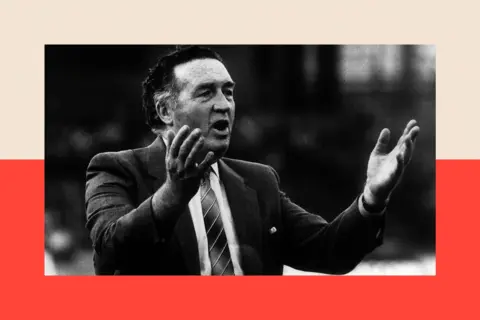
“Football is nothing without the fans,” the legendary late former Scotland World Cup manager Jock Stein once said. Some fans however at the globe’s biggest party will have paid previously unheard-of amounts for what may turn out to be dead rubber games, while forking out roughly the normal ticket price just for the commuter train to get to the stadium. Witness the New Jersey Transit train ticket – normally $12.90 return, but $100 for the tournament.
The fans are being squeezed like never before because this is a very different tournament economic model to what has gone before. For a start, it is largely taking place in borrowed American football stadiums (a quarter of the games are in Canada and Mexico), with the US oval ball sport leaving its mark, perhaps indelibly.
This tournament turns the beautiful game into the bountiful game, for organisers FIFA. This could be the most impactful World Cup ever in economic terms, but not for the conventional reason of driving economic activity among the host nations or sparking feel-good spending among those back home in countries that enjoy a good run.
 Daily Mirror/ Getty Images
Instead, it is a case study of what is known as the K-shaped economy within the world’s traditional advanced economies – where different groups within society experience very different financial outcomes – which when plotted on a graph show one line going diagonally upwards (as on the letter K) and another diagonally downwards (again as on the letter K).
And it is based on a type of attempted economic revolution in the pricing mechanism that clearly does value a certain type of fan more – those on the diagonally upwards line of that graph. It’s important to say FIFA has a very different view of things and stresses those bountiful ticket revenues will be redistributed Robin Hood-style to develop football in the world’s poorest nations.
This tournament is very, very big. The biggest stadiums, the largest number of games by far because the tournament has been expanded from 32 to 48 teams, it will probably have the highest global TV audience of any event ever, and it occurs across the largest mass of land, from Vancouver to Mexico City, ever seen. It is feasible that the winning team will have had to travel a distance the equivalent to the diameter of the Earth.
Then there are the prices. In comparison to the cost of watching elite level football in any other setting, the prices being charged to attend are beyond astronomical. Five-figure dollar amounts for the final, $1000 being the rough typical price for a ticket for one of the more attractive looking group games at the start of the tournament, and even the “bargains” costing a few hundred dollars, for a non-prestige match.
And it is the largest scale trial of an attempt to change the pricing mechanism for events such as this. The use of dynamic pricing, adjusting prices higher and higher in respect of rising demand, has been seen in music concert tickets, and some sports events, but never on this scale.
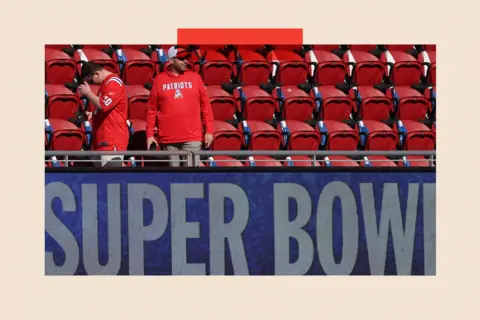
They may call the game soccer in America, but this is definitely American Football economics. In the NFL, seat pricing is designed for yield management – revenue maximisation is prized above the act of selling out the stadium. US sport is priced at the luxury top end, and so much so that the stadiums are mostly shrinking in capacity, rebuilt for many billions with hospitality suites and lounges where once there was seating.
 Reuters
The supply of these experiences is limited by the length of the season – in the NFL you have just nine home games, roughly half the number of major European football leagues and so in the NFL every game counts even more.
Dynamic pricing has provided the method for teams to squeeze the revenue hard, especially as under NFL rules, the massive TV revenues have been split more equally than in football. With all 11 US World Cup venues being NFL stadiums, American football is leaving its mark on its rather different namesake.
This is all very different to previous tournaments. An essential part of the logic of hosting had been to help catalyse new infrastructure including transport and stadium builds and rebuilds.
2026 sold itself as an asset-light tournament that would avoid costly white elephants such as Miyagi in Japan, Cape Town’s Green Point in South Africa, and the $300m Manaus stadium in the middle of the Amazon. The costs had often been met by host-country taxpayers’ capital budgets. In turn, those countries had calculated the investments were worthwhile exercises as nation branding in a more global world. But all three stadia struggled to attract enough post-tournament regular use.
2026 has mainly reversed that logic, with a small exception for Mexico. FIFA has rented the stadia, mostly paid for by American Football fans, and then aggressively maximised revenues with US-style pricing. Whereas previous tournaments had large building costs paid for by taxpayers and borrowing, 2026 costs are instead being paid for by the attendees. And the revenues raised will soar, from the increased number of games, size of stadiums and of course these incredible ticket prices.
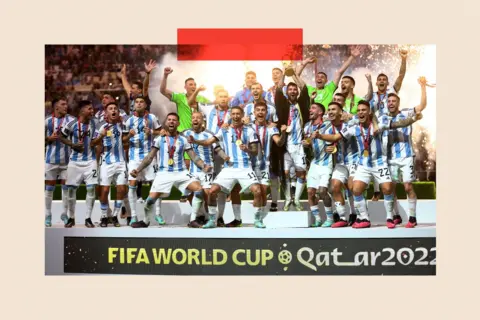
How much revenue will be raised from tickets and hospitality is unclear. It was initially forecast to more than treble, rising from $929m at the 2022 World Cup in Qatar to more than $3bn. Richard Sheehan, economics professor and sports finance expert at the University of Notre Dame, believes the total ticket and hospitality revenue for this years tournament could top $7bn, a seven fold increase. He assumes ticket revenue per match will not just double from the $15m at the last World Cup, but increase nearly five fold to $71m.
 Reuters
It could be a bonanza for the lucky host cities, the stadium owners, the teams and players, but probably not. Unlike USA ’94, the cities are not sharing in this soaring ticket revenue. The stadiums have been rented for a fixed sum. The prize money is set. The cities face having to fund the costs.
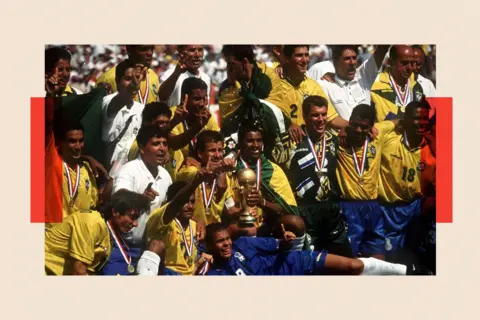
Alan Rothenberg, who led the USA 1994 World Cup organising committee, explained to the BBC World Service: “It’s structurally entirely different. So you really can’t compare it. In 1994, FIFA kept the international marketing and TV revenues and then turned the entire tournament over to the US Soccer Federation, which in turn created a separate entity to run it.
“So we had one entity in this country run by us. We were given some attractive sponsorship categories and licensing opportunities as well as ticket opportunities to sell.”
In 2026, some of the cities have responded by trying to recoup the security and transport costs of hosting the tournament. The price of transit trains from New York was increased tenfold, before being slightly cut to $98. The Boston train link costs $80. Parking a car? Official rates range up to $175, even $225.
It is a world away from the free transport offered to ticket holders at tournaments in Qatar in 2022, Germany in 2010, Japan in 2002 and France in 1998. In Japan, local volunteers lined routes from the bullet train stations to the stadiums with locals bowing to the fans, feeding them, and on a few occasions after last trains had departed, paying for their taxis home.
 Getty Images
After a backlash, FIFA points to the release of some tickets, at lower price points, such as $60, to be distributed by national associations. The most remarkable new development has been the attempt to incorporate the secondary market, touting (or scalping as it is known in the US) within the FIFA ticketing system. Almost all fans can relist their tickets for sale with no upper limit at all, with FIFA taking a 15% cut from both seller and buyer. There have also been tickets allocated through a crypto-linked digital collectible system built on FIFA’s blockchain. FIFA says they are extracting the ticket tout or scalpers’ premium and claiming it for itself and the global football community.
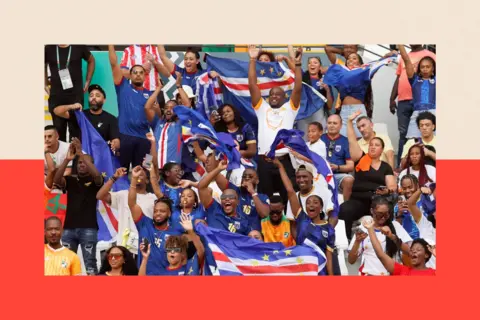
The billions of dollars in extra cash are going initially into FIFA’s reserves, with that promise to distribute its funds to the global football family. FIFA points to such grassroots funding helping to allow Cape Verde to qualify for this year’s competition thanks to improved infrastructure and grassroots development of the game. It tends to distribute these development funds equally to the 211 member associations, meaning tiny Montserrat gets a windfall from FIFA worth 2.5% of its annual GDP, or $500 per person. The equal distribution model has existed since the 1990s, and was supercharged by FIFA President Gianni Infantino as part of his election pledge. It is driven by the one-country, one-vote system, which has also been used to select the World Cup hosts from this year on.
 Reuters
All that was before dynamic pricing took off. If Needham’s estimates are correct, FIFA’s average $3.9bn annual revenue now exceeds the World Health Organisation budget and is around the same as the UN’s core budget.
“What you’re seeing now for the World Cup is probably the first real introduction of dynamic pricing at its most dynamic, in its most complete form… basically FIFA is taking all the scalping possibilities and moving them all in-house.”
For now, the pricing means it is unclear exactly how much revenue will come in, but a very large pot of money is being created by the ticket prices. In theory, this money will be welcome by the vast majority of smaller nations who will never qualify for the World Cup or send fans to pay the ticket prices, but who form the electorate for FIFA presidential elections and host nation decisions. The Golden Goose is shimmering right now in terms of value.
But as the World Cup’s doors open, there is a risk from this extreme commercialisation.
Will the stadiums be full? Will there be armies of fans from the 48 nations creating the kind of atmosphere that would have satisfied Jock Stein? Will FIFA have to repeat what happened at its Club World Cup last year, and slash prices for tickets as low as $11 to fill seats? On this note, what isn’t clear is whether the FIFA dynamic pricing model is prioritising maximising revenue or ensuring all tickets are sold.
Last month, Infantino told an economic conference that “we have to apply market rates” and that football had to adapt to this “very special market”. It is obviously, however, a choice to allow unlimited resale prices, and choose repeated aggressive rounds of demand-led price increases.
The European model taken by the likes of back-to-back European champions Paris Saint-Germain, is very cheap season tickets at either end of the ground behind the goals, with extraordinary corporate pricing for the seats nearer the halfway line. The idea is that the corporates will be attracted in part by the spectacle and noise of the ultras behind the goals in the cheap seats. The risk for the World Cup is that all that is lost.
There are some signs that the World Cup pricing model is facing a backlash. There have been falls in resale prices for low demand games – two tickets with a face value of $620 (£471) could be bought for £171 on FIFA’s own resale site – 64% cheaper.
Few of those $98 tickets were sold on that New Jersey train. Authorities in New York, New Jersey, California and in the EU began looking at complaints about ticketing strategies. “A gauntlet of confusion, fake scarcity and impossibly high prices,” according to NJ Attorney General Jennifer Davenport, chief prosecutor for the state hosting next month’s final. Whether the state has any jurisdiction over a Swiss-based “non profit” is unclear. FIFA have declined to comment.
The open question is whether FIFA has pushed this experiment in pricing to a breaking point. It seems unlikely that the fans in the host cities of the next World Cup in 2030 in Spain, Portugal and Morocco, will tolerate such prices. British and Irish authorities have already ruled it out when they host Euro 2028, when Europe’s top footballing nations compete against each other. It comes at a time when AI could enable the next big innovation in pricing services – personalised prices for different individuals, based on their data.
Some Premier League clubs are dabbling with pricing a selection of seats dynamically to boost revenues. It cuts across the traditional model of a loyal fan purchasing a fixed price season ticket. If this FIFA experiment appears to succeed, it could embolden the US NFL-linked owners of many European Clubs to attempt to price tickets similarly, especially to fund new stadiums.
The US NFL model has been applied to an event that is owned by the world. The US “K-shaped” economy – with boom for the richest top 10% driving as much as half of all consumer spending, according to analysts Moody’s, but stagnation and retrenchment at other income levels, may be on display in the stadiums. Dynamic pricing is a technology which seeks out that 10% and prices what may have been once a mass experience for ordinary working people to a tech boom fuelled niche.
The wider hope for many host nations is that more traditional feel-good effects boost consumer confidence and investment the football. Research has shown some effects, especially for well-performing host nations, and negative impacts on stock markets when teams are knocked out. There were some signs in the latest US jobs figures of tens of thousands of new jobs being created especially in hospitality, linked to the World Cup. The overall boost to the economy will be limited, however, by the sheer size of the US economy and its AI investment boom. Jordan vs Algeria may struggle to distract San Francisco from its current role birthing multi trillion AI stock market flotations.
 IMAGN IMAGES/Reuters Connect
Rahm Emanuel, Mayor of Chicago, the major US city that withdrew as a host of the World Cup, appears to feel vindicated by the decision. FIFA took all the ticket revenue from the hosts, and there are grumbles about hotel bookings in some host cities actually being well down. Many of the host stadia would have been full with rock concerts were it not for the football.
On the face of it, the economic impact in the US of a tournament renting existing stadiums, for which the vast increase in ticket revenue is mainly being diverted to FIFA, may be limited. The potential for economic benefit focuses on a boost to consumer confidence. In the UK, decent runs for England and Scotland may be just the tonic after years of never-ending political and economic crises. Retailers and hospitality are certainly preparing for bumper sales.
Around Russia 2018, analysts Kantar calculated that there were an extra 13 million supermarket visits as people stocked up at home. But there is also the possibility that Britain’s productivity challenges will not be helped by the late-night kick-offs. Next Monday has already been announced as a Bank Holiday in Scotland to help the nation with the 2am start for the Tartan Army game against Haiti.
For many it will be a welcome escape from the relentlessness of the news, even if the curiosities of the Trump White House could, in fact, offer a wider economic opportunity.
It is a very different world economy, and this shapes the backdrop to this feast of football. FIFA is conducting a consequential and controversial pricing experiment that could change the game. Meanwhile a highly unusual World Cup might just take the edges of our new world disorder. It’s a hope rather than an expectation, but that is a feeling familiar to any English or Scottish football fan.
Top image credit: IMAGN IMAGES/Reuters Connect

BBC InDepth is the home on the website and app for the best analysis, with fresh perspectives that challenge assumptions and deep reporting on the biggest issues of the day. Emma Barnett and John Simpson bring their pick of the most thought-provoking deep reads and analysis, every Saturday. Sign up for the newsletter here
Discover more from NAIRAVOICE.COM.NG
Subscribe to get the latest posts sent to your email.