
The previous installments of Timberwolves basketball, as menacing of a frontline it featured with the likes of Rudy Gobert, Karl-Anthony Towns, Julius Randle and Naz Reid, were all too predictable.
Minnesota‘s modus operandi had always been to display its physicality on front street, a tour de force of brute strength designed to wear opponents down on both ends of the floor. The Wolves’ aggressive approach, contextualized within the larger scope of the Western Conference and Anthony Edwards‘ presence as a unicorn of sorts, defined their status as contenders over the last few seasons.
Their postseason elimination at the hands of the Spurs, however, forced a recalibration. Throughout the second-round series, San Antonio leaned on its speed, quickness and versatility to dismantle Minnesota at seemingly every turn. It certainly didn’t help matters that Randle turned in one of his least-efficient offensive showings and Gobert was neutralized by his countryman, Victor Wembanyama, but it was clear something needed to change.
On Wednesday, free agent forward Jonathan Kuminga reportedly agreed to a two-year, $12.4 million deal to join the Wolves that includes a player option. It’s the latest move in what has been a busy summer for president of basketball operations Tim Connelly and general manager Matt Lloyd, with star guard LaMelo Ball now in the fold and key reserve Ayo Dosunmu re-signed as well, and with both Randle and Reid traded to Brooklyn and Charlotte, respectively.
Let’s put the financials aside for a moment. Yes, Kuminga’s decision-making over the last few seasons, particularly as it relates to contractual wishes, has been iffy. The memes have been flying all over the internet (as well as the unfortunate comparisons to Dennis Schröder‘s somewhat similar situation, turning down a substantial amount of money and never getting close to it again). But let’s be honest here. From a flexibility standpoint — in late August — are we sure this is the choice to ridicule?
Perhaps Laker faithfuls feel strongly in the opposite direction given Kuminga’s declining of a starting role there alongside Luka Dončić and Austin Reaves (although I truly believe that would have gone sour). At this stage of his career, he should be on prove-it deals, ensuring he can coexist on the most talented team he’s ever been on without any hiccups. Six million dollars a year, with a chance to improve his stock before testing the free agency waters again in 2027 — if he so chooses to — feels like a win for both sides.
While there’s a decent bet that Kuminga, who will turn 24 in October, may not be the “hand in glove” fit at power forward, there’s enough surrounding talent to make the fit work. Recently, Connelly sat down with longtime reporter Jon Krawczynski and urged for a low-usage, high impact complementary player.

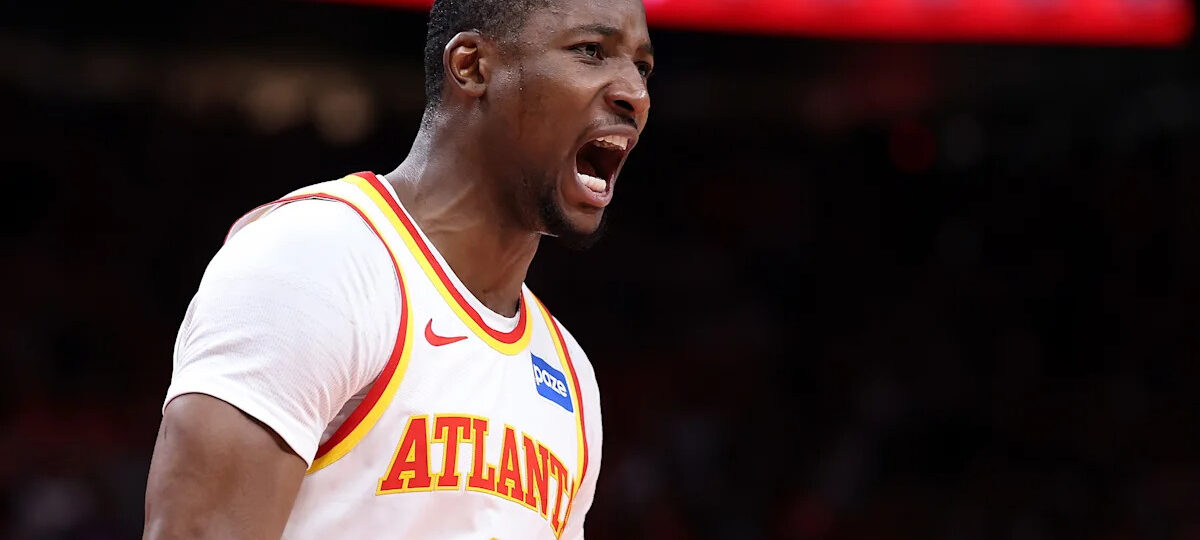
Will Jonathan Kuminga’s career finally take off in Minnesota? (Brett Davis-Imagn Images)
“We are going to have a lot of volume guys,” Connelly said. “Jaden is going to have more volume. LaMelo and Ant are going to have a lot of volume. Ayo is going to have a huge volume. So what we need is guys who can do more with less … we’re going to play a different brand of basketball.”
Eschewing size for speed certainly comes with its tradeoffs, but Kuminga has shown how his intangibles (which often go unnoticed in a fast-paced NBA game) can pay dividends. Scaling down his usage will probably be a work in progress — high-volume types don’t change course overnight — but other aspects of his game, particularly his rebounding prowess and versatility are worth gambling on, especially at that price point.
Outside of his rookie season, Kuminga has been one of the league’s premier possession extenders and finishers at his position. Prior to his trade to Atlanta, the 23-year-old was rebounding at an extraordinary rate as an 88th percentile glass cleaner, leveraging his 6-foot-11 wingspan and athleticism to beat slower power forwards and centers on the boards. Randle was a lot of things in Minnesota, but a proficient rebounder was not one of them. Reid was at least decent in that aspect, but offered minimal impact on second-chance opportunities. For a team that will be learning on the fly with Ball and Edwards manning the controls, having a player like Kuminga who can offer more cracks in the half-court — for a team that finished 18th in both offensive and defensive rebounding rate — is important.
Earlier last season when Kuminga had actually earned a starting role with the Warriors, he was at his best serving as an off-ball threat, spacing the floor for other ball-handlers while offering his services as a slasher and cutter. He finished in the 80th percentile in points per possession off cuts, a skill that will definitely come in handy as defenses load up on the likes of Ball and Edwards. Kuminga is also excellent at drawing fouls, getting to the line on around 16% of his shots, and knows how to find pockets to attack, even with traditional bigs like Gobert on the floor. And in instances where one of Minnesota’s superstars are off the floor, Kuminga has shown capable of serving as a secondary/tertiary operator, among the top third in assist rate for five straight seasons.
Defensively, there’s no questioning whether Kuminga is an upgrade over Reid/Randle. His brief stint in Atlanta, surrounded by vastly more athletic talents than with the Warriors, offered a snapshot into what his impact can look like extrapolated to a larger scale. Per PBP Stats, the Hawks were a stunning +14 in Kuminga’s minutes and held a defensive rating of 103.6. Now, we’re not saying he’s the best or most impactful defender in basketball — far from it — but he is smart, knows how to work within the constructs of a half-court scheme and can toggle between assignments in ways his predecessors simply could not. (Kuminga ranked in the 90th percentile in defensive versatility compared to 58th for Randle.)
Does this move come with questions? Of course. This is one of the more talented players who had to wait until nearly September to sort out his future. He hasn’t been particularly effective in transition considering the opportunities he gets to run the floor, is an average outside shooter at best and his shot selection and overall decision-making has left his coaching staff scratching their heads at times. But the Wolves are gearing up for their biggest push yet and adding Kuminga, a low-cost, potentially high-impact move, is a risk worth taking out West.
Discover more from NAIRAVOICE.COM.NG
Subscribe to get the latest posts sent to your email.