
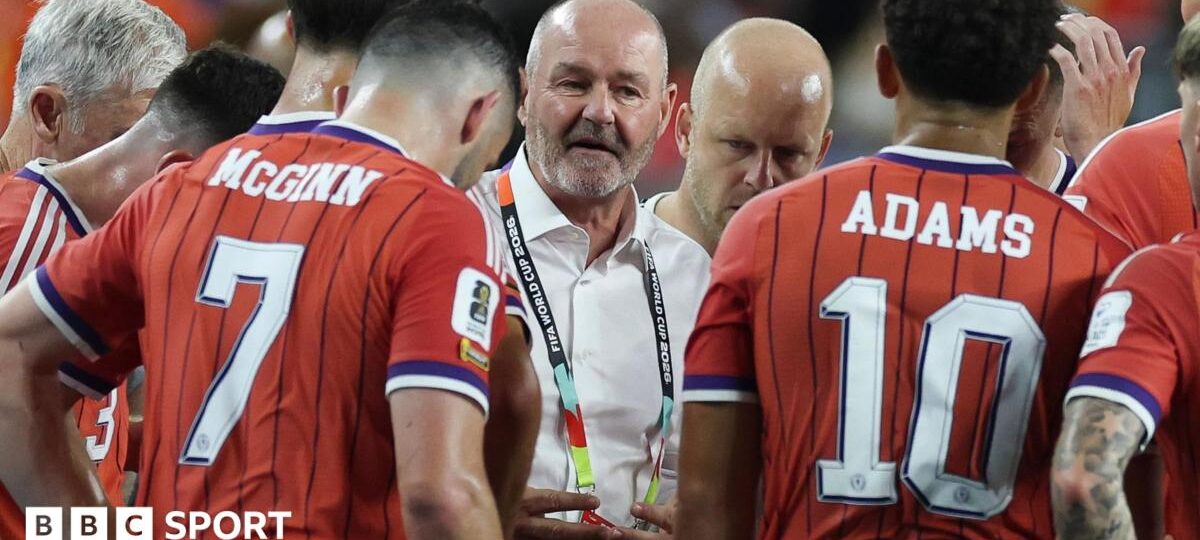

Scotland fans are no strangers to pondering permutations. But the stakes are much, much higher at a World Cup finals.
What would a point here mean? What if we lose that one? Might our rivals drop points elsewhere?
The conversations will already have started, in that most Scottish of ways. Win your first World Cup game in 36 years, immediately think you’ll probably lose the next two, and wonder if you’re out or not already.
That’s the spirit.
After the opening round of matches, Scotland sit top of Group C, Brazil and Morocco trailing in their wake. But what chance of a first ever progression out of a major tournament group stage?
Would three points be enough for last 32?
Everyone had this down as a must-win. Purely based on the belief Scotland were likely aiming to be one of the best eight third-placed teams from the 12 groups.
Sitting top of the section was not something many would have imagined, though.
But first let’s start of with the doomsday scenario. Scotland lose to both Morocco and Brazil and manage to finish third. Then it comes down to goal difference.
With the win in Boston by just a single goal, Steve Clarke’s side now arithmetically can’t finish on three points with anything other than a negative goal difference.
According to Football Meets Data, a goal difference of -1 offers an 87.5% chance of progression, which would be a reality if the Scots lost by a single goal in their final two games.
That drops to 69.4% with a -2 difference, and 47.3% at -3. You get the picture.
This is where Scotland’s ineffective attack could prove costly. They had an xG (expected goals) at the Boston Stadium of 1.05. Aside from John McGinn’s goal and Scott McTominay hitting the post, that was about it.
Often the set-piece deliveries were poor – which results in a set play xG of 0 – with the saving grace being Scotland’s defence stood up well to some fraught pressure to keep a clean sheet.
Another goal against Haiti could have meant finishing on a goal difference of zero was possible, which would have brought a 96% of progression.
“Winning games at major tournaments isn’t something Scotland do regularly,” said former Scotland talisman James McFadden on BBC Scotland.
“The resilience shown – that’s what has been forged in this group. It wasn’t enjoyable but I would have taken an ugly 1-0 win beforehand.
“The next two games are going to be tough, but they have dealt with the pressure of this game.”
What if Scotland get more points?
Now a bit of positivity…
Earn another point and Scotland would almost certainly make it out of the groups for the first time, with Morocco back here on Friday offering a chance of just that.
Putting it simply, Clarke’s team are a clean sheet away from the last 32.
The thing on the minds of many Scotland fans filling beer gardens across Boston over the next week will be which is the harder game: Morocco or Brazil?
Carlo Ancelotti’s team turned in an underwhelming showing in New Jersey, after all, and had to come from behind to snatch a draw.
There will be no fear from Scotland going to face either of these teams. However, they will need to be a lot better in possession if they are to avoid defeat.
The Scots’ pass completion rate against the 83rd best team in the world was only 82%, with more backward passes and fewer going forward.
However, this team has shown their ability to rouse themselves, and ultimately they got the job done here.
“I don’t think anybody is going to be quaking in their boots to play Scotland,” said former Scotland winger Pat Nevin. “But what they don’t know is we can do a lot better than that, and that’s maybe our secret weapon.”
What does history tell us?
This section was compiled by our Ask Me Anything team
In the seven previous tournaments, going back to 1998, each time the fifth-best third-placed team finished with at least three points: Colombia (1998), Portugal (2002), Poland (2006), Ivory Coast (2010 and 2014), Nigeria (2018), Tunisia (2022).
So goal difference could play a major factor in determining matters this year.
In 1998, three points and a -2 goal difference was enough for Colombia to be one of the five best third-placed teams. In 2006, Poland finished the tournament as the fifth-best third-place side with three points and a -2 goal difference.
Ivory Coast finished as the fifth-best third-place finishers in 2010 with three points and a +1 goal difference. Whereas in 2002, Portugal finished with a +2 goal difference on three points as the fifth-best third-placed team.
In 2022, there was a three-way tie for the fifth-best third-placed team: Tunisia, Cameroon and Uruguay all finished on four points and a level goal difference, with one win, one draw and one defeat each from their three group stage matches.
With 12 groups instead of eight at this tournament, there is room for a broader range of results but if recent history suggests anything, it is that teams should not rely on three points being enough to progress – and that goal difference will be key.
In 1998, 2002, 2010, 2014, 2018 and 2022, there were 13 third-placed teams who finished on three points but were not among the top five third-place finishers.

Discover more from NAIRAVOICE.COM.NG
Subscribe to get the latest posts sent to your email.