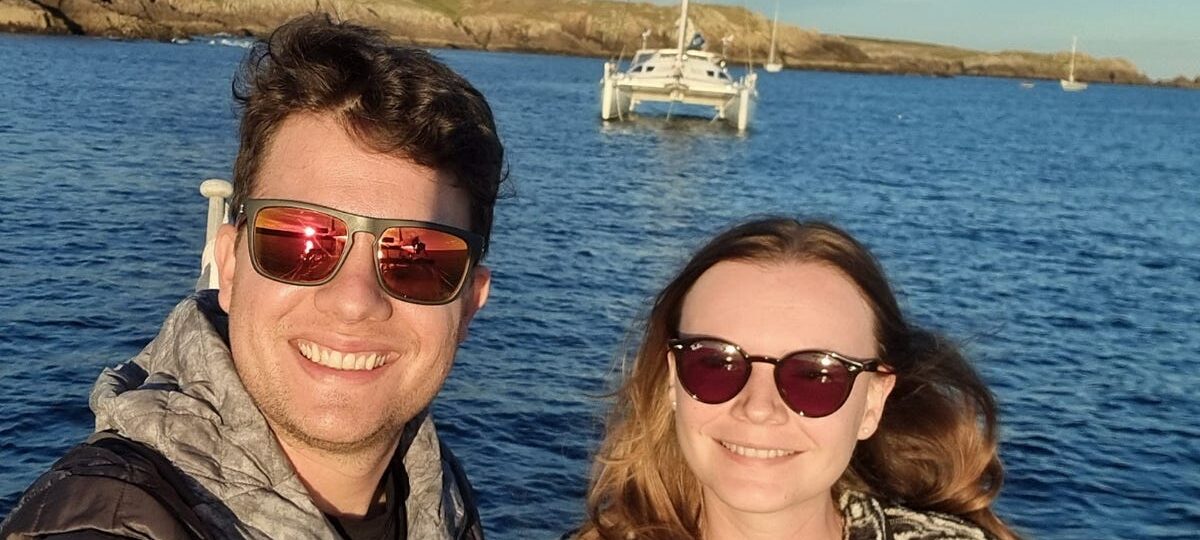
Three years ago, my husband and I packed up our lives in the suburbs of London and moved aboard a 36-foot sailboat.
We’d sailed before and had spent weeks on boats each year for our vacations, but living on one full-time proved to be very different.
We ended up living aboard and sailing through Europe for 18 months before my husband received a job on land, and we had to leave.
The lifestyle was a dream in many ways, but some aspects were more challenging than we ever could’ve expected.
Once our boat left the dock, we were limited to only the supplies that we had on board.
We had to carry everything with us: food, water, diesel fuel, cooking gas, medical supplies, spare parts, and anything else we could need.
Knowing exactly how much of something we had — but not knowing exactly how long we’d need to make that thing stretch — naturally made us want to ration just about everything.
I found myself monitoring how much food we were eating each day, how much water it took to do the dishes, and how long the stove had been on.
We also had to stay mindful of how charged our batteries were.
Aside from the potential annoyances of the lights going out or the fridge no longer working, running out of power can become dangerous quickly at sea.
We’d need electricity to power the lights and systems that let other boats see us; we also needed to keep our radio powered in case we had to call for help.
Living in a tiny space also made life difficult.
Neither of us is claustrophobic, and we both actually liked the boat’s coziness, but working remotely was tough.
If one of us had a call, there was nowhere to escape the noise, and it was very hard to avoid distracting each other.
So much can go wrong on a boat, and the consequences can be very serious.
To sail safely, you need to understand the risks and know how to solve problems that arise … which doesn’t exactly create the most relaxing environment.
We needed to be constantly attuned to changes in the weather.
I had to check the forecast multiple times a day, monitor the actual conditions we were experiencing, and move the boat if things ever felt unsafe.
Then, there was the stressful topic of money.
Boat repairs can be unpredictable and pricy, and working as consultants also meant that our finances fluctuated.
If a key system like our Starlink internet broke, we would not only have to deal with replacing it — we also wouldn’t be able to earn any income from our remote work while it was down.
Even with the best planning, boats can be a nightmare to maintain.
The salty, wet environment meant that our electrical wiring would corrode quickly, any exposed metal would quickly rust, and we’d frequently find mold growing on walls and inside cupboards.
Plus, systems don’t just break during the daytime.
Alarms go off at all hours, and emergencies need to be dealt with immediately.
We once woke up to find that the lowest part of the boat was completely filled with water.
I started bailing out the water while my husband tried to find the source of the leak.
By the time we’d cleaned everything up and gotten back to bed, it was 3 in the morning.
Despite the many challenges, though, I’m still very glad I got the opportunity to live at sea.
I explored the entire west coast of Europe, got really good at problem-solving, and gained confidence in my own abilities.
Sailing full-time is hard, but it was worth it for me — even though I’m glad I’m back on land now.
Discover more from NAIRAVOICE.COM.NG
Subscribe to get the latest posts sent to your email.