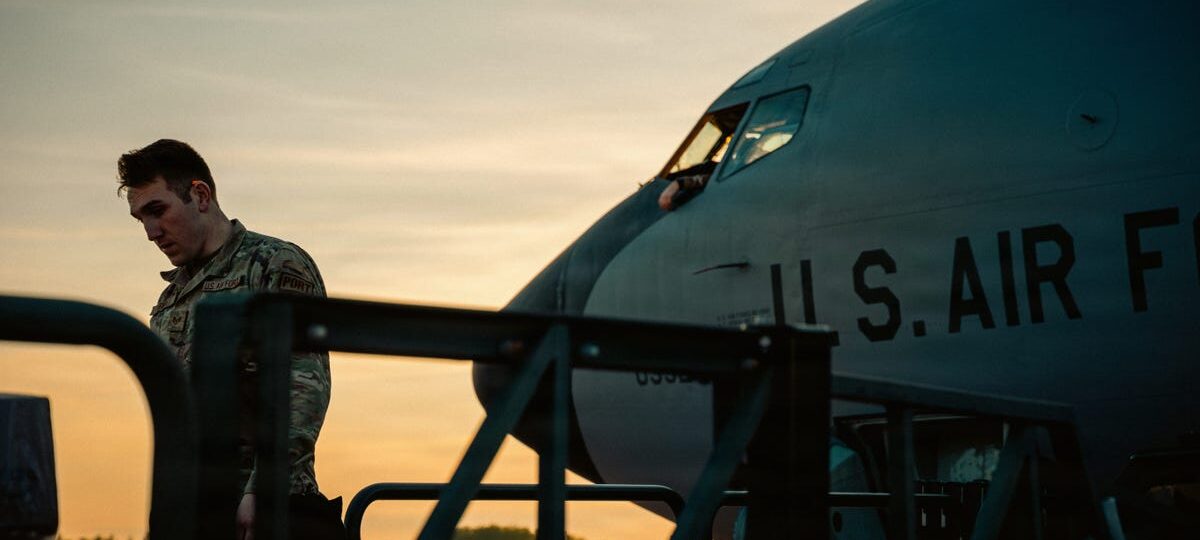
The US Air Force’s aerial refueling tanker fleet has fallen short of its readiness goals every year since 2019, a government watchdog found, raising new concerns about a critical part of the US military’s airpower.
According to a new report from the Government Accountability Office, the Air Force’s aging KC-135 Stratotanker and newer KC-46A Pegasus tanker fleets did not meet availability and mission-capable standards from fiscal year 2019 through fiscal year 2025.
Despite having identified “sustainment risks” for the fleet, the Air Force “has not comprehensively assessed these risks or developed a plan to mitigate them,” the GAO report said.
Those risks included shortages of critical repair parts, a lack of personnel to maintain the aircraft, and “infrastructure limitations.” The report noted that the service has taken some steps to remedy those failures but lacks a comprehensive plan to prevent more breakdowns.
Specific “annual availability” figures and “mission-capable rates” for the tanker aircraft were not included in the report; the Pentagon said those rates were too sensitive for public release.
Tankers effectively serve as flying gas stations for other military aircraft, extending their reach.
They refuel planes like fighter jets and bombers, which are sometimes tasked with long missions exceeding the capacity of their own fuel tanks, forcing them to depend on tankers to stay in the air.
The report’s findings come as the military has relied extensively on tankers and their skilled crews for last year’s strikes on Iranian nuclear facilities, a major January raid into Venezuela to remove the country’s president, and throughout the war in Iran.
Award citations for half a dozen fighter jet pilots who flew in support of the 2025 Midnight Hammer strikes said that they returned home “critically low” on fuel after encountering an “aerial refueling fallout” early on in the mission.
During the later war with Iran, tankers crucially supported intense combat air operations.
Refueling aircraft were damaged amid exchanges of fire, and six US service members were killed in March when their KC-135 Air Force tanker crashed while flying over Iraq.
The KC-135 tanker carries more than 212,000 pounds of fuel, while the KC-46A carries slightly less, at 200,000 pounds.
They’re a critical component of American airpower facing readiness problems compounded by incomplete data, the report said.
The air service tracks aircraft availability and readiness rates, but those metrics aren’t detailed enough to specify whether a tanker that can fly can actually conduct its most important job — refueling.
Tankers can be counted as “mission capable” as long as the plane can perform at least one assigned mission, and that isn’t necessarily refueling another aircraft.
The service’s KC-135 fleet is growing old.
The aircraft first entered service in the 1950s, and new problems arise as the fleet ages.
Meanwhile, the newer KC-46A has been plagued by years of production delays and operational challenges, including problems with its refueling boom, which transfers fuel to receiving aircraft, and its remote vision system, a sort of rear-view camera.
The GAO report authors noted that earlier this year, Air Force officials identified “critical deficiencies” with KC-46A systems and more concerns related to manufacturer Boeing’s “quality control procedures,” citing problems with “frequently failing electrical components on the boom, sensors that do not perform accurately, airframe cracks, and other structural issues.” Military aircraft experts have previously raised concerns about tanker readiness.
The refueling problems described in the fighter jet award citations point to a problem the Air Force is “whistling past the graveyard on,” John Venable, a retired Air Force pilot and senior fellow at the Mitchell Institute for Aerospace Studies, told Business Insider last month.
It’s unlikely the Air Force could support a major contingency operation based on the current status of its tankers, Venable said. “It’s a very complicated situation,” he said, but ultimately, “the Air Force does not have enough tankers,” or repair parts, “to be ready for a major fight.” “The tanker fleet remains a cornerstone of US power projection, actively delivering vital refueling support around the globe,” an Air Force spokesperson said in response to a Business Insider query on the GAO report’s findings. “The Air Force,” they said, “concurred with the report’s recommendations and is aggressively working to resolve readiness challenges so our tankers can continue to provide critical support to the warfighter.”
Discover more from NAIRAVOICE.COM.NG
Subscribe to get the latest posts sent to your email.