 Image source, Getty Images
Protests turned violent with protesters blocking roads, vandalising factories and setting vehicles on fire
Hundreds of garment factories in Bangladesh have been forced to closed after days-long protests by workers demanding higher wages.
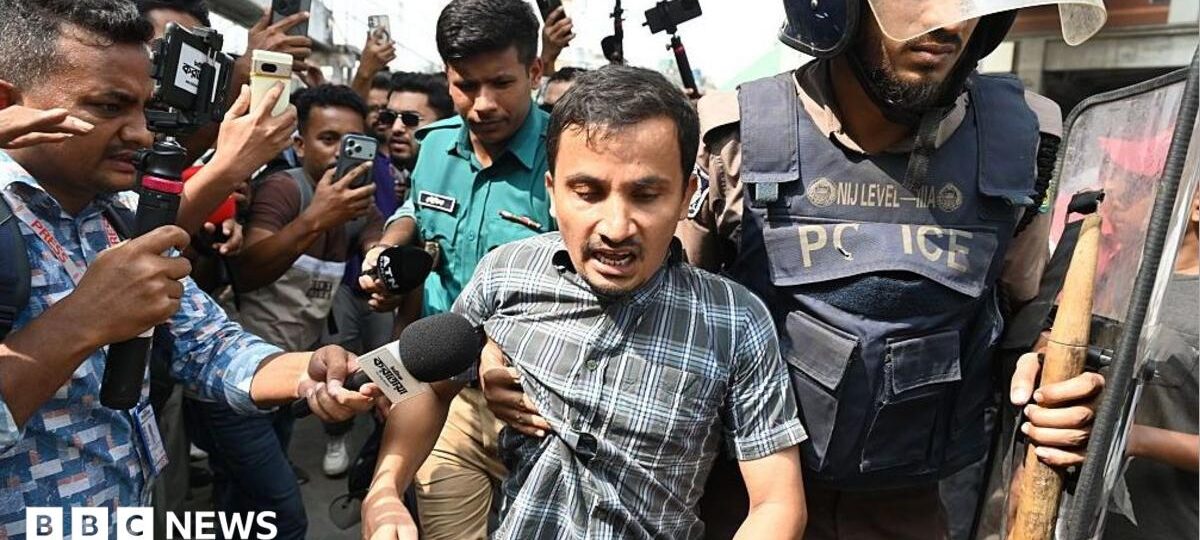
On Sunday, protests in the capital Dhaka turned violent with protesters blocking roads, vandalising factories and setting vehicles on fire. They also clashed with police, who fired tear gas to disperse them. Police later said that dozens of protesters had been arrested.
Workers are demanding a minimum monthly wage of 30,000 taka ($242; £180), more than double the current standard, citing rising costs of living.
Bangladesh’s textile industry employs around four million workers and manufactures garments for major global brands including H&M, Primark and Uniqlo.
There are fears in the industry that the prolonged unrest could disrupt production and affect international buyers, state news agency BSS reported.
The garment industry generates nearly $40bn every year for Bangladesh, accounting for around 10% of its GDP.
The South Asian nation is the world’s second-largest garment exporter after China – but its workers are among the lowest-paid in the world, taking home around 13,000 taka ($105; £78) a month.
“We want the government to accept our demands and increase our wages. [And] they need to instruct landlords and homeowners not to raise rent and ensure that the prices of essential commodities remain affordable,” one female worker told BBC Bangla.
“Food prices, cooking gas and electricity bills have all gone up,” Mamun, a 28-year-old factory worker, told AFP. “The government must either bring down the prices of essential commodities or raise our wages.”
The government announced on Sunday that it had established a board to review workers’ wages, and Prime Minister Tarique Rahman held an emergency meeting with ministers to address the unrest.
But demonstrations continued on Monday in Dhaka and nearby manufacturing hubs including Ashulia, Gazipur and Narayanganj.
Around 670 factories suspended operations on Monday, according to reports by Reuters and AFP, and hundreds in these areas will remain shut on Tuesday.
At least 29 protesters were arrested as of Monday, according to Dhaka police Deputy Commissioner Mohidul Islam, who said that those who created an “unstable environment in the garment factories” would come under the law.
 Image source, AFP via Getty Images
Garment workers demanding better wages clashed with police
Authorities have accused the Awami League, the banned political party of former leader Sheikh Hasina, for taking advantage of the protest movement to instigate violence – though they did not provide any evidence of this.
Home minister Salahuddin Ahmed threatened punitive action against protesters who were trying to “destabilise the country” “under the guise of labour protests”.
Babul Akhter, a workers’ representative on the wage board, urged protesters to go back to work on Monday, promising to “fight for [their] fair wages”.
“I tell my fellow workers, return to work. Don’t give in to anyone’s incitement.”
Related topics
Discover more from NAIRAVOICE.COM.NG
Subscribe to get the latest posts sent to your email.