
The Women’s Africa Cup of Nations (WAFCON) has undergone a remarkable transformation since its inception in 1991. What began as a modest competition involving home-and-away qualification matches has become one of the continent’s biggest sporting events, producing world-class footballers such as Asisat Oshoala, Perpetua Nkwocha, and Barbra Banda, who have inspired millions of young girls and reshaped the landscape of women’s football across Africa.
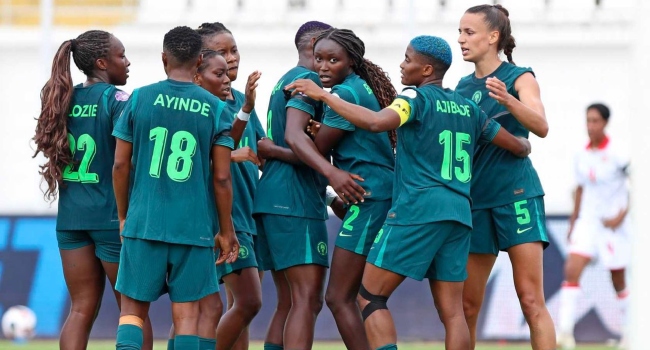
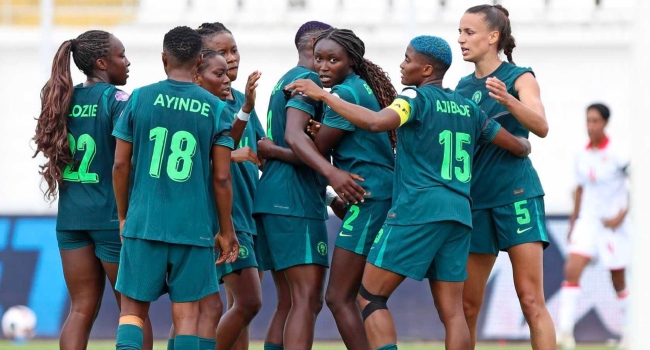
Over the past three decades, the Super Falcons of Nigeria have cemented their dominance and presence on the continent. Notwithstanding the increased competitiveness and coverage that pulled eyeballs, it has given rise to new challengers who have put a minor dent in the giants of Africa’s dominance.
Today, WAFCON is not only Africa’s premier women’s football championship but also a major pathway to the FIFA Women’s World Cup
Nigeria Set the Standard
When the Confederation of African Football (CAF) launched the Women’s African Championship in 1991, few could have predicted they would win 10 of the 113 titles.
The Super Falcons defeated Cameroon over two legs to become Africa’s first women’s champions, earning qualification for the inaugural FIFA Women’s World Cup.
Four years later, they successfully defended their title, beating South Africa to retain the continental crown. The competition adopted a tournament format in 1998, with Nigeria hosting the finals. The change in structure did little to disrupt the Super Falcons’ supremacy. They won the inaugural tournament-style championship and went on to capture every subsequent title until 2006, establishing one of the greatest dynasties in African sporting history.
Behind that success were generations of exceptional players. Legends such as Mercy Akide, Florence Omagbemi, Nkwocha, Rita Nwadike, Stella Mbachu and Cynthia Uwak inspired Nigeria’s dominance before passing the baton to stars including Oshoala, Desire Oparanozie and Onome Ebi, who sustained the country’s position at the summit of African women’s football.
Equatorial Guinea Break The Monopoly
After nearly two decades of Nigerian dominance, the balance of power finally shifted in 2008.
Host nation Equatorial Guinea stunned South Africa 2-1 in the final to become the first country outside Nigeria to win the continental title. Their triumph represented a watershed moment for women’s football in Africa, proving that the Super Falcons were no longer invincible.
Equatorial Guinea reinforced that achievement in 2012 with a convincing 4-0 victory over South Africa in the final, becoming only the second nation to lift the trophy. Although controversies later emerged over player eligibility during that era, their victories remain part of WAFCON history and marked the emergence of stronger competition across the continent.
The Super Falcons Reclaim Their Throne
Nigeria responded in typical fashion. The Super Falcons reclaimed the title in 2010 and continued their winning tradition with further triumphs in 2014, 2016 and 2018. Throughout this period, one crucial element stood out for Nigeria: subsequent coaches discovered that a blend of experienced leaders and emerging stars maintained their status as Africa’s benchmark despite increasingly fierce opposition.
The 2018 final in Ghana was one of the most dramatic in the tournament’s history. After a tense goalless draw against South Africa, Nigeria prevailed 4-3 in a penalty shootout to lift a record-extending 11th title.
South Africa’s Long-Awaited Triumph
No team had come closer to ending Nigeria’s dominance than South Africa. Having finished as runners-up five times, Banyana Banyana finally realised their dream in 2022. Under coach Desiree Ellis, South Africa defeated hosts Morocco 2-1 in Rabat to secure their maiden WAFCON title.
The victory was widely celebrated as the reward for years of sustained investment in women’s football and highlighted the narrowing gap between Africa’s traditional powerhouse and the continent’s emerging elite.
Morocco’s Rise Signals New Era
Although Morocco fell short in the 2022 final, the hosts captured the imagination of African football with their remarkable run to the championship match.
Backed by significant investment from the Royal Moroccan Football Federation, Morocco has rapidly emerged as one of Africa’s leading women’s football nations. Their successive appearances in the latter stages of major tournaments underline the growing competitiveness of WAFCON and suggest that the list of champions may continue to expand in the coming years.
Nigeria Restore Its Dominance
The 2024 edition reaffirmed Nigeria’s position at the pinnacle of African women’s football. The Super Falcons produced another impressive campaign, defeating hosts Morocco in the final to capture a record-extending 10th continental title. The victory demonstrated the team’s resilience and ability to evolve despite the rapid improvement of rivals across the continent.
Every WAFCON Champion since 1998
The Numbers Behind WAFCON
The tournament’s roll of honour illustrates Nigeria’s extraordinary legacy:
Nigeria – 10 titles
Equatorial Guinea – 2 titles
South Africa – 1 title
Only three nations have lifted the WAFCON trophy in more than three decades.
Discover more from NAIRAVOICE.COM.NG
Subscribe to get the latest posts sent to your email.