

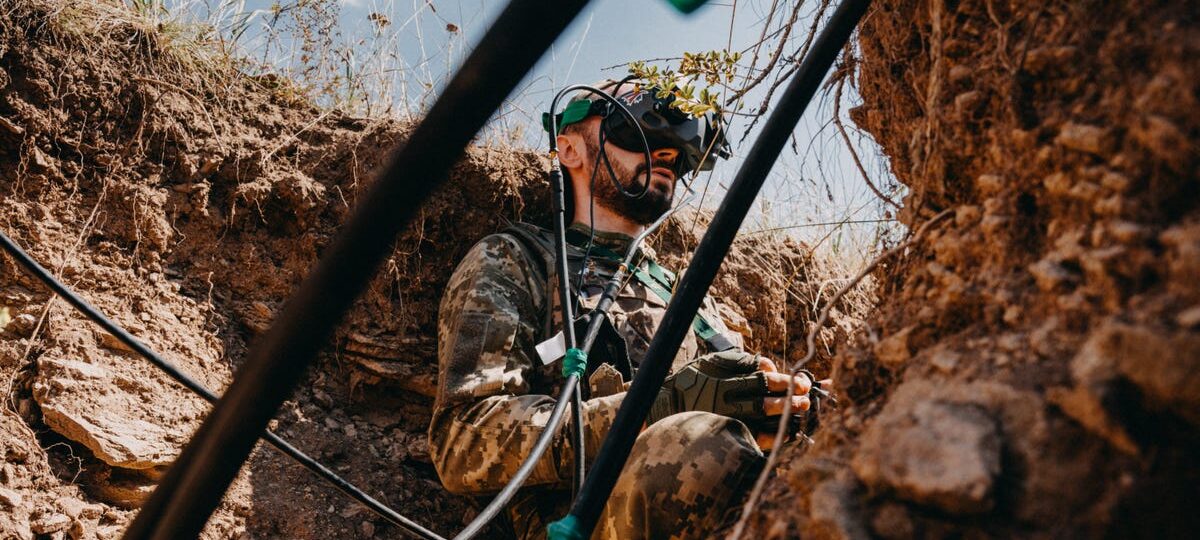
Ukraine’s “e-Points” system, which rewards soldiers for hitting prized targets, is doing more than rewarding battlefield kills.
It is helping steer soldiers toward higher-value Russian targets.
The system rewards units that eliminate Russian soldiers or destroy military equipment and upload video confirmation to the military, which awards them points they can use to buy drones, ground robots, electronic warfare systems, and other gear from the government’s Brave1 Marketplace.
Officials have said it works “like Amazon,” but for military technology.
Updates to what the system rewards have worked to “incentivize all of the units along the entire front line to strive to go after targets that are more challenging to pursue.
And I think that’s having effects,” Kateryna Stepanenko, a Russian warfare expert at the US-based Institute for the Study of War, told Business Insider.
Ukraine unveiled the system last year, initially offering the largest rewards for strikes on valuable equipment such as tanks and launchers.
It was later widened to reward reconnaissance missions and operations that involved ground robotic systems, as well as actions by snipers and mobile air-defense teams shooting down Shahed attack drones.
Previously, soldiers could easily focus on “things that are really in front of you,” like infantry and tanks, Stepanenko said.
Now, soldiers are incentivized to “go after these very complex and more challenging targets,” including rear-area infrastructure, barracks, and trucks more than 100 kilometers from the front.
She characterized the point system as one of several factors contributing to Ukraine’s newfound momentum on the battlefield, as Kyiv uses new drones and better planning to hit Russian logistics and other targets in areas that were once safer for Moscow.
Dmytro “Liber” Zhluktenko, a former drone pilot who is now a lessons-learned analyst with Ukraine’s 413th Unmanned Systems Regiment “RAID,” told Business Insider that the system was “absolutely” encouraging Ukrainian soldiers to go after different types of targets than they were before. “That’s the whole point of the system,” he said.
It’s not perfect, but it “really creates the incentive for more strategically viable targets” identified by Ukraine’s general staff, Zhluktenko said.
Rather than hitting what’s readily available, soldiers are pursuing targets that better align with Ukraine’s overall strategy and work together more cohesively.
The points system gives Ukraine’s command a way to shift battlefield behavior quickly.
If the military decides it needs more of a certain target destroyed, it can raise the reward.
Units then have a direct reason to adjust because the points help them get the equipment they need. “It’s like a lifeline for us,” Zhluktenko said.
Mykhailo Fedorov, Ukraine’s defense minister, said in March that the system had “changed the approach to warfare.” “This is about clear incentives, fair rewards, and the rapid scaling of effective solutions,” he explained. “Military units receive resources based on results: the more targets they destroy, the more points they earn.
This is a direct incentive that enables units to strengthen their capabilities with new technologies.” Ukraine’s defense ministry said in late April that more than 181,000 drones, ground robots, electronic warfare systems, and other equipment had been supplied to the front via the e-Points system since the start of the year.
At the command level, the points system is part of a broader Ukrainian effort to hit deeper, plan better, and coordinate more of its forces around bigger battlefield goals.
Ukraine has been leveraging new types of drones to strike Russian logistics and other targets farther from the front, while its Delta battlefield-management system fuses intelligence from satellites, combat units, and drone feeds so commanders can look beyond immediate targets and plan more deliberately.
For troops, Zhluktenko said, the system lets units use points to buy the gear they actually want, rather than take what the military assigns them.
If they take out a Russian soldier, for example, “we would be able to buy a drone for that money, but this specific drone that we like and need that our operators are used to, it’s not something that would be pushed onto us from the Ministry of Defense.” Ukraine’s military has worked in a way that is far more decentralized than its Western counterparts.
Units often work directly with weapons makers, buying, testing, and helping develop their technology instead of waiting for the central military to decide what they get.
Soldiers and arms makers say that is one reason Ukraine has been able to develop and field new weapons so quickly.
Scott Boston, a land warfare expert at RAND Corporation, said last month at a drone summit in Latvia that the marketplace that soldiers use with their points also helps Ukraine innovate quickly and know what weapons front-line soldiers actually want.
Commanders can “bring something in, they can experiment with it, they can see how it works.” It also sends a “marketplace signal,” he said, telling the military and industry what gear there’s demand for and what is unnecessary.
Discover more from NAIRAVOICE.COM.NG
Subscribe to get the latest posts sent to your email.