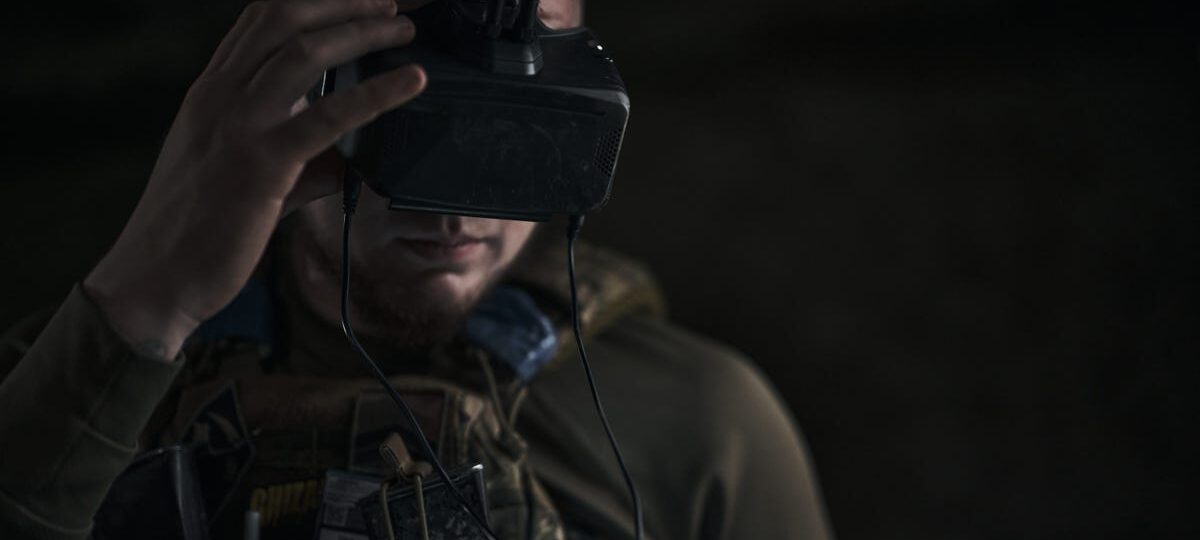
Ukrainian drone operators need masses of relatively simple drones without a bunch of flashy features, a soldier with firsthand experience explained, cautioning the West against making them too complicated as it readies for future drone fights.
Ukraine’s fight against Russia’s invasion is a grinding war of attrition that is consuming weaponry so fast that combatants need affordable weapons in huge numbers, and battlefield technology becomes obsolete so quickly that soldiers need systems they can update easily to keep them relevant in battle.
Dmytro “Liber” Zhluktenko, a former drone operator who is now a lessons learned analyst in Ukraine’s 413th Unmanned Systems Regiment “RAID,” told Business Insider that “we need something that works great but doesn’t have superfluous features.” “That is something that most of the Western defense technology manufacturers, they get it so wrong,” he said.
Consider first-person-view attack drones, “we need something that is really basic.” “We are yet to find Western manufacturers that are able to produce, let’s say 500,000 FPV drones, simple ones that just work, that are fine-tuned without any extra autonomy or extra navigation or any features like that,” he added, describing what Ukraine needs most as something pilots can easily take straight into combat.
Western-made drone tech, he said, is often “too complicated, often detached from the battlefield, and much more expensive than Ukrainian options doing the same job.
Therefore, most of the drones used at Ukraine’s battlefield are Ukrainian-made.” His assessment of the situations draws on both his experience as a drone operator and his role as an analyst, where he looks at battlefield trends, interviews operators, meets with foreign defense manufacturers, prepares briefs for higher command, and organizes the sharing of information between Ukrainian units.
Part of the appeal of simpler drones is that Ukrainian operators can adapt them themselves.
Near the front, soldiers routinely modify weapons to keep them useful as the battlefield changes, and some units even have their own R&D centers.
They often want drones and other combat systems that are basic, generic platforms they can rework, upgrade, or configure for different missions, much like ground robots that can be assembled with different weapons or components like Lego sets.
Ukrainian companies and foreign companies that work with units know this is happening, work with unit engineers to help keep products updated, and are often surprised by the ways soldiers modify their gear.
Companies are increasingly making their products modular, both so they can upgrade the products more easily and so soldiers can make their own changes near the front.
Zhluktenko said Ukraine’s operators want products they can “tune ourselves, we would change the components or whatever as we need, because that’s the normal process.
But something like the basic platform that it could build upon.” He said it’s “bonkers” that, despite the West’s “significant industrial capacities,” they aren’t seeing anyone produce something simple and effective at scale.
Zhluktenko said that many Western manufacturers are still “stuck in this doctrine of building tools in small quantities that maybe yes, they do have some extra features, but that’s not something that is way too relevant for Ukraine’s combat.” Zhluktenko’s comments echo warnings from Western and Ukrainian officials that this war has shown the West the limits of relying on smaller numbers of exquisite, highly advanced weapons.
Modern, large-scale warfare, as the situation in Ukraine has demonstrated, may also require much larger numbers of cheaper, less capable gear.
Ukraine is still buying and building advanced drone technology with cutting-edge features like autonomy, which can be critical for warfighting tasks such as intercepting Russia’s attack drones or executing long-range strikes that need to break through the enemy’s electronic warfare.
Zhluktenko said that it’s about “balance,” arguing that simpler drones remain essential and are often needed in far greater numbers.
Ukrainian companies like SkyFall and General Cherry are producing these kinds of drones at scale, he said.
A representative for Ukrainian drone and technology company TechEx told Business Insider that Western manufacturers often have to deal with heavier, peacetime regulations.
They may have “levels of additional software and hardware that’s put on top of it instead of making it a bare, functional, ready to go system here and now,” she said.
That can “overcomplicate the operation of the system,” she added.
It can also make the manufacturing process more complex, so it’s harder to produce the large volumes that some Ukrainian manufacturers can.
She described it as the contrast between “wartime operations and the peacetime operations.” She said Western companies might have different processes and priorities if they needed to work faster and on a bigger scale.
Western officials say the war shows that allies need much larger volumes of cheap weapons, with leaders like Danish defense minister Troels Lund Poulsen previously telling Business Insider that “one of the lessons” from Ukraine is that the West needs far greater quantities of inexpensive weaponry.
NATO Secretary-General Mark Rutte said last year that “speed is of the essence, not perfection.” Drones are central to Ukraine’s fight, and it says they now cause as much as 95% of Russia’s front-line losses.
But using drones effectively can require deploying large numbers of them, knowing that many will never reach their targets.
That means making systems that are cheap and workable is key.
Zhluktenko said that when it comes to drones, the mindset should be about “spending thousands of dollars, not hundreds of thousands.”
Discover more from NAIRAVOICE.COM.NG
Subscribe to get the latest posts sent to your email.