The thrill of a miniseries is achieving a satisfying story within the confines of a single season. Whether you watched it nightly as prescribed during the network miniseries days or take a weekend to binge it in the age of streaming, these miniseries share brilliant storytelling and extraordinary performances. While countless incredible miniseries exist throughout television history, the eight on this list are the best ever made.
Spanning a spectrum of styles, genres, and eras, these eight shows reflect the miniseries’ dynamic history and how they have evolved over time. From harrowing stories from history books to modern classics centered on profound individuals, these miniseries combine excellent acting, tight scripts, and cinematic quality to earn their stripes as brilliant products.
1
‘Adolescence’ (2025)
<<img src="https://static0.colliderimages.com/wordpress/wp-content/uploads/2026/05/adolescence-owen-cooper-erin-doherty.jpg?q=49&fit=crop&w=825&dpr=2" />
Image via Netflix</figure>
Told in four extraordinary episodes, Adolescence reshaped the miniseries genre forever. Created by Jack Thorne and Stephen Graham, Adolescence follows the harrowing aftermath of 13-year-old Jamie Miller’s (Owen Cooper) arrest for the murder of his female classmate. Rather than a typical whodunit, Adolescence explores the psychological toll and systemic fallout experienced by Jamie’s family, the detectives, and a therapist as they try to understand the motive behind the tragedy.
Hailed as a technical and narrative masterpiece, Adolescence‘s execution, emotional weight, and urgent cultural relevance made it one of the greatest miniseries ever made. Pushing the ensemble to treat the text like a play, every single episode is filmed in one unbroken, continuous real-time take. The camera moves relentlessly through school corridors, detention centers, and police interview rooms, forcing you into an uncomfortable experience. Acting like a fervent pressure cooker, the narrative offers a raw, unflinching examination of the toxic online radicalization of youth, the manosphere, incel culture, and family breakdown. It has swept the Primetime Emmy Awards with nine wins, including Outstanding Limited Series, and acting awards for Graham, Cooper, and Erin Doherty; Adolescence remains a historic streaming achievement.
2
‘Band of Brothers’ (2001)
<<img src="https://static0.colliderimages.com/wordpress/wp-content/uploads/2025/12/band-of-brothers.jpg?q=70&fit=crop&w=825&dpr=1" />
Image via HBO</figure>
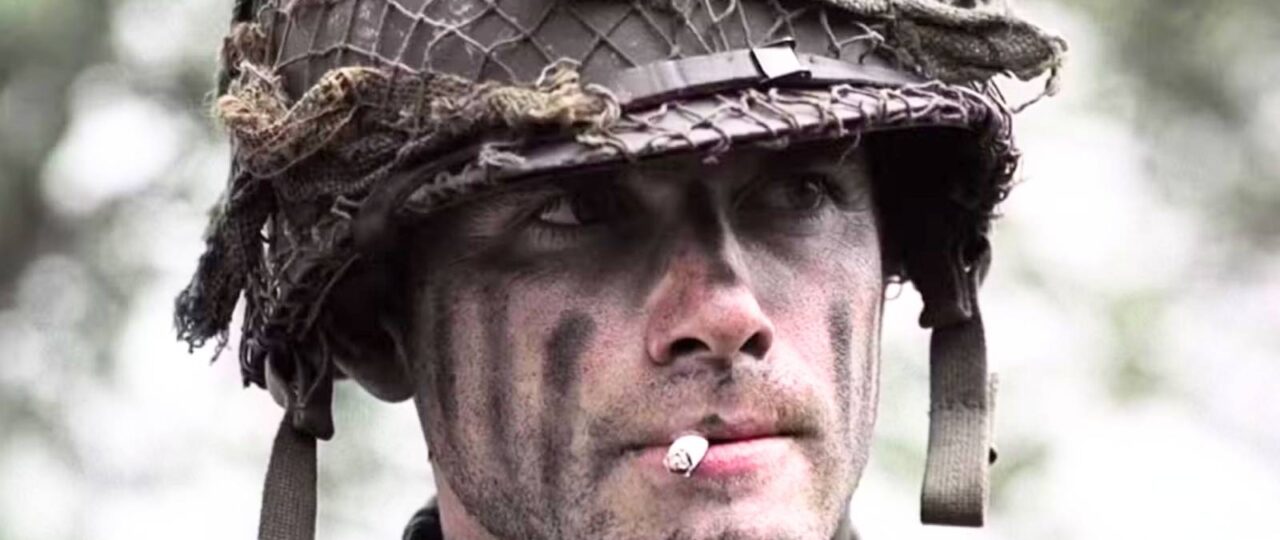
Bringing cinema-quality action to the small screen, Band of Brothers remains the greatest war miniseries thanks to its rare combination of historical fidelity, cinematic scale, and deep emotional resonance. The war drama chronicles the journey of Easy Company, a U.S. Army paratrooper unit in the 101st Airborne Division, during World War II. Over ten episodes, the story follows the soldiers from rigorous training in 1942 through major European battlefields, highlighting the heavy toll of combat and the deep bonds of brotherhood they forge. With an incredible ensemble leading the charge, Band of Brothers is an intimate examination of war’s brutality never before seen on TV.
Created by Tom Hanks and Steven Spielberg, Band of Brothers sets itself up in a unique manner. Each episode opens with brief, powerful recollections from surviving members of Easy Company, giving the dramatization something tangible to latch onto. By pairing it with human reality, audiences are immediately sucked into the powerful storytelling. With a then-record-breaking budget, the feature film quality production value was put to extraordinary use. The series relied heavily on practical effects, authentic WWII equipment, and massive set pieces to bring the story to life. Centering on the intimate, day-to-day survival, leadership trials, and psychological toll borne by ordinary individuals, Band of Brothers changed the types of war stories audiences sought.
3
‘Chernobyl’ (2019)
<<img src="https://static0.colliderimages.com/wordpress/wp-content/uploads/2025/06/chenobyl-lyudmilla.jpg?q=70&fit=crop&w=825&dpr=1" />
Image via HBO</figure>
One might think that a dramatization of one of the worst man-made tragedies in history wouldn’t translate into a brilliant miniseries, but audiences were proven wrong. Created by Craig Mazin and directed by Johan Renck, the historical drama Chernobyl captured the catastrophic nuclear accident at the Chernobyl Nuclear Power Plant in the Soviet Union. The story follows the scientists, firefighters, and government officials who fought to contain the disaster while exposing the systemic cover-ups, lies, and bureaucratic secrecy of the Soviet regime. Combining an unrelenting, slow-burning horror, meticulous historical craftsmanship, and a searing rebuke of institutional corruption, Chernobyl turned the harrowing ordeal into a richly human tragedy.
The series centers on the haunting central question: What is the cost of lies? Through the scathing exploration of truth and lies, Mazin’s ability to recontextualize the events through human eyes made the story immensely profound. The series treats invisible ionizing radiation and bureaucratic indifference as the story’s true monsters. The initial disaster is not the last stop; it’s simply the catalyst for a masterpiece story. The five-episode series uses immaculate period accuracy, recreating the 1980s essence through architecture, costume, material culture, and heavy machinery, all down to the tiniest detail. Anchored by Jared Harris as chemist Valery Legasov, Stellan Skarsgård as deputy prime minister Boris Shcherbina, and Emily Watson as Ulana Khomyuk, the powerhouse performances allowed the high-level political chess match and terrifying realities of first responders and miners to become excruciatingly visceral.
4
‘Lonesome Dove’ (1989)
<<img src="https://static0.colliderimages.com/wordpress/wp-content/uploads/2023/04/robert-duvall-and-ricky-schroder-in-lonesome-dove-1989.jpg?q=70&fit=crop&w=825&dpr=1" />
Image via CBS</figure>
Based on the novel by Larry McMurtry, the epic Western miniseries Lonesome Dove reinvigorated the genre through a profoundly intimate journey across the frontier. The story follows two retired Texas Rangers, Augustus “Gus” McCrae (Robert Duvall) and Woodrow Call (Tommy Lee Jones), as they depart their small border town to drive a cattle herd over 1,500 miles to Montana. Along the arduous journey, the men and their crew face harsh weather, outlaws, and tragic losses that capture the gritty, changing landscape of the American West. Directed by Simon Wincer, Lonesome Dove flourished through its all-star cast and unflinching and unromanticized look at a harrowing journey.
Rather than an overly glossy Hollywood depiction of the West, Lonesome Dove focused on the mundane, dirty, and dangerous realities of the frontier. By de-mythologizing the American cowboy, the story doesn’t shy away from sudden death, harsh weather, snake-filled river crossings, and the emotional toll of aging on men whose way of life is fading. A faithful adaptation, the sprawling narrative is filled with rich characters and incredible storytelling that a typical two-hour film could never achieve. Backed by stellar performances from Duvall and Jones, the series features Hollywood heavyweights, including Danny Glover, Anjelica Huston, Diane Lane, and Robert Ulrich. Like its source material, Lonesome Dove is a stroke of genius.
5Enjoying this article? Support our work with a small crypto donation.
‘Mare of Easttown’ (2021)
<<img src="https://static0.colliderimages.com/wordpress/wp-content/uploads/2026/07/mare-of-easttown.jpg?q=49&fit=crop&w=825&dpr=2" />
Image via Michele K. Short/HBO</figure>
If ever there was a miniseries that fans begged for more, it was Mare of Easttown. The creation of Brad Ingelsby, the Craig Zobel-directed crime drama tells the story of Mare Sheehan (Kate Winslet), a small-town Pennsylvania detective who investigates the brutal murder of a local teenage mother while trying to keep her own fractured life from falling apart. Mare of Easttown explores the dark underbelly of a close-knit community and the heavy toll that past tragedies and generational trauma take on its residents. Blending a gripping whodunnit murder mystery with an unflinching character study, Mare of Easttown tackles grief, motherhood, and working-class life.
Mare of Easttown came to life through Ingelsby’s dedication to creating an authentic world. The DelCo community was captured by including authentic local accents, regional culture, and a bleak winter tone. Rather than putting a cheap fetishization of crime at the center of the story, Mare of Easttown allows the mystery to dictate the actions of the characters. It’s rooted in character motivations through human pain, loss, and empathy. Across the tight seven-episode arc, Mare of Easttown provides a complete, self-contained story where every subplot, twist, and moment is earned. Winslet is at a career high, stripping away her typical glamor for a weary, flawed, and deeply human detective. Supported by standout performances from Julianne Nicholson, Evan Peters, and Jean Smart, Mare of Easttown is a masterclass in naturalistic acting. A deeply emotionally resonant story, Mare of Easttown is miniseries perfection.
6
‘Pride and Prejudice’ (1995)
<<img src="https://static0.colliderimages.com/wordpress/wp-content/uploads/2025/11/pride-and-prejudice-1995-tv-show.jpg?q=70&fit=crop&w=825&dpr=1" />
Image via BBC</figure>
Perhaps the pinnacle version of Pride and Prejudice, the six-hour adaptation faithfully follows the Jane Austen masterpiece. Adapted by Andrew Davies, the story follows the spirited Elizabeth Bennet (Jennifer Ehle) and the wealthy, aloof Mr. Darcy (Colin Firth) as they navigate the pressures of marriage, family, and social standing in 19th-century England. Across six episodes, the two must set aside their mutual pride and first impressions to find true love. Capturing social satire, subtle wit, and slow-burn romance, Pride and Prejudice is a delight.
Unlike a rushed feature film, the miniseries has room to breathe. Viewers get to see the full financial pressures on the Bennet family, the slow unraveling of misunderstandings, and the quiet weight of Regency-era social rules. Retaining chunks of Austen’s original text, the story keeps the emotional beats for period accuracy. Ehle plays Elizabeth with sharp, grounded energy that pairs perfectly with Firth’s iconic presentation of the romantic lead. Pride and Prejudice is unbeatable.
7
‘Roots’ (1977)
<<img src="https://static0.colliderimages.com/wordpress/wp-content/uploads/2025/05/roots.jpg?q=70&fit=crop&w=825&dpr=1" />
Image via ABC</figure>
The concept of the miniseries took flight after the massive success of Roots. Based on the book by Alex Haley, the eight-part miniseries chronicles the multi–generational saga of an African American family, beginning with Kunte Kinte (LeVar Burton), a young Gambian man captured and sold into American slavery. The series follows his descendants through the horror of enslavement, the Civil War, and their eventual emancipation, emphasizing their resilience and enduring struggle for freedom. One of the greatest and most impactful television moments, Roots broke massive viewership records, transformed how television tackled Black history, and created unprecedented national conversation.
Unlike earlier Hollywood portrayals that sanitized or ignored the realities of American slavery, Roots unflinchingly depicted the violence, psychological brutality, and structural oppression. And yet, it still focused on the humanity and resilience of family and cultural continuity. The saga inspired millions of Americans to research their own ancestry, sparking a national boom in genealogy research. Why? Well, the numbers don’t lie. Broadcast over the course of eight consecutive nights, the series drew in an estimated 130 million viewers, with 100 million tuning in for the series finale alone. Roots pioneered the multi-night event programming, launching the blueprint for the modern miniseries.
8
‘The Haunting of Hill House’ (2018)
<<img src="https://static0.colliderimages.com/wordpress/wp-content/uploads/2025/09/hillhouse-kittens.jpg?q=70&fit=crop&w=825&dpr=1" />
Image via Netflix</figure>
Sparking a surge in horror storytelling on television, Mike Flanagan‘s reimagining of The Haunting of Hill House became a total game-changer. Based on the Shirley Jackson novel, the ten-part miniseries follows the Crain family across two timelines, alternating between their terrifying childhood experiences at their haunted Hill House in 1992 and their adult lives as a family tragedy forces them back together. The Haunting of Hill House is a psychological horror drama that explores grief, trauma, and how the supernatural ghosts of the past continue to haunt us in the present.
Standing out as a modern masterpiece, the series features a unique blend of emotional depth, technical ambition, and psychological terror. Rather than relying solely on jump scares, Flanagan anchors the story in the deep-seated psychological toll the Crains are experiencing. The supernatural elements are presented as external manifestations of internal pain and trauma. The dual timeline works expertly, letting the mystery unravel organically while building steady, unrelenting tension and terror. The show rewards viewers on a second watch as it hides nearly 30 silent, lurking spirits in the dark corners and doorways of the background. Between the iconic episode 6 single-take scene and the revelation of the Bent-Neck Lady, The Haunting of Hill House established itself as a historic series, redefining the prestige, self-contained thriller format.
Discover more from NAIRAVOICE.COM.NG
Subscribe to get the latest posts sent to your email.