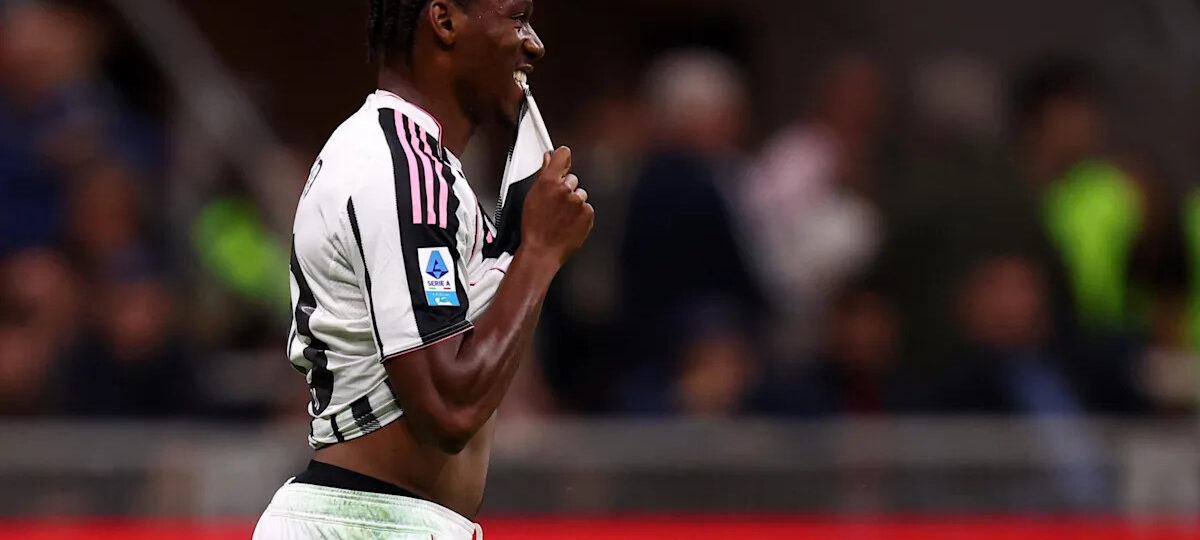
 Jonathan David of Juventus Fc looks dejected during the Serie A match between AC Milan
So, I have a godson who just turned 12 this year. Stay with me, it’s relevant. His father and I are both Canadian soccer fans and Azzurri supporters. (He’s a Milanista for the record, so I guess that makes us both gluttons for punishment.)
One way we refer to the lengthy amount of time that Italy have been out wandering in the World Cup wilderness is by noting that the last time they played an official game in the tournament my godson was just a few days shy of turning 4 months old. Now, if you’d told me then that that Brazil 2014 was the last World Cup I’d see Italy qualify for, and that 12 years later my godson would see Canada have more success at the tournament than Italy, and that he would not have seen Italy qualify even once? I would have looked at you like you had lobsters crawling out of your ears.
And yet here we are, in this sometimes-dumbfounding timeline.
So, when I saw that Juventus had signed Jonathan David in their latest attempt at revitalizing the attacking department, I was filled with cautious optimism. It had the makings of a great story for us in the land of maple syrup and the metric system (sometimes) — a rising star of our up-and-coming soccer nation making the jump to a stumbling Italian juggernaut to help them regain their footing as an unstoppable force. Naturally, I was filled with pride at the news, but also a little trepidation: Would he be able to lead the line and be a reference point for i Bianconeri like he had been for les Rouges?
The promise was definitely evident in his past work. David was one of the more prolific attackers in Europe, providing 28, 23 and 21 goal contributions in the 2022-23, 2023-24, and 2024-25 seasons, respectively. That was good enough for 14th, 31st, and 43rd in Europe’s top 5 leagues for those years, according to transfermarkt.com. He was a top scorer for the Canadian men’s national team and known for his mental fortitude. There seemed to be plenty of upside and more than one reason to believe he’d be a success.
Well, after waiting a full season to judge the results, I think it’s safe to say that — all things considered — the story has been one of frustration and missed opportunities. Although that “all things considered” does carry some weight and deserves some explanation.
As the 2025-26 season got underway, David looked to be off to a hot start, scoring in his debut against Parma and backing it up with an assist on Matchday 3 versus some snakes Inter Milan in the 4-3 thriller at the Allianz.
But then the goals and assists just dried right up. It wouldn’t be until Matchday 17 that another goal contribution would come — an assist against lowly Pisa. This, despite seeing more of the field after oft-favoured-yet-also-oft-frustrating forward Dusan Vlahovic had succumbed to a nasty adductor injury that kept him out for most of the season.
The next game was against Lecce, when that penalty miss took place. For many fans, this was ample evidence of mental frailty; that David was stuck in his own head, and perhaps just didn’t have the fortitude to play for a club of Juventus’ stature, history, and expectations, with all the pressure that comes along with it.

So, when he followed it up on the very next matchday with a goal and an assist against Sassuolo, there was a palpable sense of relief. Not only among the fans, but indeed the team as well — the celebratory group hug that drew even Luciano Spalletti to the field made it clear to everyone watching that David had the support of the team. With three more goals and another assist following in short order over the next four games, things looked to finally be on track.
That is, up until they decidedly weren’t.
Across the next four matchdays, his goal contributions again dried up, and alongside them the wins. Over that span, Juventus won none, lost two and had two draws, a terrible run that magnified the impact of his failure to score, heaping even more pressure on himself and the team.
From Matchday 24 to 38, David scored just one more goal in Serie A. His record in cup competitions was scarcely better, with no goal contributions in two Coppa Italia matches, to go with a goal apiece against both Bodø/Glimt and Pafos and an assist against Benfica in Champions League play.
There were points where it seemed like the team and David were clicking, but as the scoring draught went on, the situation eventually deteriorated to the point that Spalletti was even playing a somehow match-fit Arek Milik (!!!) over the Canadian. It’s possible the wily old coach won’t be able to find a way to play him effectively going forward.
Throughout the season, David’s performances have split opinions. While, of course, everyone would have preferred more goals, those were few and far between. (Well, few and bunched up really, but that just doesn’t roll off the tongue as nicely.) Many observers did, however, notice positives in his one-two play and quick connections with teammates, his knack for finding space and getting into dangerous positions, how the team in general — and Weston McKennie specifically — seemed more dynamic with him in the lineup, and just wished he’d be a little more selfish when in shooting range. It was also evident that despite his somewhat relaxed appearance on the field, he was consistently among the players that ran the most game in, game out.
The determination was there, but the execution was ultimately lacking. As several commenters have noted, a striker should ideally be scoring or enabling goals first and foremost. Particularly if they are the focal point of the attack, as David often was.

There are several factors that may have contributed to this downturn in form from his time with Lille. The change of country, language, national and club cultures, playing system (twice), teammates, and an increased burden of expectation were all likely significant challenges. It wouldn’t surprise me in the slightest if at least some of these affected his play and mentality. Some players can adapt more quickly than others — these are human beings, after all, and there will be variation in how they handle the change. Looking back to his time with Lille, he took a season to acclimate and gain top form, and that same process/timeline may be at play here.
That said, there is no guarantee that David will overcome the challenges set before him and show the necessary improvement in his second season. Which brings us to …
As is often the case with a free transfer, the upshot is that the player has been afforded a hefty wage. So far, the on-field return for said wage has been insufficient.
Another upshot of free transfers is that any proceeds from a transfer out would be just about pure profit for a club still in need of financial steadying. Damien Comolli and Co. must certainly be asking themselves if David is worth more to them on the field or the transfer market.
A good World Cup performance for Canada — with whom David is far more established and prolific — could increase demand for his services as well as the asking price Juve could command. That pure profit may tip the scales and make it even easier for them to call time on the experiment.
If this was David’s first and only season playing for the Old Lady, I can’t help but wonder what could have been if he’d been able to adapt and lead the line for us. And in spite of all the pitfalls and frustrations of his 2025-26 season, I still felt a great swell of pride whenever I saw him don the legendary Bianconeri kit as the first Canadian to play for Juventus.*
And now for a take that’s a little more hot than tepid: I still think David is a great player. We didn’t get to witness his best with us, sadly. And we may never get to. But even if the best Jonathan David didn’t show up this year, I still believe he has a bright future ahead of him. That future being in Turin, however, is a prospect that appears to be fading.
*First Canadian to play for the men’s team, at least — shout out to Juventus Women’s former resident Canuck Julia Grosso for leading the way in 2021.
Discover more from NAIRAVOICE.COM.NG
Subscribe to get the latest posts sent to your email.