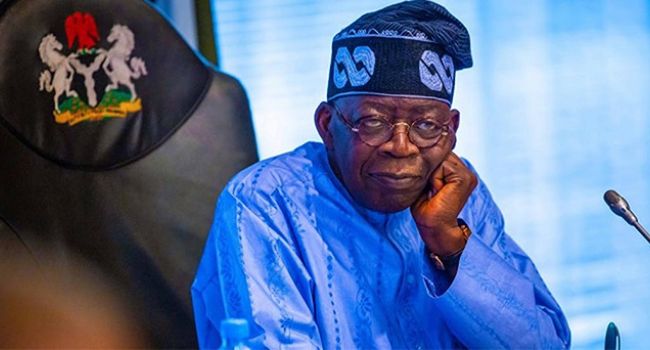
Tinubu’s political alliances are expanding, Obi and Kwankwaso are sharpening their challenge, and INEC is under pressure to demonstrate transparency. But as the presidential campaign gathers momentum, Nigeria’s politicians may be discovering that winning endorsements is easier than winning public confidence.

There is an interesting contradiction emerging in Nigerian politics. At a time when political parties are supposed to be competing against one another, their leading figures are increasingly finding reasons to work together.
In Rivers State, Nyesom Wike is assembling a coalition that crosses party boundaries but supports President Bola Tinubu and other APC candidates.
In Osun, Governor Ademola Adeleke supports Tinubu’s re-election while insisting that his political organisation will compete against the APC in legislative elections.

Meanwhile, Peter Obi and Rabiu Kwankwaso have established a joint presidential campaign structure, even as other opposition leaders continue discussing the possibility of a broader alliance.
And the Independent National Electoral Commission, caught in the middle of growing political suspicion, has taken a step towards addressing concerns about the voters’ register.
Welcome to Nigeria’s 2027 election.
A contest in which party labels are becoming increasingly flexible, political loyalties are being renegotiated, and the electorate is being asked to distinguish between genuine conviction and political convenience. But beneath the manoeuvring lies a question that could determine the outcome. The politicians are choosing sides. Will the voters follow them?
Wike’s coalition: when political boundaries become optional

Nyesom Wike has never been a politician easily constrained by conventional party loyalties.
His support for Tinubu in the 2023 presidential election, despite his association with the PDP, demonstrated his willingness to pursue political objectives across party lines. Now, with another presidential election approaching, he is taking that approach further.
At a political gathering in Eleme, Rivers State, Wike made it clear that his Rainbow Coalition is not simply an arrangement to support Tinubu’s re-election. It also intends to support APC candidates contesting governorship and legislative elections.
That is a significant development.
It suggests that Wike is attempting to create a political structure capable of influencing elections at several levels, regardless of the formal party affiliations of those participating. There is a certain political logic to the arrangement.
For Tinubu, Wike provides an influential ally in a strategically important state.
For Wike, cooperation with the President offers a means of preserving political relevance and strengthening his position in Rivers.
But what does the arrangement offer ordinary voters? That is the question that deserves more attention. Cross-party cooperation is not inherently objectionable. Indeed, democracies often require politicians to work across partisan divisions.
But political cooperation should ideally be based on identifiable policies and shared objectives.
When alliances appear to be organised primarily around personalities, voters may reasonably wonder what distinguishes one party from another.
There is also the question of whether Wike can deliver the electoral support he promises.
Rivers has experienced significant political tensions and competing claims to influence. A political endorsement, however emphatic, does not automatically resolve those divisions. The Rainbow Coalition may prove formidable. But its true strength will be measured at the ballot box, not at political gatherings.
Adeleke offers a different interpretation of coalition politics

Compare Wike’s approach with that of Governor Ademola Adeleke in Osun State. Adeleke has declared his support for Tinubu’s re-election. But he has also made it clear that this support does not extend to APC legislative candidates. His political organisation intends to support its own candidates in those contests. The distinction is revealing.
In Rivers, Wike is promoting a broad electoral alliance with the APC.
In Osun, Adeleke is offering presidential cooperation while preserving competition at other levels. Both arrangements reflect the increasingly personalised character of Nigerian politics.
But they also demonstrate that support for Tinubu does not necessarily translate into support for his party. That could become important in states where governors and influential politicians maintain strong local organisations outside the APC. It also raises a broader democratic question.
If politicians can support one party for President and another for the National Assembly, are voters being offered genuine ideological choices, or merely different combinations of political interests?
There is no simple answer.
Nigerian political parties have rarely been distinguished by sharply defined ideological programmes. But the growing frequency of cross-party arrangements makes it even more important for candidates to explain what they stand for. Otherwise, the election risks becoming a contest between political networks rather than competing visions of government.
Obi and Kwankwaso move from negotiations to confrontation
While Tinubu’s allies are consolidating their arrangements, the opposition is beginning to demonstrate a more assertive posture.

The Nigeria Democratic Congress has unveiled a presidential campaign council bringing together Peter Obi, Rabiu Musa Kwankwaso and former Bayelsa Governor Seriake Dickson.
Dickson chairs the council, Obi serves as co-chairman, and Kwankwaso, the party’s vice-presidential candidate, occupies the position of co-vice-chairman.
The structure includes national and state-level coordinators intended to support the campaign across the country. This is an important organisational step.
For months, opposition politics has been dominated by discussions about possible alliances, common candidates and negotiations among competing political leaders.
The NDC’s decision to establish a formal campaign structure suggests that the Obi-Kwankwaso ticket intends to contest the election seriously.
And Obi’s latest criticism of Tinubu indicates that the campaign is becoming more confrontational.
Obi has questioned the President’s capacity and energy to govern effectively, sharpening his attack on the administration’s leadership.
Such criticism is part of democratic competition. But it presents both an opportunity and a risk. The opportunity is to draw public attention to the government’s performance. The risk is that personal attacks could overshadow the substantive policy differences voters need to understand.
The Obi-Kwankwaso partnership has an interesting geographical dimension. Obi’s strongest political appeal has historically been associated with the South-East and reform-oriented voters in other regions. Kwankwaso brings an established political identity in Kano and parts of the North-West.
Together, they could potentially appeal to constituencies that have not always supported the same presidential candidate. But that potential should not be confused with guaranteed electoral success.
A presidential election requires a broad national coalition.
The NDC must demonstrate that it can compete effectively beyond its strongest regional constituencies.
It must also explain how it would manage the economy, address insecurity, create jobs and improve public services.
The opposition cannot rely indefinitely on dissatisfaction with the incumbent. At some point, it must persuade Nigerians that it offers a better alternative.
INEC takes a step towards rebuilding confidence

Away from the rallies and political endorsements, another development deserves serious attention.
INEC has published the preliminary voters’ register online, following complaints about public access.
The development comes after Atiku Abubakar and other stakeholders questioned whether Nigerians had been given adequate opportunity to inspect the register during the previously announced period.
The commission’s publication of the register is a welcome step towards greater transparency.
But publication alone is not enough. The real test is whether voters can access their records, verify their information and obtain corrections where necessary.
INEC has indicated that the final register is scheduled for publication on December 15.
That leaves a limited period in which administrative problems must be identified and resolved.
The commission should therefore provide clear information about the verification process, the treatment of complaints and the safeguards designed to protect the integrity of the register.
There is a wider lesson here.
Electoral confidence cannot be manufactured through assurances.
It must be earned through procedures that citizens can understand and independently examine.

Opposition parties have a legitimate right to scrutinise INEC’s preparations. But they also have a responsibility to distinguish genuine irregularities from unverified allegations.
Similarly, the ruling party should resist the temptation to interpret every demand for transparency as an attack on the government.
A credible election benefits every participant. The winner gains legitimacy. The losers have stronger grounds to accept the result. And the country avoids the instability that can arise when large numbers of citizens believe their votes have not been properly counted. With the presidential election approaching, INEC’s conduct may prove just as consequential as the campaigns themselves.
The economy remains the argument nobody can escape

For all the attention devoted to political alliances, the economy remains central to the election.
Tinubu’s campaign is defending the reforms introduced during his first term.
The government argues that removing petrol subsidies and restructuring the foreign-exchange system were necessary to correct longstanding economic distortions.
There have been improvements in some macroeconomic indicators.
But the political difficulty is that many Nigerians continue to experience high living costs.
Food prices, transportation expenses, housing costs and the burden of running small businesses remain immediate concerns.
The Federal Government’s recently announced 90-day economic intervention programme is therefore particularly significant.
Its objectives include improving food affordability, supporting households and accelerating the delivery of public projects.
The programme is expected to run into the period immediately preceding the presidential election.
That creates an unusually direct test of the administration’s economic performance.
If Nigerians experience meaningful relief, Tinubu’s argument that his reforms are beginning to deliver results could become more persuasive. If the intervention produces little visible improvement, the opposition will have additional grounds to question the government’s economic record.
There is also the unresolved issue of organised labour’s demands for improved wages and relief from rising petrol prices. A breakdown in negotiations could increase political pressure on the administration. But the opposition should not imagine that public dissatisfaction automatically translates into support for its candidates.

Voters will want to know what alternative policies are being proposed. Would an opposition government restore petrol subsidies? Would it retain the current foreign-exchange framework? How would it finance wage increases? What would it do to improve electricity supply, agricultural productivity and employment? These are questions that deserve detailed answers.
Nigeria cannot afford another election in which economic promises are made without serious consideration of how they would be implemented.
Nigeria 2027 Election Watch: the emerging battlegrounds
The latest political developments provide a clearer picture of where the contest may become particularly competitive.
Rivers State will test whether Wike’s Rainbow Coalition can translate political influence into votes across presidential, governorship and legislative contests.
Osun State will provide an interesting example of split political loyalties, with Adeleke supporting Tinubu while retaining his own party’s electoral ambitions.
Kano State could become crucial to the Obi-Kwankwaso ticket, particularly if it succeeds in mobilising voters beyond Kwankwaso’s traditional political base.
The South-East remains important to Obi’s electoral prospects, although turnout and the strength of competing political organisations will matter.
The North-Central states may prove especially competitive because of their diverse political loyalties, security concerns and economic circumstances.

And across the country, the influence of younger voters deserves attention. Many younger Nigerians are politically engaged, economically frustrated and increasingly willing to challenge established political assumptions.
But their potential influence will depend on voter registration, turnout and the credibility of the choices available to them.
Social media enthusiasm can help shape political narratives.
It cannot substitute for votes.

Political actor current assessment
Tinubu and the APC have a strong campaign organisation and extensive political endorsements, but continue to face exposure to economic dissatisfaction
Wike’s Rainbow Coalition Clearer electoral ambitions in Rivers; still faces the test of translating influence into votes
Adeleke Preserves political flexibility by separating presidential support from legislative competition
Obi-Kwankwaso /NDC More defined campaign organisation and a sharper challenge to Tinubu; national mobilisation remains a test
Atiku and the wider opposition continued relevance in coalition negotiations and electoral scrutiny, but cooperation remains unresolved.
INEC takes a constructive step with publication of the preliminary register; must demonstrate that verification and corrections work effectively.
What to watch before Friday

Several developments deserve close attention over the next few days. The first is whether the Obi-Kwankwaso campaign can move beyond its organisational announcement and begin demonstrating effective national mobilisation.
The second is whether Wike’s Rainbow Coalition attracts additional political support or encounters resistance from competing organisations in Rivers.
The third is whether the wider opposition coalition negotiations produce a clearer electoral arrangement.
INEC’s handling of the preliminary voters’ register will also remain important, particularly as political parties and civic organisations examine the information made available.
And the government’s engagement with organised labour could influence the economic atmosphere in which the campaign unfolds.
These are developments that may have more lasting consequences than another round of political endorsements.
The final signal: Voters are not political property

There is an assumption that runs through much of Nigerian politics.
It is the belief that powerful politicians possess votes.
A governor controls a state.
A former governor controls a political structure. A party leader commands a constituency.
And when these individuals enter an alliance, the votes supposedly follow them. But voters are not political property. They may admire a governor without agreeing with his presidential preference. They may support a political party in one election and reject its candidate in another. They may attend a rally without intending to vote for the person addressing them. And they may express enthusiasm for an opposition candidate without ultimately turning out on election day.
This is why the political calculations unfolding across Nigeria deserve careful scrutiny.
Tinubu’s extensive network of endorsements is a significant advantage.

The Obi-Kwankwaso partnership presents an interesting challenge.
Atiku’s political experience and networks remain relevant. Wike’s Rainbow Coalition could influence the contest in Rivers. And Adeleke’s carefully limited endorsement illustrates the complexity of political loyalty.
But none of these arrangements settles the election.
The more important question is whether the candidates can persuade Nigerians that their lives will improve under their leadership.
For Tinubu, that means demonstrating that economic reforms are producing tangible benefits.
For the opposition, it means offering credible alternatives rather than simply promising change.
For INEC, it means ensuring that the electoral process is transparent, accessible and trusted.
And for the electorate, it means examining the candidates beyond their alliances, their slogans and the political personalities surrounding them.
The parties are choosing sides.
The politicians are negotiating their interests. The campaigns are gathering momentum. But when Nigerians enter the polling booths in January, the ballot will belong to the voter, not the governor, the minister or the party leader who claims to speak for them.
That is the distinction every campaign should remember.
And it may be the most important political signal of all.
That is The Signal this Tuesday.
EDITORIAL NOTE
Political Signals is an independent weekly political analysis produced for Channels Television. It examines political developments, personalities and electoral trends without endorsement of any political party or candidate. Its assessments are based on publicly available evidence and may change as events and evidence develop.
Discover more from NAIRAVOICE.COM.NG
Subscribe to get the latest posts sent to your email.