An important decision on governorship candidates, fresh pressure over the voters’ register, and a new battle for the South-East have shifted the 2027 campaign into more consequential territory. The politicians are still negotiating power. The electoral commission is beginning to determine who can contest it.

For weeks, Nigeria’s political conversation has revolved around familiar questions. Who is supporting President Bola Tinubu? Can Atiku Abubakar and Peter Obi agree on a common strategy? How much influence does Nyesom Wike command? Which governor will deliver which state?
Then, on Friday, the Independent National Electoral Commission (INEC) reminded everyone that there is another player in this election: the umpire. INEC announced the outcome of its review of complaints arising from the exclusion of governorship and state assembly candidates. Some politicians received welcome news. Others discovered that their appeals had failed.
Among the most notable decisions, former Communications Minister Isa Pantami succeeded in his petition concerning the Gombe governorship election, although his candidacy remains subject to pending litigation.

Ladi Adebutu, the PDP’s governorship candidate in Ogun State, was less fortunate. His petition was rejected.
These decisions may appear to be administrative matters. They are not. They affect the choices available to voters, the calculations of political parties, and potentially the balance of power in important states.
And they arrive at a moment when INEC is already facing intense scrutiny over the integrity of the voters’ register. The emerging question is no longer simply which politician has the strongest campaign organisation. It is whether Nigeria’s electoral institutions can apply the rules consistently, resolve disputes transparently and command public confidence when the votes are counted.

Pantami gets a reprieve. Adebutu does not.
INEC’s latest decisions offer a revealing picture of the difficulties political parties are experiencing with the Electoral Act and candidate nomination procedures.
The commission received 69 petitions from 12 political parties across 26 states concerning governorship nominations.
Of those, 41 succeeded, and 28 were rejected. For state assembly elections, 25 of the 61 petitions were successful, while 36 were rejected.
The figures tell us something important. This is not an isolated disagreement involving one or two politicians. It is a substantial problem affecting party nominations across the country. The disputes concern membership registers, compliance with statutory deadlines, alleged multiple nominations and the wrongful inclusion or exclusion of candidates. INEC says it examined the complaints against relevant records and legal provisions.
In Gombe, Pantami’s successful petition offers the PDP an opportunity to compete with a candidate whose exclusion had threatened its position in the state. But the pending court proceedings mean that the matter is not entirely settled.

In Ogun, Adebutu’s unsuccessful appeal presents a different challenge.
Unless the decision is overturned through a lawful process, the PDP faces the prospect of contesting the wider election without its preferred governorship candidate on the ballot. That could have consequences beyond the governorship race. State-level campaigns help mobilise supporters for other elections. They provide organisational networks, local leadership and political visibility.
A party without a governorship candidate may find it more difficult to sustain enthusiasm among its supporters. But there is also a larger principle. Political parties cannot demand strict compliance with electoral law from INEC while treating their own statutory obligations as optional. If the law requires membership registers to be submitted within a prescribed period, parties must comply. Equally, INEC must demonstrate that it applies those requirements fairly to every party, whether ruling or opposition.
The commission’s willingness to uphold some petitions and reject others is evidence of a review process. It is not, by itself, proof that every decision was correct.
That judgment must rest on the law, the records and, where necessary, the courts. The lesson is simple: an election can be lost before polling day if a political party fails to get its nominations right.
The Register Controversy Takes A More Troubling Turn

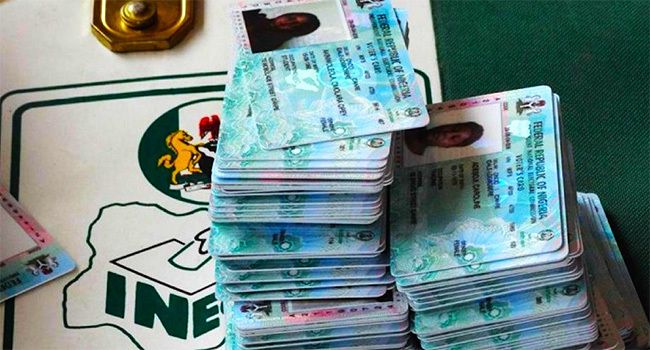
If the candidate-list decisions were the day’s most consequential administrative development, the controversy surrounding the voters’ register may prove even more serious. On Friday, INEC’s Director of Information and Communication Technology, Lawrence Bayode, acknowledged that some registration officers had introduced irregular records into the commission’s database.
Among the questionable entries were photographs suspected or identified as artificially generated, alongside other defective registration records. Bayode said the commission had identified how some irregularities entered the system, although the motives of those responsible remained unclear. This changes the nature of the discussion. Until now, much of the controversy had centred on screenshots circulating online and allegations from political actors. INEC’s acknowledgment provides a firmer basis for examining weaknesses in the registration process. But two distinctions are essential.
First, the register under examination is preliminary, not final. INEC says its verification and cleanup processes are continuing ahead of certification on December 15.
Second, the discovery of irregular entries does not establish that fraudulent votes have been cast, or that the irregularities were introduced to benefit any particular candidate. Those distinctions must not be lost in the political argument. Nevertheless, serious questions arise. How many questionable records have been identified? Were registration officers able to circumvent existing safeguards? How many records have been removed? What disciplinary or criminal investigations are underway? And perhaps most importantly, how will INEC demonstrate that its final register has been properly verified?

Atiku Abubakar has demanded an independent forensic audit, identification of the officers involved, and disclosure of contractors handling sensitive election materials. He has also threatened legal action if the commission fails to provide the information sought. These demands are part of the opposition’s political response, but the underlying issue extends beyond party competition. Every candidate has an interest in an accurate register. So does every voter.

INEC Chairman Joash Amupitan declared on Friday, during a meeting with an ECOWAS pre-election delegation, that the commission has no preferred candidate or political party. He said INEC had completed nine of the 14 major milestones in its election timetable and outlined preparations involving biometric accreditation and electronic results management. Those assurances are important. But they must be accompanied by evidence of corrective action. The danger is not simply that irregular records may remain in the database. It is that uncertainty about the register could undermine public acceptance of the eventual election result. INEC has an opportunity to prevent that outcome. It should use it.
Makinde Takes The Battle To Obi’s Political Stronghold

While INEC faces questions about electoral administration, the presidential candidates are beginning to test one another’s geographical strengths.
Oyo State Governor Seyi Makinde, the presidential candidate of the Allied People’s Movement, has taken his campaign to the South-East. At a town hall meeting in Enugu, Makinde urged voters to reject ethnic and religious considerations and examine the policy proposals of competing candidates. He acknowledged the region’s association with Peter Obi but insisted that voters should hear alternative political programmes.
Makinde also outlined four pillars of his proposed agenda: economic reform, restructuring security, improving education and changing Nigeria’s political environment. His campaign says its manifesto will be unveiled on November 4.

This is a politically interesting development. The South-East was one of Obi’s strongest regions in the 2023 presidential election. His supporters will expect him to retain substantial support there in 2027. But Makinde’s decision to campaign in Enugu challenges the assumption that any candidate should enjoy exclusive political ownership of a region. That is healthy for democratic competition. The question is whether Makinde can turn the message into meaningful electoral support. He faces a difficult task.
Obi has an established political identity in the South-East, while the APC is also seeking to expand its influence through its alliances with influential regional politicians.
Makinde must therefore persuade voters that his candidacy offers something sufficiently different to justify their support. His proposed manifesto will provide an opportunity to test that argument. But the broader political significance goes beyond Makinde. If candidates begin seriously competing outside their traditional regional strongholds, the election could become more nationally competitive. And that would be a welcome development.
Tinubu’s Formidable Machinery Faces A Different Test

President Tinubu’s campaign remains the most visibly organised of the major presidential efforts.
His Kaduna rally last Saturday demonstrated the APC’s mobilisation capacity and the advantages of incumbency.
Reuters reported that the President enjoys the backing of an extensive network of governors, while facing significant political challenges arising from economic hardship and insecurity.
The President is defending his economic reforms as necessary steps towards restoring stability and creating conditions for long-term growth. There is evidence of improvement in some macroeconomic indicators.
But the campaign must still answer a question that cannot be settled through political endorsements.
Are ordinary Nigerians better off?

The cost of petrol, food, transportation and other essentials continues to shape public perceptions.
The government’s recently announced 90-day economic intervention programme offers an opportunity to demonstrate measurable progress. Yet the clock is running.
The presidential election is scheduled for January 16. That means voters will be evaluating the administration’s performance while the promised intervention is still unfolding. Tinubu’s political organisation may give him an advantage in reaching voters. But the persuasiveness of his message will depend on how those voters assess their circumstances.
And the opposition must offer more than criticism. Atiku, Obi, Makinde and the other challengers need to explain how their economic proposals would differ from the current administration’s policies, what they would cost and how quickly Nigerians could reasonably expect results. That is the debate the country needs.

The week’s developments have altered some of the immediate political calculations.
Political actor Friday’s signal
INEC under heightened scrutiny following disclosures about irregular voter records and decisions on candidate petitions
Pantami / Gombe PDP gains a conditional reprieve; pending litigation remains decisive
Adebutu / Ogun PDP suffers a setback following rejection of his petition
Atiku / ADC gains a prominent issue on electoral transparency; allegations still require independent verification
Makinde / APM begins testing Obi’s regional strength with a South-East campaign
Obi–Kwankwaso / NDC retains a potentially significant regional coalition but faces competition for voters beyond its established bases
Tinubu / APC maintains organisational advantages while facing economic and security-related vulnerabilities
These are qualitative political assessments, not polling forecasts.

The most immediate test is whether INEC publishes a sufficiently detailed account of the irregularities identified in the preliminary register, the corrective measures undertaken and the status of investigations involving registration officers.
The commission’s updated governorship and state assembly candidate lists will also deserve examination, particularly in Gombe, Ogun and Kano.
Makinde’s promised November 4 manifesto could provide an opportunity to compare substantive policy proposals rather than campaign personalities.
The response of the Obi-Kwankwaso campaign to the emerging competition in the South-East will be worth watching.
And the APC’s continuing campaign will reveal whether its impressive network of political endorsements is accompanied by a persuasive response to economic hardship.

The final signal: An election is only as credible as its rules
Nigeria has spent much of the past several weeks discussing the strength of its political parties.
The APC has demonstrated formidable organisational capacity. The opposition has produced competing candidates and attempted new alliances.
Governors and influential politicians have been choosing sides, sometimes across party boundaries.
But Friday’s developments remind us that elections depend on more than political strength. They depend on rules. Rules governing who may contest. Rules governing who may vote. Rules governing how votes are accredited, counted and reported. And rules governing how disputes are resolved. Political parties must comply with those rules, even when compliance is inconvenient.
INEC must enforce them consistently, even when its decisions are unpopular. And the courts must provide timely remedies when genuine disputes arise.
There is an important difference between electoral competition and electoral confidence. Competition determines who wins. Confidence determines whether the result is accepted as legitimate. Nigeria needs both.
The irregularities identified in the preliminary voters’ register do not justify declaring the election compromised before it has taken place. But neither should they be dismissed as minor administrative problems.
The proper response is transparent investigation, effective correction and accountability where misconduct is established. The same principle applies to candidate nominations. A politician should not be excluded arbitrarily. But no politician should expect exemption from the law because of political influence.
With January approaching, the candidates will continue their campaigns. They will make promises, challenge one another’s records and seek support across the country.
That is democracy at work. Yet the most important political responsibility may now rest with an institution that is not contesting the election.
INEC must convince Nigerians that the contest will be fair. Because when the ballots are finally counted, Nigerians should be debating the choices voters made — not whether the electoral system allowed those choices to be expressed. That is the challenge before the commission.
And it is the most consequential political signal this Friday.
EDITORIAL NOTE
Political Signals is an independent weekly political analysis produced for Channels Television. It examines political developments, personalities and electoral trends without endorsement of any political party or candidate. Its assessments are based on publicly available evidence and may change as events and evidence develop.
Discover more from NAIRAVOICE.COM.NG
Subscribe to get the latest posts sent to your email.