

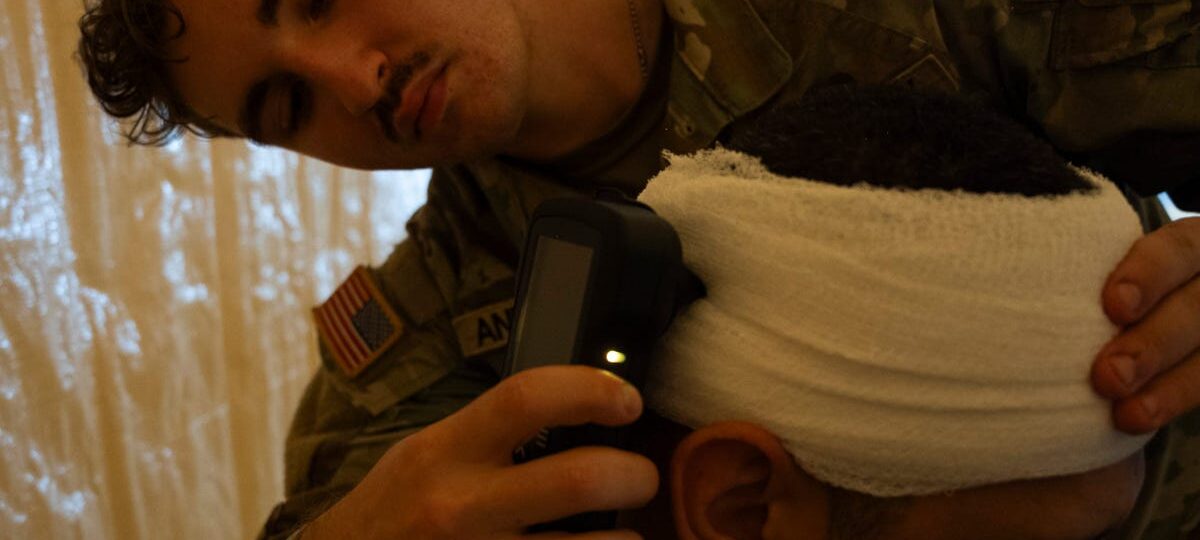
The Pentagon has struggled to implement a new system meant to monitor service members’ brain health and document exposures to shock waves produced by weapons, a government watchdog found.
The Defense Department has begun requiring cognitive assessments for newly enlisted troops and active-duty personnel in jobs considered at high risk for blast exposure.
But the military services lack sufficient staff, equipment, and other resources to complete all of the required assessments, according to a new Government Accountability Office report released last week.
In 2024, the Pentagon directed the services to begin tracking service members’ potential exposures to blast overpressure — the forceful waves generated when certain weapons are fired or when explosives detonate — and set new requirements for how far troops should stand from certain weapons when they are fired.
Troops who work in artillery, infantry, explosive ordnance disposal, and some aviation jobs are among those considered at increased risk of exposure, the report said.
The new requirements came amid growing concern that repeated exposure to blast waves in training and combat can affect brain health.
Troops who’ve been exposed to blast overpressure may report headaches, slower cognitive processing, trouble concentrating, and memory problems after exposure.
Repeated exposure can also contribute to traumatic brain injury, the effects of which can last a lifetime.
The GAO reported service member reactions after exposure, with one saying after an exercise with breaching weaponry designed to punch a hole in an adversary’s defenses, that they felt “rattled, dizzy, and were throwing up.” Another service member described firing a rocket launcher, telling the watchdog that it felt like “taking a hit from a [football player] going 150 miles per hour.” At the same time, the Pentagon began requiring baseline cognitive tests that measure attention, memory, and thinking speed, allowing providers to compare future results against individual baselines to assess how repeated exposure affects troops over time.
However, tracking those exposures is a major challenge, the GAO determined.
The Army, which has the largest population of high-risk personnel, had started exposure tracking for less than 2% of roughly 142,000 potentially exposed service members by the end of fiscal year 2025, according to the report.
Army and Navy officials told the watchdog that they did not have enough industrial hygienists, a type of safety specialist, to meet the new requirements, though Navy officials said their specialists were spending up to 60% of their time on blast-overpressure hazards as of January.
A one-year pilot program for a new cognitive assessment tool may help with the military’s resource issues, the report said, but the Pentagon had not documented how it would evaluate the tool’s effect on those resource needs.
Cognitive assessments and brain health tracking are significant concerns for the military.
While some jobs have long faced exposure to brain injuries, the challenge of drones and missiles has exposed more troops with other jobs, such as those in logistics and medical providers, to blasts generated by attacks.
TBIs have notably been a common injury in the war with Iran.
The Office of the Secretary of Defense did not respond to Business Insider’s request for comment on the GAO’s findings.
Discover more from NAIRAVOICE.COM.NG
Subscribe to get the latest posts sent to your email.