
The NFL quarterback injury crisis has already gotten out of hand heading into Week 3. The league is spending more money than ever on quarterbacks, yet several teams are already discovering how quickly their seasons can fall apart without one. With Jayden Daniels, Caleb Williams, and Jaxson Dart suffering injuries in Week 2, the NFL quarterback injury crisis has exposed a problem that goes well beyond keeping starting quarterbacks healthy.
Finding a franchise quarterback is difficult enough. Building a roster capable of surviving without him might be an even bigger challenge. The NFL quarterback injury crisis has exposed just how quickly years of roster construction can unravel when one player goes down.
Six teams could be forced to start backup quarterbacks because of injuries within the first three weeks of the 2026 season. According to the Associated Press, that would be the first time such a situation has occurred this early in a season since at least 2000.
Consider what happened in a matter of days.
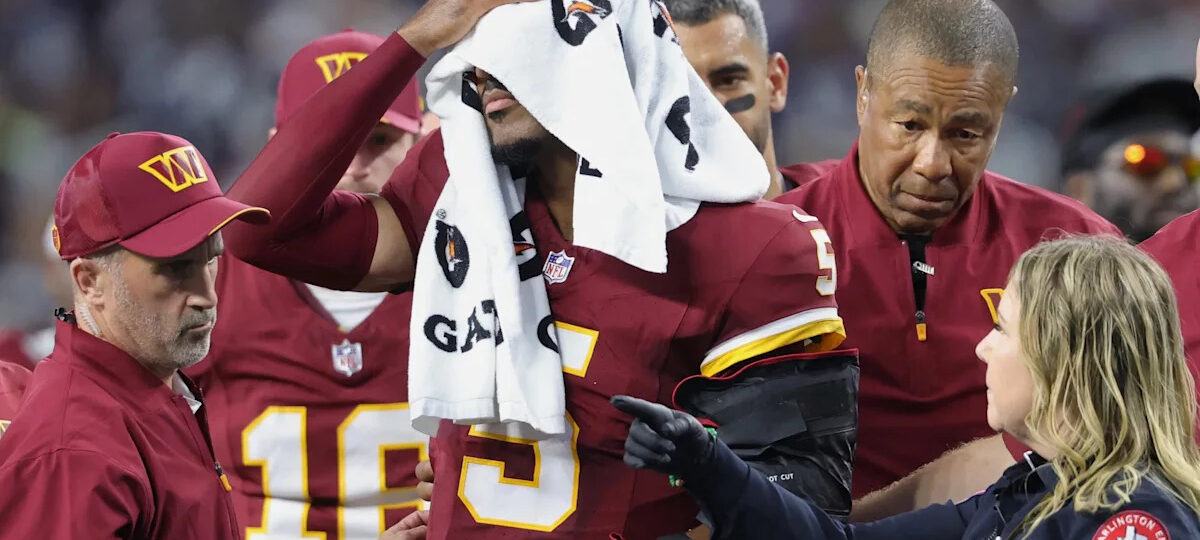
Williams suffered a hamstring injury against Minnesota, while Daniels dislocated his left elbow against Dallas. The Giants subsequently lost Dart to a knee injury against the L.A. Rams. New York has since confirmed that its young quarterback will miss the remainder of the regular season.
Three young quarterbacks, three completely different injuries, and three franchises suddenly facing questions they weren’t expecting to answer in September.
Seattle lost Sam Darnold to a hip injury during its season opener. Minnesota turned to Carson Wentz after Kyler Murray suffered a concussion, while Atlanta opened the season without Michael Penix Jr. or Tua Tagovailoa available.
Injuries are part of football. Nobody is suggesting otherwise. However, when losing one player threatens to derail an entire season, general managers should probably start questioning how they’ve constructed their rosters. That seems to be a common theme with the NFL quarterback injury crisis in 2026.

Sep 20, 2026; Chicago, Illinois, USA; Chicago Bears quarterback Caleb Williams (18) is helped off the field with an apparent injury against the Minnesota Vikings during the second half at Soldier Field. Mandatory Credit: Matt Marton-Imagn Images
The NFL quarterback injury crisis has exposed an interesting contradiction. Several of the teams dealing with injuries actually invested in experienced backups.
Here’s the uncomfortable part. Washington, Chicago, and New York actually have established alternatives.
The Commanders have Marcus Mariota, who stepped in after Daniels went down. Chicago has Tyson Bagent and veteran Case Keenum, while the Giants have former No. 1 overall pick Jameis Winston.
It’s not as though these organizations forgot to sign backup quarterbacks.
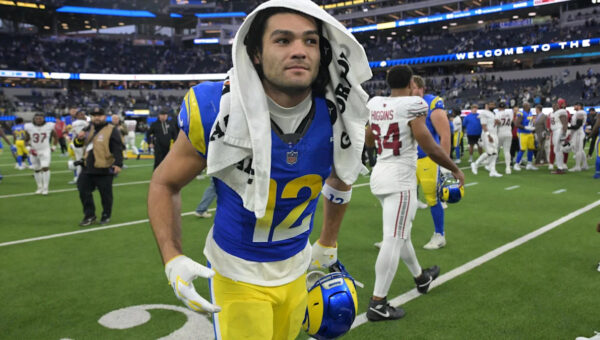
Nevertheless, Winston’s performance against Los Angeles demonstrated just how difficult the transition can become. He completed 11 of 27 passes for 111 yards and an interception as the Giants suffered a 28-6 defeat.
Winston wasn’t preparing to run an offense designed specifically around his strengths. He entered a game with a plan constructed for Dart, whose mobility gives New York an entirely different dimension. Winston’s struggles illustrate why the NFL quarterback injury crisis cannot be solved simply by adding another recognizable name to the depth chart.
Giants head coach John Harbaugh acknowledged the need to adjust afterward, explaining that the team would develop a game plan better suited to Winston.
That raises an interesting question.
Why aren’t teams investing more time in developing offensive systems that can accommodate their backups before an injury forces their hand?
Nobody expects Winston to become Dart overnight. But an experienced quarterback shouldn’t need an entirely new offensive identity to keep his team competitive.
The financial argument against spending heavily on backup quarterbacks is understandable.
Every dollar spent on a reserve is money that can’t go toward protecting the starter, strengthening the defense, or addressing another weakness. With the salary cap forcing difficult decisions, carrying two highly paid quarterbacks isn’t realistic for most organizations. The NFL quarterback injury crisis doesn’t mean every franchise needs to spend millions on another veteran. Finding the right quarterback for the existing system is equally important.
But there’s a difference between spending recklessly and preparing adequately.
Teams regularly dedicate considerable resources to rotational defensive linemen, reserve offensive tackles, and receivers who might see only a handful of snaps each week.
One overlooked element of the NFL quarterback injury crisis is how little time backup quarterbacks spend working with the players they’ll actually be expected to lead. Meanwhile, the player responsible for operating the entire offense often receives limited practice opportunities with the starters.
That’s a peculiar approach for a league in which losing the starting quarterback can completely alter a team’s outlook.
The solution isn’t necessarily signing another expensive veteran. Finding someone whose abilities complement the existing offensive system could be considerably more valuable.
For teams with mobile quarterbacks, that might mean carrying a backup who can execute similar rushing concepts. For others, it could involve developing an alternative package that emphasizes quicker throws and a more substantial running game.
Washington has already demonstrated the value of having an experienced replacement. Mariota completed 11 of 16 passes for 111 yards and a touchdown after Daniels suffered his injury against Dallas.
However, even an effective backup cannot eliminate the broader consequences of losing a franchise quarterback.

Sep 20, 2026; Arlington, Texas, USA; Washington Commanders quarterback Marcus Mariota (8) walks on the field after a game against the Dallas Cowboys at AT&T Stadium. Mandatory Credit: Kevin Jairaj-Imagn Images
Addressing the NFL quarterback injury crisis will require general managers to reconsider how they distribute resources across their rosters.
The Giants offer perhaps the clearest example of what’s at stake.
Dart’s injury doesn’t simply affect New York’s immediate chances of winning games. It also costs the organization valuable opportunities to evaluate its young quarterback throughout his second NFL season.
Those lost repetitions cannot be replaced by watching film or participating in meetings.
Washington faces a similar concern with Daniels, whose latest elbow injury comes after he missed considerable time with an injury to the same joint last season. His return timeline remains uncertain.
For organizations attempting to build around young quarterbacks, these setbacks create problems that extend into future seasons.
An NFL quarterback injury crisis forces coaches to lose opportunities to evaluate their offensive schemes. General managers have less information when deciding which players to retain. Young receivers lose valuable development time alongside the quarterback expected to lead their offense for years.
A capable backup won’t solve every one of those problems. However, maintaining a competitive offense can prevent a difficult situation from becoming considerably worse.

Sep 21, 2026; Inglewood, California, USA; New York Giants quarterback Jameis Winston (19) drops to throw during the first quarter against the Los Angeles Rams at SoFi Stadium. Mandatory Credit: Gary A. Vasquez-Imagn Images
The NFL quarterback injury crisis should force teams to reconsider what adequate preparation actually looks like. Spending enormous amounts of money to acquire and develop a franchise quarterback makes little sense if the organization has no reliable way to function without him.
The injuries to Daniels, Williams, and Dart weren’t necessarily preventable, and blaming general managers for circumstances outside their control accomplishes nothing. What they can control is the roster surrounding those quarterbacks, the preparation their backups receive, and the flexibility of their offensive systems.
Finding another franchise quarterback isn’t the answer. Building an offense that doesn’t completely collapse when the starter gets hurt would be a pretty good place to start.
Ultimately, the NFL quarterback injury crisis is exposing something general managers can no longer afford to overlook: preparing for life without their most important player.
Discover more from NAIRAVOICE.COM.NG
Subscribe to get the latest posts sent to your email.