              Ocarina of Time's story is straightforward, but the characters you meet along they way are still memorable.


              Superb action-adventure gameplay that holds up, especially with new quality-of-life changes on Switch 2.


              Some character models look off, but the rest of the game really sings.


              A fantastic foundational soundtrack is honored with new arrangements.
I have a pretty deep relationship with The Legend of Zelda series. I’ve played every mainline game and spinoff, and developed an affinity for Zelda starting with the very first game. The sense of exploration enamored me and prepared me for the scores of open-world adventure games that would follow for decades. It’s a formative series for many, no matter what generation you start in.
Speaking of generations of Zelda, the Nintendo 64 era is in one of the best possible spots for any franchise. You have not only Ocarina of Time, commonly known as “one of the greatest games of all time,” but also Majora’s Mask, which many fans say is an even richer experience. Still, Ocarina is by far the more accessible of the two, and that still holds true in 2026 with the Switch 2 remake. It’s one of the easiest gaming recommendations I’ve ever made.
Link Returns To A New Hyrule
Link is back, and this time he’s bringing decades of development hindsight. The adventure of Ocarina of Time on Switch 2 is mostly the same, but some things (like mission rewards) were tweaked, and the control scheme was given a modern pick-me-up.Other than that, it’s still very much the same Ocarina adventure.
You’ll meet Princess Zelda, tangle with Ganondorf, and try to claim the title of the Hero of Time, as you straddle two distinct timelines: Young Link and Adult Link.
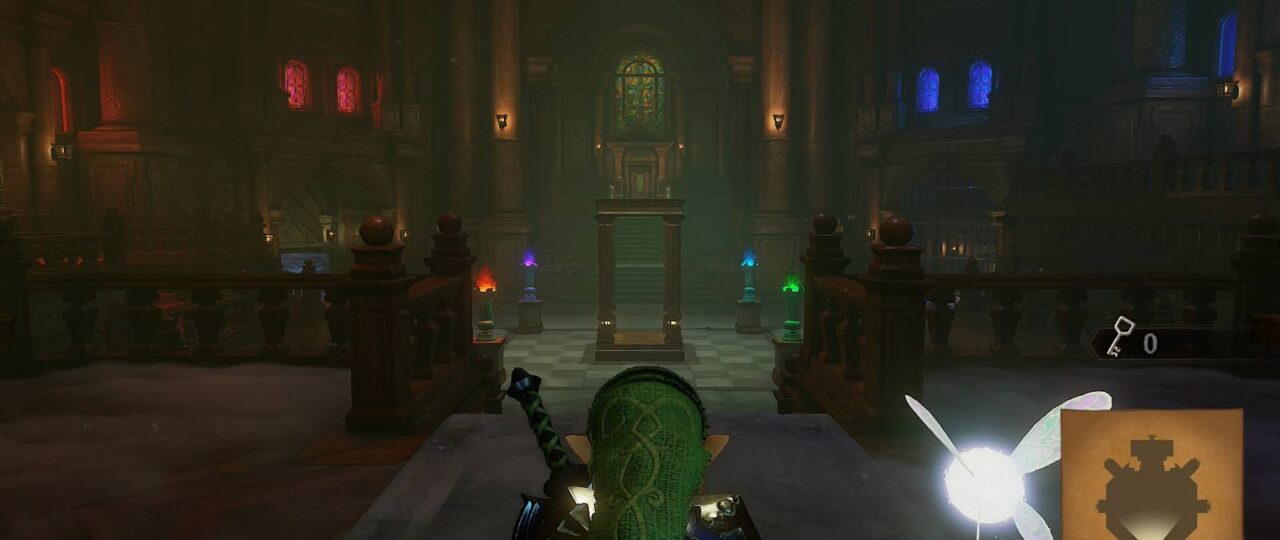
The first thing I noticed when delving into the future timeline is how distinct it looks, thanks to the visual alterations on Switch 2. Nintendo does a fantastic job of driving home how different these two timelines are, and it plays out nicely as you explore and get your bearings in a familiar yet foreign future version of Hyrule.
The visual aspect of the Ocarina of Time remake is what fans will debate the most, but I have to say the parts I didn’t really like on paper when the game was shown off grew on me. Some characters look off, including outfits and textures, especially when they aren’t key to the story. Other character models (especially some of the bosses) sing, and when that orchestral soundtrack arrangement hits, you realize why so many people fell in love with Zelda in the first place.
The environments are really the key to why this remake stuns. At times, especially in a vacuum when looking at certain landmarks, it doesn’t seem more impressive than a fan remake. But once you notice all the pieces of the new engine coming together, and you’re staring off into the distance at a gorgeous sunset, it clicks.
Ocarina’s Core Loop Is Still Fantastic
Part of the reason why Ocarina of Time comes so highly recommended is that the core game loop isn’t just addictive; it’s also relaxing and straightforward. Now, those philosophies might sound like they’d clash constantly, but they don’t. Ocarina is so full of life and secrets that you could spend hours just exploring Hyrule Field and its surrounding areas and still not find everything, even with the proper tools.
Ocarina of Time is still one of the easiest action-adventure games to recommend because it’s surmountable, and the map designs are intuitive. You’ll walk around, see an object, and go, “Oh, this is probably going to be important later.” It encourages experimentation, which is even more the case now that a manual jump button has been added.
It sounds like such a simple thing, but it adds a lot, especially when it comes to combat. In the original game, Link had to walk to an edge to leap, but with a dedicated button, you can dance around the environment with more control. While it may seem like sacrilege to old-school Ocarina fans, the remake’s engine is extremely stable, and jumping around feels natural and fun.
More quality-of-life features from the 3DS edition return, including the d-pad quick-item menu, one of the best additions to Ocarina to date. Instead of manually going into menus to constantly swap items, you can swap to some in a quick menu, which never pauses the action. This includes boots, masks, the Lens of Truth, optional fairy hints from Navi (who is much quieter this time, to the point where I didn’t even notice her often), and of course, the Ocarina itself.
The Ocarina item itself leads me into one of the game’s best aspects: the new soundtrack. The score is absolutely beautiful, and the original songs hold up under scrutiny, especially with the arrangements in this remake. The Zelda concert series was already impressive, and now it’s poised to be even better.
Every single time I entered a dungeon and solved a puzzle, I felt just as accomplished as I did in 1998. The constant positive reinforcement, the open-ended (but not obtuse) solutions, all the joy of playing the original came rushing back. Dungeons feel thematic, neatly laid out, and exciting. It’s a huge reason why people resonate with Zelda in the first place, and that feeling is still intact.
A Legacy Secured
I could talk about Ocarina of Time for hours on end with a friend, and statistically, you’ve probably chatted about it at some point, given how many people have recommended it since 1998. It’s a stone-cold classic for a reason, and the framework is just as fun to revisit in the modern era as it was in the late ’90s.
The Switch 2 remake preserves that legacy, though it resists change in ways that occasionally clash. Remakes are always a sticky subject: many fans want the game to be completely different, while others want it to be basically the same, but on a modern platform with easy access.
There’s no real solution to making a remake that satisfies everyone, but Ocarina of Time comes close. With some additional content and replay value, it could easily have been the definitive version. But it will “just” have to settle for being an incredible remake that’s worth playing at least once. Ocarina of Time is arguably worth playing in any iteration, including Switch 2.
-
+
A loving recreation of a classic. -
+
Adventuring is still addictive and engaging. -
+
New quality-of-life/control changes are appreciated.
Discover more from NAIRAVOICE.COM.NG
Subscribe to get the latest posts sent to your email.