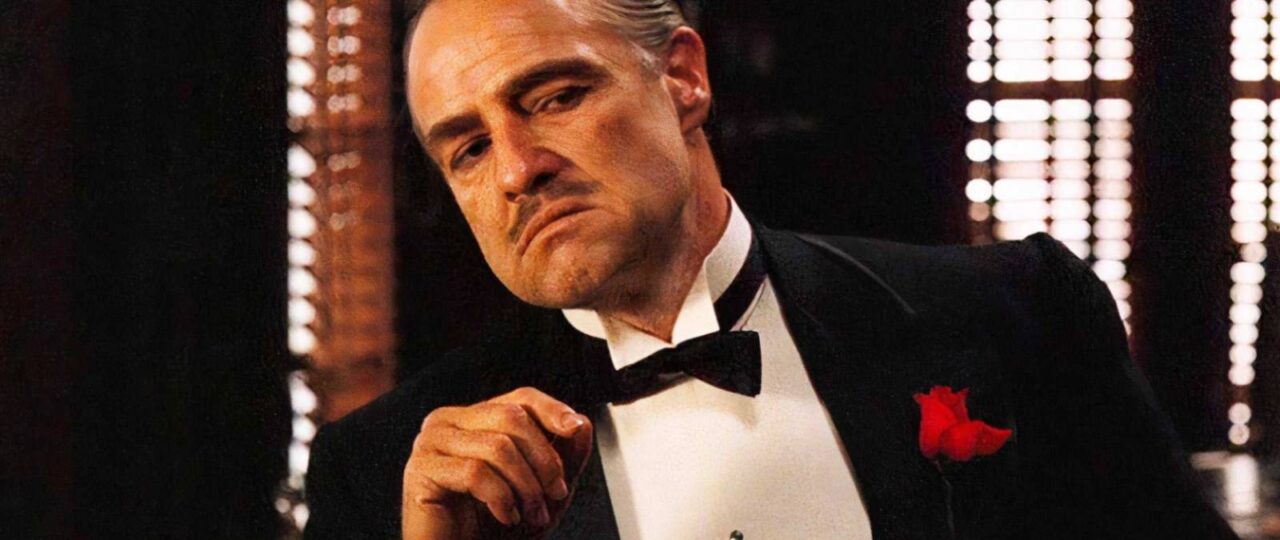
There’s something about a crime story that has drawn audiences to the movies for generations. Whether based on real events or depicting a fictitious tale, crime movies keep the stakes high and the violence flowing. Countless crime films have shaped cinema history, but only ten are truly the best in the genre.
From a masterful tale about a mafia family to a crime drama that weaves a series of narratives into one, the range in which the storytelling is done through these ten films has proven the vast range and potential of the genre. While many other films have stood the test of time, these films became the blueprint.
1
‘Chinatown’ (1974)
<<img src="https://static0.colliderimages.com/wordpress/wp-content/uploads/2025/08/jack-nicholson-and-faye-dunaway-in-chinatown.jpg?q=70&fit=crop&w=825&dpr=1" />
Image via Paramount Pictures</figure>
Directed by Roman Polanski, the neo-noir crime mystery Chinatown follows private investigator J.J. “Jake” Gittes (Jack Nicholson), who is hired by a woman claiming to be Evelyn Mulwray (Faye Dunaway) to expose an affair involving her husband, Hollis Mulwray (Darrell Zwerdling), the chief engineer of the Los Angeles Department of Water and Power. What begins as a simple adultery case spirals into a dark conspiracy involving municipal corruption, stolen water rights, and hidden family trauma. Culminating in a truly tragic conclusion, Chinatown captures the theme that systemic greed and evil often escape justice.
Chinatown is a masterwork in airtight screenwriting. With a bleak moral view and an anti-Hollywood finale, Chinatown subverted traditional detective tropes. Robert Towne‘s Academy Award-winning script is taught as a blueprint for building an engaging mystery. Unlike classic noir, where the hero usually solves the crime and restores balance, Chinatown embraces the idea that evil can, and will, win. Instead of hiding corruption in gritty, rain-slicked alleys like traditional noir, Polanski sets the story in the blinding, sun-drenched glamour of Los Angeles, proving that the brightest sunlight can hide the darkest sins. The film’s closing line, “Forget it, Jake, it’s Chinatown,” encapsulates the terrifying reality that some systems of corruption are too vast and systemic to fight.
2
‘Goodfellas’ (1990)
<<img src="https://static0.colliderimages.com/wordpress/wp-content/uploads/2026/05/goodfellas-1990-2-1.jpg?q=49&fit=crop&w=825&dpr=2" />
Image via Warner Bros. Pictures</figure>
Martin Scorsese is a master of crime dramas, and Goodfellas is proof. The biographical film tracks the life of Henry Hill (Ray Liotta), a half-Irish, half-Italian boy growing up in 1950s Brooklyn who becomes fascinated by the local Mafia. Alongside mentor Jimmy Conway (Robert De Niro) and volatile partner Tommy DeVito (Joe Pesci), Henry climbs the ranks through hijacking, truck robberies, and extortion as he enjoys the mob’s wealth, status, and protection. But when he gets too far deep, Henry turns to the FBI and enters the witness protection program. A story about self-preservation, Goodfellas contrasts the seductive, high-rolling glamour of mob life with sudden, casual violence and paranoia.
Through breakneck pacing, raw realism, and innovative stylistic choices, Scorsese breathes new life into Nicholas Pileggi‘s book. Spanning 25 years, Goodfellas uses fast edits, freeze-frames, and dynamic camera movements to mirror the lifestyle’s chaotic, high-speed rush. Rather than a traditional sweeping orchestral score, Scorsese layers the soundtrack with popular rock, blues, and doo-wop tracks that anchor the story’s eras and moods, giving it innate accessibility. Even with an ensemble of tried-and-true legends of the genre, each performance is refreshing and unpredictable. Technically brilliant and wildly exciting, Goodfellas revived the mob genre into the ’90s.
3
‘Fargo’ (1996)
<<img src="https://static0.colliderimages.com/wordpress/wp-content/uploads/2026/03/fargo-1996-1.jpg?q=49&fit=crop&w=825&dpr=2" />
Image via Gramercy Pictures</figure>
Violent, quirky, and darkly funny, Fargo subverted traditional noir conventions. Directed by Joel and Ethan Coen, Jerry Lundegaard (William H. Macy), a desperate car salesman in Minneapolis, hires two thugs (Steve Buscemi and Peter Stormare) to kidnap his wife, Jean (Kristin Rudrüd). The poorly planned scheme spirals out of control, as pregnant, mild-mannered, and sharp-witted police chief Marge Gunderson (Frances McDormand) tracks the chaotic trail of greed and self-deception. Fargo is a smartly crafted story grounded in a deeply human portrait of decency versus rapacity.
Fargo is all about atmosphere. The Coens use the bleak, snow-covered landscape of Minnesota and North Dakota, deadpan regional dialogue, and offbeat local flavor to contrast the warm, ordinary lives of the characters against cold-blooded avarice. By giving the crime comedy a refreshing setting, it sets itself apart through its unique tone. At its core, the film is less about a procedural crime mystery and more about how small lies, motivated reasoning, and moral rot snowball into total ruin. A whimsically dark vibrancy lets Fargo emerge as a brilliant, character-driven story.
4
‘Heat’ (1995)
<<img src="https://static0.colliderimages.com/wordpress/wp-content/uploads/2024/06/heat-1995-4.jpg?q=49&fit=crop&w=825&dpr=2" />
Image via Warner Bros. Pictures</figure>
In Michael Mann‘s epic crime drama Heat, the story follows the intense cat-and-mouse game between obsessive LAPD detective Vincent Hanna (Al Pacino) and a disciplined master criminal, Neil McCauley (Robert De Niro). Though on opposite sides of the law, McCauley and Hanna recognize each other as kindred spirits dedicated to their respective crafts, famously sharing a quiet conversation in a diner. Heat captures the isolation of their obsessions, as they are unable or unwilling to choose a normal domestic life. Heat is a pinnacle of the genre for its ability to merge a high-stakes thrilling procedural with a deep, philosophical character study.
The script takes its time showing the unglamorous, repetitive grind of actual police surveillance and meticulous criminal planning. Led by a pair of utter powerhouses, the iconic pairing of De Niro and Pacino, especially seen in the diner scene, is celebrated as one of the best-written and best-acted scenes in cinema history. The film moves beyond a simple hero-versus-villain story. The two men are written as psychological mirror images, obsessed with their crafts, living isolated lives, and bound by a strict professional code. Mann mastered a technical feat in the robbery shootout by capturing live-recorded blank rounds bouncing off concrete buildings for a deafening, hyperrealistic effect. Using real tactical weapons training, fast, fluid reload drills during the street battle are so authentic they have famously been used as training examples for military forces.
5
‘L.A. Confidential’ (1997)
<<img src="https://static0.colliderimages.com/wordpress/wp-content/uploads/2025/08/la-confidential-kim-basinger-russell-crowe.jpg?q=70&fit=crop&w=825&dpr=1" />
Image via Warner Bros.</figure>
Directed and co-written by Curtis Hanson, the neo-noir crime thriller L.A. Confidential follows three vastly different LAPD Detectives who investigate a brutal multiple murder at an all-night diner, the Nite Owl, in 1953 Los Angeles. Ed Exley (Guy Pearce) is an ambitious, rule-bound golden boy desperate to escape his murdered father’s shadow and climb the ranks through clean, legal police work. Bud White (Russell Crowe) is a brutal, hot-tempered enforcer who savagely beats abusive men, driven by personal trauma and a fierce desire to protect the vulnerable. Jack Vincennes (Kevin Spacey) is a sleek, media-savvy detective who leaks celebrity arrests to a sleazy tabloid publisher, Sid Hudgens (Danny DeVito), for cash and personal fame. As they dig deeper independently and then cross paths, they uncover high-end prostitution, hijacked heroin shipments, police department framing, and Hollywood blackmail.
Hailed as a premier masterwork of neo-noir storytelling, L.A. Confidential‘s realism and razor-sharp script elevate it as a top-tier film. Instead of a single, clean hero, the film tracks three distinct LAPD officers with clashing motivations and moral compromises. The dense, multi-layered narrative deconstructs James Ellroy‘s novel by exposing an unglamorous facade of post-war California. Hanson’s taut pacing and Jerry Goldsmith‘s jazz-infused noir score elevate the film, and the ensemble’s top-notch performances earned Kim Basinger an Oscar for Best Supporting Actress. L.A. Confidential remains an atmospheric masterpiece.
6
‘Pulp Fiction’ (1994)
<<img src="https://static0.colliderimages.com/wordpress/wp-content/uploads/2025/11/pulp-fiction-1994-dance-scene.jpg?q=70&fit=crop&w=825&dpr=1" />
Image via Miramax Films</figure>
Some may debate which film earns the moniker, but Pulp Fiction islikely Quentin Tarantino‘s greatest project. The interwoven, non-linear crime story depicts the Los Angeles underworld. Vincent Vega (John Travolta) and Jules Winnfield (Samuel L. Jackson) are working-class hitmen for mob boss Marsellus Wallace (Ving Rhames). Vincent is tasked with taking Marsellus’s wife, Mia (Uma Thurman), out for the evening, but things take a dangerous turn. Butch Coolidge (Bruce Willis) is an aging prizefighter Marsellus pays to throw a fixed fight. Instead, Butch wins the fight, accidentally kills his opponent, and goes on the run. Fixer Winston Wolfe (Harvey Keitel) helps cover up an accidental murder, and a pair of small-time diner robbers named Pumpkin and Honey Bunny (Tim Roth and Amanda Plummer) have a holdup that collides with Jules and Vincent at a local diner. Pulp Fiction scrambles the narrative until it converges through a story about fate, irony, and violence.
A cinematic masterpiece, Pulp Fiction remains at the top of the heap for its revolutionary storytelling, sharp dialogue, and massive cultural impact. The woven narrative structure turns the movie into a puzzle, challenging the audience to piece the events together. What makes it a special film is that the characters do not just talk about crime; they have casual, witty, and deeply philosophical conversations about mundane topics. The film popularized centering a story around morally gray or outright criminal characters, making them deeply charismatic and compelling to root for. By mixing elements of classic gangster films, hard-boiled pulp magazines, film noir, dark comedy, and neo-noir, Tarantino builds a refreshing postmodern style. With a perfectly curated soundtrack and brilliant visual style, it’s no wonder why it’s pointed at as cinephiles’ favorite.
7
‘The Godfather’ (1972)
<<img src="https://static0.colliderimages.com/wordpress/wp-content/uploads/2026/05/the-godfather-1972-9.jpg?q=49&fit=crop&w=825&dpr=2" />
Image via Paramount Pictures</figure>
Launching one of the greatest trilogies of all time, The Godfather lifts Mario Puzo‘s bestselling novel for a mob movie of Shakespearean proportions. Directed by Francis Ford Coppola, The Godfather chronicles the powerful Italian-American Corleone crime family, led by Don Vito Corleone (Marlon Brando), and the moral descent of its youngest son, Michael (Al Pacino). What could have been a pulpy gangster film becomes a sweeping tragedy about power, family duty, and moral decay.
Rather than relying purely on action, Coppola frames the mob through family rituals, loyalty, betrayal, and the corrupting weight of the American Dream. The film tracks Michael’s descent from a reluctant, decorated war hero into a cold, ruthless mafia boss, mirrored by the quiet passing of power. Gordon Willis used deep shadows, low-key lighting, and rich color palettes to visually encode moral ambiguity, enriching the film with extraordinary cinematography. The Godfather transformed gangster films from low-budget B-movies into high-art epics, inspiring a generation to come.
Your answers have pointed to one Oscar Best Picture winner above all others. This is the film that was made for the way your mind works.
You are drawn to films that operate on multiple levels simultaneously — that begin in one genre and quietly, brilliantly migrate into another. Bong Joon-ho’s Parasite is a film about class, desire, and the architecture of inequality that manages to be darkly funny, deeply suspenseful, and genuinely shocking across a single extraordinary running time. Your instinct is for cinema that hides its true intentions until the moment it’s ready to reveal them. Parasite is exactly that — a film that rewards close attention and punishes assumptions, right up to its devastating final image.
You want it all — and this film gives you all of it. The Daniels’ Everything Everywhere All at Once is one of the most maximalist films ever made: action comedy, multiverse sci-fi, family drama, existential crisis, and a genuinely earned emotional core that sneaks up on you amid the chaos. You are someone who responds to ambition, who doesn’t want cinema to choose between being entertaining and being meaningful. This film refuses that choice entirely. It is overwhelming by design, and its overwhelming nature is precisely the point — because the feeling of being crushed by infinite possibility is exactly what it’s about.
You are drawn to cinema on a grand scale — films that understand history not as a backdrop but as a force, and that place their characters inside that force and watch what happens. Christopher Nolan’s Oppenheimer is a film about the terrifying gap between what we can do and what we should do, told with the full weight of one of the most consequential moments in human history behind it. You want your films to feel important without feeling self-important — to earn their ambition through sheer craft and the gravity of their subject. Oppenheimer does exactly that. It is enormous, complicated, and refuses easy comfort.
You are drawn to films that foreground their own construction — that make the how of the filmmaking part of the what it’s about. Alejandro González Iñárritu’s Birdman, shot to appear as a single continuous take, is cinema examining itself through the cracked mirror of a fading actor’s ego. You respond to formal daring, to the feeling that a film is doing something that probably shouldn’t be possible. Michael Keaton’s performance and Emmanuel Lubezki’s restless camera create something genuinely unlike anything else — a film that is simultaneously about creativity, relevance, self-destruction, and the impossibility of ever truly knowing if your work means anything at all.
You are drawn to cinema that trusts silence, that refuses to explain itself, and that treats dread as a form of meaning. The Coen Brothers’ No Country for Old Men is a film about the arrival of a new kind of evil — implacable, arbitrary, and utterly indifferent to the moral frameworks we use to make sense of the world. It is one of the most formally controlled films ever made, and its controlled restraint is what makes it so terrifying. You want your films to haunt you, not comfort you. You are not interested in resolution if resolution would be dishonest. No Country for Old Men is honest in a way that most cinema never dares to be.
8
‘The Godfather Part II’ (1974)
<<img src="https://static0.colliderimages.com/wordpress/wp-content/uploads/2026/03/the-godfather-part-ii-1974-5.jpg?q=49&fit=crop&w=825&dpr=2" />
Image via Paramount Pictures</figure>
Proving that sequels can be better than the original, The Godfather Part II holds up a familiar mirror through a brilliant narrative structure. The crime epic serves as both a sequel and a prequel to the original 1972 film. In the present, a paranoid Michael Corleone (Al Pacino) rules as the new Don of the Corleone family, struggling to expand and protect the criminal empire in Las Vegas, Florida, and pre-revolution Cuba. In the past, a young Vito Corleone (Robert De Niro) flees a massacre in Sicily as a boy, arriving at Ellis Island, and rises through early 20th-century New York City to build the foundation of the Corleone family. The Godfather Part II explores the dark, fatalistic underbelly of immigrant ambition and organized crime in America.
Simply put, The Godfather Part II is revolutionary. The film cuts back and forth between two distinct timelines. By contrasting Vito’s survival and protective nature with Michael’s cold, calculating isolation, Coppola reframes the cost of power. Cinematographer Gordon Willis uses warm, golden sepia tones for Vito’s historical rise and cold, dark, shadow-drenched frames for Michael’s modern downfall. The visual storytelling heightens the technical achievements, pushing it beyond just a typical tale of a dramatic lifestyle. It simply deepens the emotional core. Though they don’t share the screen in this film, Pacino and De Niro, who earned an Oscar, dominate every frame they’re in. There’s a reason why this film tops the list of greatest films ever made.
9
‘The Silence of the Lambs’ (1991)
<<img src="https://static0.colliderimages.com/wordpress/wp-content/uploads/2026/03/ted-levine-buffalo-bill.jpg?q=49&fit=crop&w=825&dpr=2" />
Image via Orion Pictures</figure>
If you believe awards dictate success, then The Silence of the Lambs achieved the ultimate triumph. Earning the Big Five at the Academy Awards, the Jonathan Demme-directed film changed the horror genre forever. The film tracks the psychological chess match between FBI trainee Clarice Starling (Jodie Foster) and imprisoned Dr. Hannibal Lecter (Anthony Hopkins). Part of a quid pro quo, Clarice trades personal details about her traumatic childhood in exchange for clues to help profile a serial killer nicknamed Buffalo Bill (Ted Levine). A brilliant masterpiece of tension-building, The Silence of the Lambs uses an intimate approach to terrorize its audience.
Instead of relying on cheap slasher tropes or heavy bloodshed, Demme builds suffocating tension through dialogue, uncomfortable silences, and an intense cat-and-mouse game. He uses intimate close-ups that put the audience in the characters’ eyeline, creating an unsettling, deeply personal experience. The film elevated true-crime storytelling into prestige cinema and set the blueprint for modern psychological thrillers and police procedurals. Through extraordinary performances, heightened suspense, and a unique narrative about an ambitious woman navigating an intimidating, male-dominated law enforcement world, The Silence of the Lambs became a cinematic game changer.
10
‘The Usual Suspects’ (1995)
<<img src="https://static0.colliderimages.com/wordpress/wp-content/uploads/2026/02/the-usual-suspects.jpeg?q=49&fit=crop&w=825&dpr=2" />
Image via MGM</figure>
No crime film caught the audience off guard quite like the ending of The Usual Suspects. Directed by Bryan Singer and written by Christopher McQuarrie, The Usual Suspects starts with a deadly explosion and a massive shootout on a smuggler’s ship at the Port of Los Angeles (San Pedro Harbor), leaving 27 dead and millions of dollars missing. Small-time con man Roger “Verbal” Kint (Kevin Spacey) is one of the few survivors and is interrogated by U.S. Customs Agent Dave Kujan (Chazz Palminteri). Verbal explains how he and four other career criminals—Dean Keaton (Gabriel Byrne), Michael McManus (Stephen Baldwin), Fenster (Benicio del Toro), and Todd Hockney (Kevin Pollak)—were rounded up in a seemingly random New York police lineup and then forced into a series of jobs by a mysterious lawyer named Kobayashi (Pete Postlethwaite), who acts on behalf of an unseen, legendary crime lord named Keyser Söze. But who is Keyser Söze? With one of cinema’s most shocking endings, The Usual Suspects remains legendary for its misdirection.
With a genius script and taut direction, The Usual Suspects is remembered for forcing the audience to re-evaluate everything they witnessed. In the final minutes, the movie pulls the rug out, revealing that Verbal fabricated almost his entire story from details scattered around the interrogation room and unmasking himself as the elusive crime lord. Spacey rightly earned an Oscar for his slippery, subtle portrayal of Verbal Kint. The film is deliberately constructed so that second-time viewers notice hidden clues, subtle glances, and fabricated details right away. And yes, it gets better with every watch.
Discover more from NAIRAVOICE.COM.NG
Subscribe to get the latest posts sent to your email.