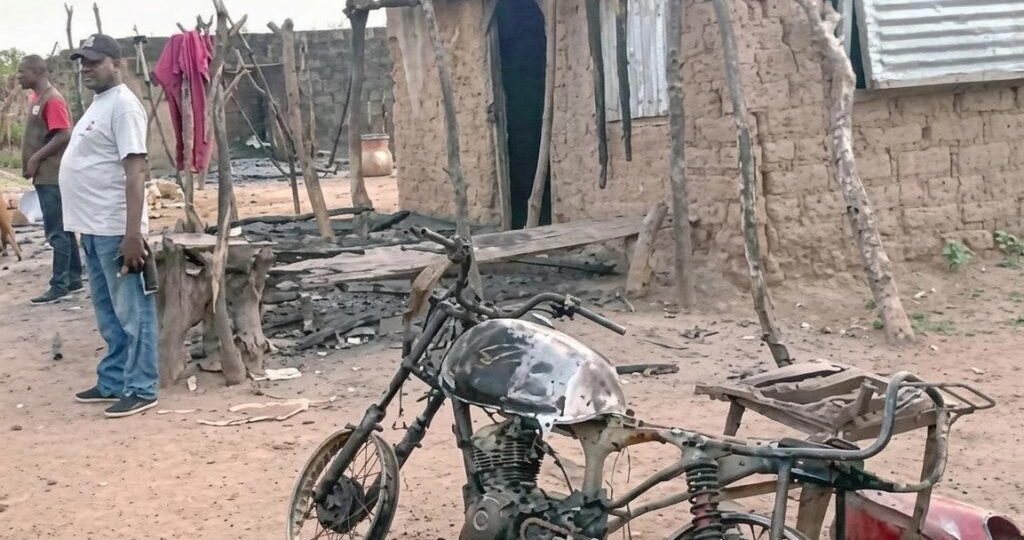
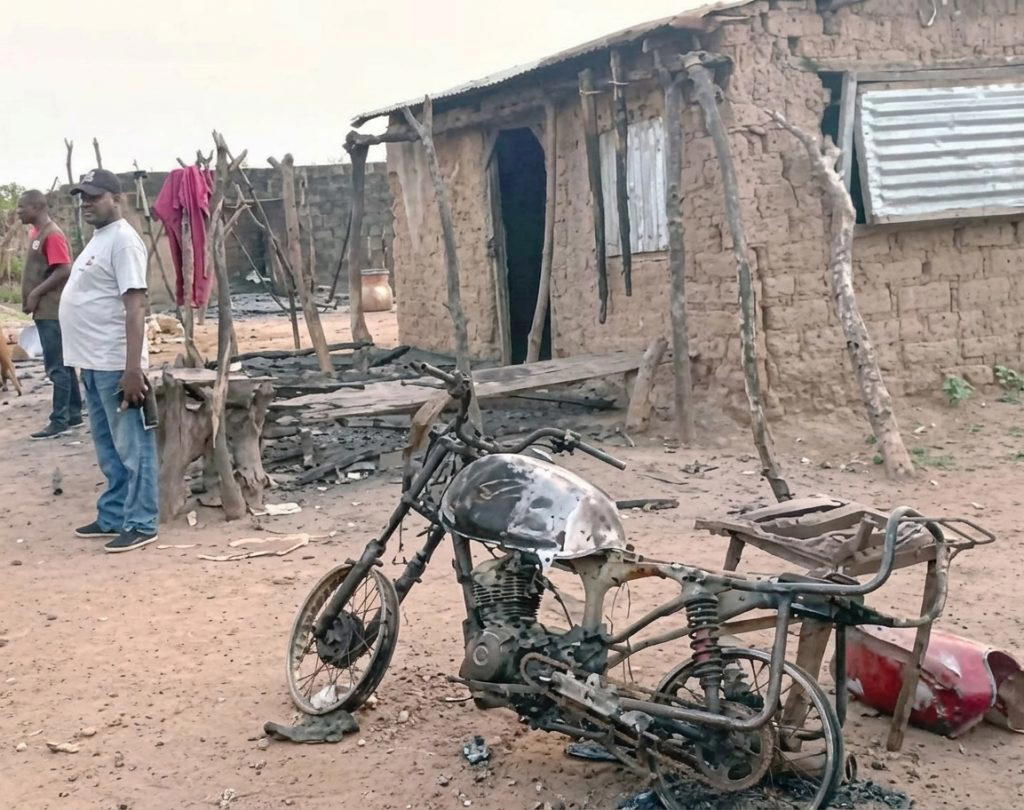
• We can no longer farm, they took everything away from us — survivor
By Femi Bolaji, Jalingo
Friday, October 23, 2026, began like any other market day in Binnari, a rural community in Karim-Lamido Local Government Area of Taraba State, where the life of the people revolves around farming, fishing, livestock rearing and cross border trade.
Taraba: Day bandits killed 62, injuredTaraba: Day bandits killed 62, injuredTaraba: Day bandits killed 62, injuredTaraba: Day bandits killed 62, injuredTaraba: Day bandits killed 62, injuredTaraba: Day bandits killed 62, injuredFrom the early hours, residents and traders from neighbouring communities were busy going about their daily activities. Farmers brought their produce to market, food sellers prepared for customers, and livestock owners hoped to make sales that would help sustain their families.
For many, the market was more than a place to buy and sell. It was where household needs were met, school fees were raised, debts were settled and plans for the coming week were made.
But before the day ended, that familiar routine had been violently interrupted. Armed bandits on motorbikes reportedly stormed the community, opening fire on people going about their business, killing residents, destroying property and looting stores. In the confusion that followed, families fled for safety, leaving behind homes, belongings and livelihoods they had spent years building.
By the time the immediate danger had passed, Binnari had been left counting its losses.
Casualties
The National Emergency Management Agency (NEMA), in it’s preliminary reports from the Taraba State Emergency Management Agency (TSEMA) and posted on its official social media handles put the death toll at 62. Another 52 people were reported injured, while 5,187 residents were displaced and 7,123 people affected by the attack.
The figures, contained in a statement issued by NEMA on October 27, 2026, followed an on-the-spot assessment by TSEMA’s Executive Secretary, Dr. Echuseh Audu.
Behind those numbers are families struggling to understand how a day that began with ordinary hopes ended in death, displacement and uncertainty.
For the people of Binnari, the tragedy is not simply about the number of lives lost. It is also about the children whose education may have been interrupted, the farmers who have lost their livestock, the traders who can no longer return to the market with confidence and the families now wondering how to begin again.
In a community where people depend largely on what they produce, catch, rear or sell, the attack has threatened not only lives but the very means through which residents survive.
Binnari’s market has long served as an important meeting point for people from different communities and neighbouring states like Plateau, Gombe and Bauchi.
Farmers come with grain and other agricultural produce. Fishermen bring their catch, while livestock owners and traders gather to exchange goods and negotiate prices. For many residents, market day offers an opportunity to earn money, replenish household supplies and reconnect with people they may not have seen for days or weeks.
Such exchanges have helped sustain families and strengthen relationships across community and state boundaries.That was the life Binnari’s residents knew before the attack.
Attack
On October 23, however, the market became the scene of a violent assault that residents say left people running for their lives.The attackers reportedly opened fire indiscriminately, killing people and destroying property.
As fear spread, some residents fled towards nearby areas in search of safety. Others were caught in the confusion as people desperately tried to escape the violence.
Accounts from the community also indicated that some people drowned after a canoe capsized during an attempt to cross a river while fleeing the attack.
For those who survived, the experience was devastating. Some lost relatives, others lost their homes, and many were left without the means to provide food for their families.
The fact that the attack happened on a market day made the tragedy particularly painful. People who had gathered to earn a living and attend to their daily needs suddenly found themselves fighting to stay alive.
The preliminary figures released by NEMA offer an indication of the scale of the disaster, but they cannot fully capture the grief of families who lost loved ones or the anxiety of those who fled without knowing when they would return.
For Ezekiel Salihu, a resident of Binnari, the attack has left the community in desperate need of government intervention.
Recalling what happened, he said residents were engaged in their normal trading activities when the armed men arrived and began killing people and destroying property.
“My name is Ezekiel Salihu. I am calling on the government,” he said in an emotional appeal.
“We, the people of Binnari, are currently in a very difficult situation because of what happened recently. Bandits came into our town on Friday when everyone was buying and selling. People were going about their daily trading activities when the attackers came and started killing people and destroying properties.”
Fear for future
For Salihu, the immediate concern is whether residents can continue to live in their community without fear of another attack.
He appealed to the government and security agencies in Karim-Lamido to deploy personnel to the area and provide the protection residents desperately need.
“I am calling on the government and security agencies in Karim-Lamido to help us find a way to live peacefully in our town. Security forces should be deployed here so that we can feel safe,” he said.
He also expressed concern about the closure of schools, saying the attack had disrupted the education of children in the community.
“Our schools have all been closed down, and many students drowned and died as a result of the attack,” he added. Salihu’s appeal was directed particularly at Governor Agbu Kefas, whom he urged to act swiftly to prevent further suffering.
“I am begging the government, especially Governor Kefas, to act swiftly and help us.”
His concerns reflect the wider challenges facing Binnari. While the immediate priority is to prevent another attack, residents must also contend with disrupted education, lost income and the difficulty of restoring a sense of normal life.
For parents, the fear is not limited to what has already happened. It is also about whether their children can safely return to school, whether family members can travel to nearby communities and whether farmers can return to their fields without risking their lives.
For Maryam Abbas, the attack has taken away the means through which she supported herself and her family. A food seller, farmer and fisherwoman, Abbas depended on different sources of livelihood to meet household needs.
Each activity played a role in helping her survive and provide for those who depended on her.
But the attack left her facing an uncertain future.
“My name is Maryam Abbas. I am a food seller, a farmer and a fisherwoman. On Friday, bandits came and attacked us. They burnt and destroyed our properties and killed many people. Our animals, including cows and goats, as well as other livestock, were stolen by the bandits,” she said.
Her account reflects the experience of many rural households whose economic security depends on a combination of farming, trading, fishing and animal rearing.
For such families, losing livestock is not simply losing animals. It can mean losing savings, trading capital and the resources needed to pay school fees, buy food or meet medical expenses.
Similarly, when farm produce and equipment are destroyed, a family’s ability to earn money may be affected well beyond the day of the attack.
Abbas said she and others had been left with virtually nothing and appealed to the government for assistance.
“We have nothing left because we lost everything, but we are begging the government to help us. We want to live without the fear of being attacked,” she said.
Her plea was particularly poignant because she did not see an easy alternative to remaining in Binnari.
“Otherwise, we do not know where else to go. This is our town, and we do not have anywhere else to go. The government should please look into our situation and help us.”
Her words capture a difficult reality for displaced residents. Leaving home may offer temporary safety, but it can also mean losing access to farmland, businesses, community support and the familiar surroundings on which daily life depends.
For people whose livelihoods are rooted in their immediate environment, displacement can quickly become an economic crisis as well as a humanitarian one.
The preliminary assessment by TSEMA, as reported by NEMA, put the number of displaced residents at 5,187, while 7,123 people were affected by the attack.
These figures point to a humanitarian emergency requiring more than the immediate deployment of security personnel.
Thousands of people forced from their homes may need temporary shelter, food, clean water, healthcare and other essential supplies.
Families who have lost their belongings may also require clothing and basic household items.
For injured residents, access to medical care is an immediate concern. Some survivors have reportedly remained in hospitals while dealing with the physical and emotional effects of the violence.
The displacement has also created uncertainty for children whose schooling has been interrupted. Beyond the immediate disruption, prolonged insecurity could make it difficult for families to resume normal routines and for children to return to their classrooms.
NEMA according to its statement said it was working with TSEMA, the state’s Emergency Management Committee, Karim-Lamido Local Government authorities and other relevant stakeholders to monitor developments, assess the needs of affected residents and facilitate appropriate humanitarian assistance.
The agency also expressed condolences to the families of those killed and wished the injured a speedy recovery.
For residents, however, the urgency is immediate. They need to know where they can safely stay, how they will feed their families and what support is available to help them recover from their losses.
What residents say they need most is a clear explanation of what happened, effective protection and assurances that the attack will not be repeated.
Young people in Binnari have also voiced their frustration, saying they want little beyond the opportunity to live and work in peace.
One youth who spoke anonymously said residents were not demanding major development projects but simply wanted the government to protect their lives.
“We do not expect anything from the government; we only want to live peacefully, but we do not know why we were attacked,” he said.
He expressed concern about what he perceived as a lack of effective intervention and warned that continued insecurity could deepen the community’s suffering.
“We are not even asking for good roads, electricity or hospitals. We just want to live peacefully,” he said. The youth also appealed for a lasting solution before the situation deteriorated further.
Delayed response
Abubakar Usman Binnari, another resident, said the community’s distress was made worse by what he described as a delay in the response to the attack.
He said residents contacted government officials and security personnel when the violence occurred but the response was delayed.
“Our people are scared. When the attack happened, we reached out but the response was late,” he said.
His account raises questions about the speed of emergency response in remote communities facing violent attacks. For residents under fire, the ability to reach security personnel and receive timely assistance can be a matter of life and death.
He appealed for assistance for those injured and for families who had lost their property.
“All our wealth is invested in farming and livestock, but we have lost everything because the bandits stole it all.
“We can no longer farm or rear animals peacefully because the bandits have taken everything away from us,” he said.
His concern is not limited to immediate relief. He also wants the government to work with neighbouring states to address insecurity along the borders, arguing that cooperation is necessary to prevent further attacks.
The Taraba State Police Command initially confirmed the recovery of 10 bodies following the attack. The later preliminary assessment submitted by TSEMA and reported by NEMA put the death toll at 62.
The Taraba State Government and security agencies also said they have taken steps aimed at restoring order.
Governor Agbu Kefas condemned the incident and directed security agencies to pursue those responsible.
The state government also extended Karim-Lamido’s designation as an area of special security concern for another six months while emergency relief materials were provided for displaced residents.
These measures are important, but the concerns expressed by residents show that the challenge goes beyond issuing directives or deploying personnel after an attack.
The people of Binnari say they want sustained security that will enable them to return to their homes, reopen the market and resume farming and other economic activities. They also need reassurance that security agencies will respond quickly when communities come under threat.
For Binnari’s farmers, the next planting season may bring fresh uncertainty if they cannot safely return to their land. Traders who lost goods and capital may struggle to restart their businesses, while food sellers and fishermen face questions about how to earn an income in an insecure environment.
When a household loses its main source of income, children may be withdrawn from school, medical treatment may be delayed and access to adequate food may become more difficult.
Displacement can also separate families from their support networks, leaving elderly people, children and other vulnerable residents dependent on assistance.
The 5,187 people reported displaced therefore represent more than a movement of residents away from their homes. The figure points to thousands of people whose routines, livelihoods and sense of security have been disrupted.
Discover more from NAIRAVOICE.COM.NG
Subscribe to get the latest posts sent to your email.