

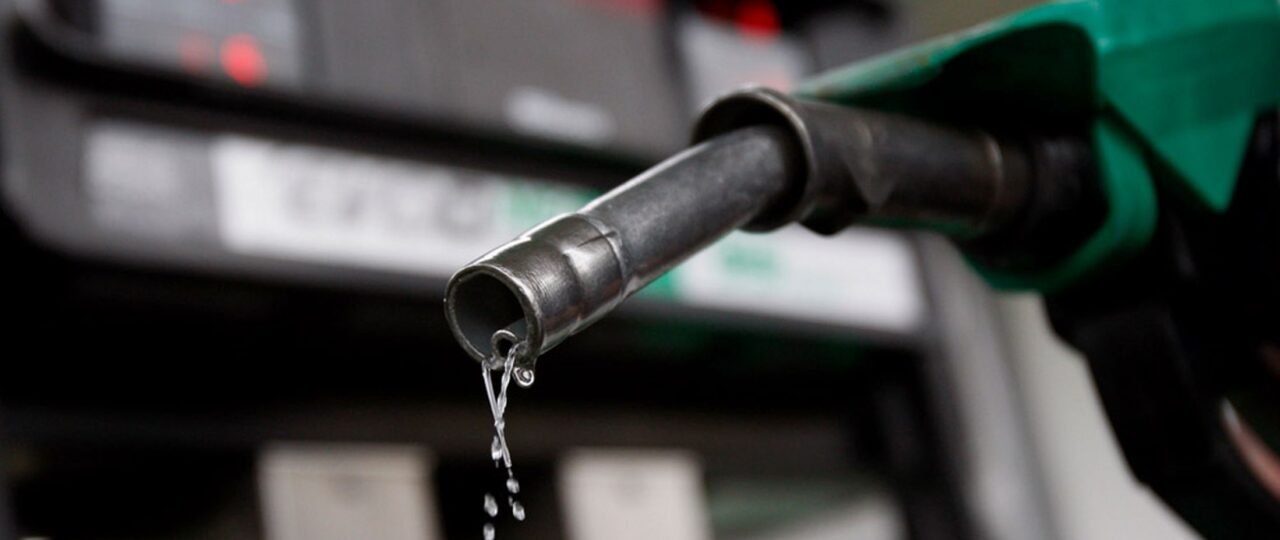
The removal of fuel subsidy by the Bola Tinubu administration has failed to deliver the economic and social benefits Nigerians were promised. This was the position canvassed by the Chief Economist of ARKK Economics & Data Limited, Dr Samson Simon.
Simon, who spoke in an interview with DAILY POST on Tuesday, said economists, including himself, had supported the removal of the subsidy before Tinubu assumed office because of the enormous resources the government was spending to keep petrol prices low.
He, however, said the justification for the policy was that resources previously spent on subsidy would be redirected to critical sectors such as education, healthcare and infrastructure.
“Some time ago, before Tinubu came to power, all of us were made to understand, and unfortunately, I was among the economists telling Nigerians that it makes sense for subsidy to be removed.
“And our reason for saying that was that, at the time we were paying for subsidy, every Nigerian buying fuel, for every one litre of fuel you buy, you pay one half, and then the government will pay the other half.
“Many of us thought, why not bear the full cost as an individual instead of the government paying the other half? Why not the government use these resources to fix our education, fix our healthcare, fix our infrastructure, and so on and so forth? So that was the logic.”
But according to the economist, the expected benefits have not materialised.
Simon also dismissed the argument that increased allocations from the Federation Account Allocation Committee, FAAC, meant states were receiving the money previously spent on fuel subsidy.
He argued that much of the increase was nominal and largely reflected changes in the exchange rate rather than a real increase in government resources.
“Now that subsidy has been removed, unfortunately, there’s nothing that we’re doing now that we were not doing before, whether pertaining to education, healthcare or infrastructure.
“People will say that FAAC allocation has increased, which is true, but it’s a nominal increase. It’s not a real increase because if you look at the exchange rate, a billion dollars before Tinubu came to power was around N460 billion.
“Considering the official exchange rate now, $1 billion is more than N1.3 trillion, which means that the same dollar that you had four years ago, if you change it in naira terms, you are going to get more than three times the amount.
“If you look at the increase in FAAC allocation from before Tinubu came on board to now, it has largely been reflected in the exchange rate differential.
“So it’s not like, actually, subsidy has been removed and the money that would have gone to subsidy is coming to the states. It’s just a nominal increase. It’s what is being called money illusion,” Simon said.
The economist was particularly critical of the way the subsidy removal was implemented, arguing that the government failed to adequately prepare for its impact on vulnerable Nigerians.
“To be blunt, this government has bungled the subsidy removal. The money that should have been used right after subsidy was removed is hardly anywhere to be seen,” Simon said.
“And that’s why people are not happy. By saying the government will not pay for subsidy, you’re saying the Nigerian people should pay. It’s the government that was paying before. Now the Nigerian people are paying for it.
“And how many of us can afford to pay? The majority of us live below the poverty line; we’re struggling. If before now we were living in crushing poverty, you can only imagine the extent of poverty now that subsidy has been removed, and nothing commensurate, particularly for the most vulnerable, those people, let’s even say the bottom decile, the bottom 10%.
“There’s nothing commensurate. What exactly has the government done to cushion the effect of this subsidy removal? Next to nothing. In fact, nothing.”
Simon said the consequences had extended beyond the direct cost of petrol, with higher transportation and production costs feeding into the prices of food and other essential commodities.
“So the suffering has been visited on Nigerians, and even for people that have relatively decent jobs, they’re struggling,” he said.
The economist also challenged the argument that fuel subsidy disproportionately benefited wealthy Nigerians.
The argument, which has been advanced by government officials, is that wealthier Nigerians consumed more petrol because they owned bigger vehicles and used more fuel.
Simon acknowledged that the wealthy may have benefited more in absolute terms but argued that the removal of subsidy had imposed a heavier burden on poorer Nigerians.
“The argument some of them, unfortunately, the current Minister of Finance keeps making, that when we were paying for subsidy, it was only benefiting the rich, which is false,” he said.
“If you say it was benefiting the rich more, it’s reasonable in the sense that they were the ones with the gas guzzlers. They had big cars, they had diesel-fuelled generators. They had multiple cars.
“And for every one litre they were buying, government was paying partly for them, right? But the truth is, now that subsidy has been removed, who is bearing the brunt? Who is suffering it more than anybody? The poorest of the poor.”
Simon said the debate should not have focused solely on the cost of maintaining subsidy without considering the social and economic benefits it provided.
“Instead of us dwelling on the benefits, we were just focusing on the costs. We didn’t do proper cost-benefit analysis to see if this is the benefit Nigerians are getting from paying for subsidy, this is the cost.
“Is the benefit worth the cost? If it is worth it, if the benefits exceed the cost, then by all means keep subsidy. If the benefits are equal to the costs, by all means keep subsidy.
“You only remove subsidy if the costs are more than the benefits. I don’t remember them doing anything like that. Everybody was just dwelling on the costs of subsidy. I don’t remember any data that made this comparison,” he said.
According to Simon, the economic consequences of subsidy removal extend far beyond the petrol station because fuel is a major input in transportation, agriculture and other sectors.
“We were just focusing, fixating on the costs. And now that we have removed fuel subsidy, we have seen the benefits? We have missed the benefits we were getting because this thing has a multiplier effect.
“If you remove subsidy, food prices will go up, everything will go up, particularly for the most vulnerable people who are struggling to feed themselves.
“Even if they are saying we should not limit ourselves to rain-fed farming, we should go into irrigation farming, you need to fuel the machine to irrigate. Many people cannot afford to buy the fuel now,” he stated.
He also pointed to the pressure faced by professionals and salaried workers as a result of rising living costs.
“Like me, many of us are teaching. How much do they even pay a professor? It is hardly enough to even fill their car. The price is so high,” he said.
Simon said the policy was not necessarily wrong in principle but argued that its implementation was inadequately planned.
“So I think it was not properly thought out. We just got carried away by the fact that it was costing us dearly. We didn’t look at the benefits.”
The economist also questioned Nigeria’s level of social spending compared with the scale of economic hardship facing citizens.
“If you go to America, social programmes of the American government are more than half of America’s budget. What percentage of Nigeria’s budget are for social programmes?
“So there’s nothing wrong with catering for the people. Why do you have government in the first place? It’s for the welfare of the people.”
However, Simon clarified that his position did not amount to a call for the restoration of fuel subsidy in exactly the form it existed before Tinubu assumed office.
“I’m not saying that subsidy should be retained the way it was before Tinubu came. We have to also think through, like what Atiku said. It may seem he’s going to play to the gallery. Some people find it attractive, but you have to also look at the cost.
“I think he’s dwelling on the benefits too, which is the same mistake that Tinubu made by dwelling on the costs. So he’s looking at the benefits. What about the costs?
“Can the Nigerian state afford to bear the full costs of subsidy reinstatement?”
Simon said Nigerians should not expect a return to the petrol prices that prevailed before the subsidy removal, warning that reinstating the subsidy would impose a significant burden on government finances.
“So, like I said, it requires a cost-benefit analysis. I don’t see the possibility of buying fuel for less than N200 like it was before Tinubu came. I don’t see that ever happening again.
“I’m not saying it’s completely impossible, but it’s going to be quite costly, which I don’t think the Nigerian state is willing to bear all the costs. I don’t think so,” he said.
Rather than simply reverse the policy, Simon said the government should focus on protecting Nigerians who are least able to absorb the increased cost of living.
“So let’s tell ourselves the truth. As an economist, I think the best thing that can be done now is to make provision for the most vulnerable,” he concluded.
Discover more from NAIRAVOICE.COM.NG
Subscribe to get the latest posts sent to your email.