

Stutter-step penalty kicks, explained: Why some players take them and some fans despise them originally appeared on The Sporting News.
Add The Sporting News as a Preferred Source by clicking here.
Few things are as divisive in the world of soccer as a stutter-step penalty.
The routine subverts all conceptions of what it takes to make the net move. In a sport defined by technique, the stop-start nature of the strike has proven contentious, especially when players miss their target.
So, is the stutter-step penalty viable in today’s game? And what are the origins of the move derided by many? Here’s what you need to know.
2026 WORLD CUP HQ:Latest World Cup news | Full World Cup schedule | Buy World Cup tickets
Why do some players take stutter-step penalty kicks?
As with most things pertaining to the aesthetics of the beautiful game, the stutter-step penalty — which sees a player feint and slow their run as they approach the ball, attempting to send the goalkeeper in the other direction — is believed to have origins on Brazil’s lush plains.
Nicknamed “paradinha” — “little stop” in Portuguese — the move was perfected by some of the country’s finest exports, including Pele, who claimed to have invented the ploy in his autobiography, “My Story.”
“In 1959, I can remember a training session with the national team where I saw Didi invent a new trick,” Pele wrote, per The Guardian. “He ran up to the ball, but just before he kicked it he stopped and instantly looked up to see which way the keeper was moving. In that split second he judged where to kick the ball and, of course, beat the keeper.
“I thought this was a brilliant idea — slightly on the edge of the rules, because you are supposed to kick the ball before the keeper moves. In reality, the keeper starts to move just before you kick the ball — so by looking up just before you kick it you are already in an advantageous position. Goalkeepers started complaining that it wasn’t fair.”
More than 70 years later, the choreography continues to draw admirers, from Neymar Jr. and Paul Pogba to Cristiano Ronaldo and Kylian Mbappe.
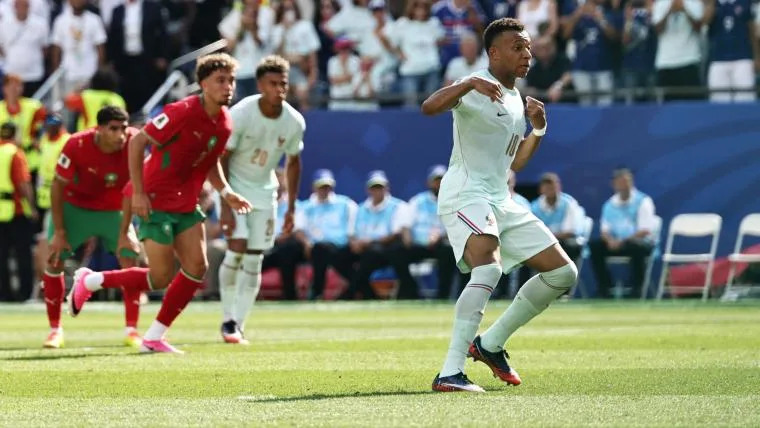
It has a checkered reputation nowadays, with a string of talents, including Mbappe and Brazilian midfielder Bruno Guimaraes, bungling their deployment of the contentious dance.
Nevertheless, the move is likely to remain en vogue in the years to come. At its best, it pairs style with substance, allowing footballers not only to tout their footballing gifts, but their chicanery, too.
When did stutter-step penalty kicks become common?
The stutter-step penalty first came to effect on Brazil’s sides of the late 1950s and early 1960s. Pele was one of the technique’s first practitioners, employing the jig to great effect throughout his playing career. Others soon followed suit, with masses of adherents embracing the composition decades later.
MORE WORLD CUP NEWS:
Discover more from NAIRAVOICE.COM.NG
Subscribe to get the latest posts sent to your email.