EXCLUSIVE: One of the most iconic DC shows could have almost led to a shared universe.
The superhero film and TV genre has evolved significantly over the last two decades, with the current climate seeing the continuous growth of the Marvel Cinematic Universe, as well as James Gunn’s DC Universe. While The CW became the home for the Arrowverse franchise, it wouldn’t have been possible had it not been for a very different comic book adventure.
In an interview with ScreenRant’s Andy Behbakht for the 25th anniversary of Smallville, Al Gough and Miles Millar, who co-created the DC TV drama, looked back on how they wanted to explore expanding the series into a franchise. As they were asked about whether there was ever a time that they were considering expanding Tom Welling’s show into a franchise, similar to what The CW’s Arrowverse did in 2012, Millar began by sharing his praise for the universe that came after the Superman prequel’s conclusion:
ScreenRant: Throughout these 10 seasons, as we expanded upon Clark’s world and also your take on the DC Universe, I know that you guys talked about your dynamics with DC and Warner Brothers, but also that you guys dealt with restrictions. I don’t know how many times someone would come up to a Comic-Con panel and be like, ‘When is Batman going to be on the show? When is Wonder Woman going to be on the show?’ But seeing now, for example, we see these characters in costumes by minute five and they’re hanging out with all these other superheroes. We had something like the Arrowverse. Once you saw after Smallville ended and seeing what the next generation was able to do, were you wondering like, ‘Oh, so that’s what it’s like to have all the toys,’ even though you guys still had a lot of toys to play with during your era.
Miles Millar: Yeah, I mean, definitely there’s no Arrowverse about Smallville. That’s pretty clear. Well, it’s true, obviously, it is the same crew in Vancouver. It was the sort of grounded, and then they became more cartoonish as they went. But for us, it was actually a point of survival. The fact that we didn’t overuse the other characters too soon allowed us to keep going. We could use the arsenal of characters as we went and then explore them in the way we wanted to and sort of reinvent them that fit the mood of the show, which is more grounded than some of the other shows that came after it. But in terms of what happened with the Arrowverse, it meant nothing to us. It’s great. It was just more ways to tell the stories and more ways to entertain people. So it was flattering in terms of what came after the show, definitely. I think we sort of laid the groundwork for what happened afterwards.
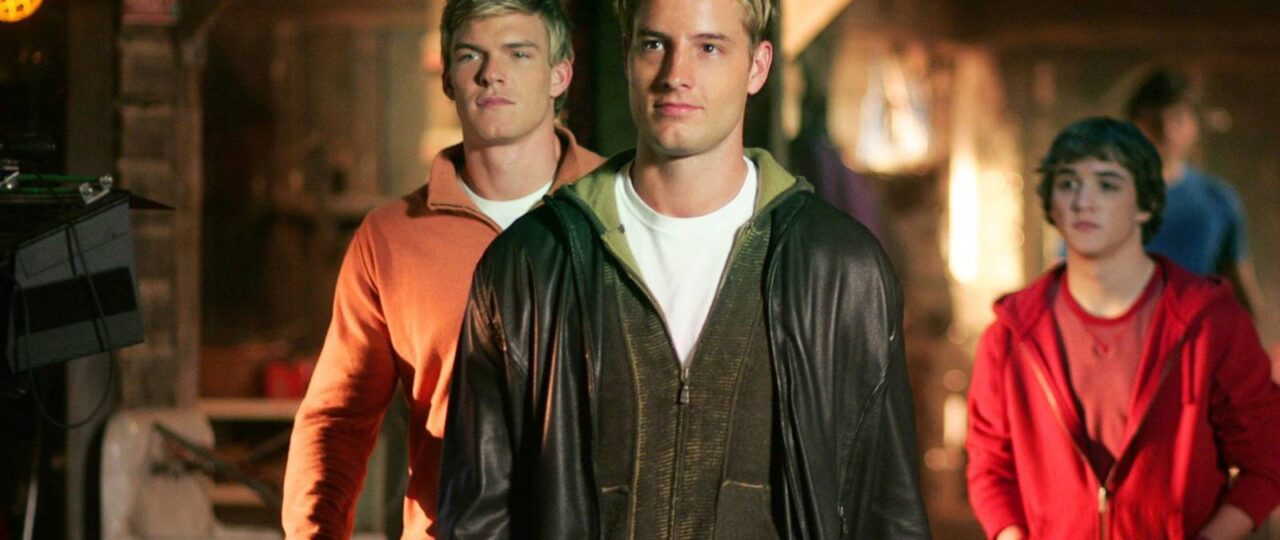
In Smallville season 5, which was the final year the show aired on The WB before it merged with UPN to become The CW in 2006, Alan Ritchson made his debut as DC’s Arthur Curry. Not long after, Millar and Gough produced an Aquaman pilot, which ended up being filmed, but once The CW was formed, it was never picked up as a series.
ScreenRant: I was also curious on that note, because I know that even though the younger crowd may not have seen it to this day, I know you guys were trying to do Aquaman, for example, and I’m still pissed to this day that that show did not go forward because that pilot is so good. It is one of the best things that ever came out on iTunes back then.
                <p>Miles Millar: It had problems, but it was the raw pilot. So it's seen a pilot before you get a chance to go in and fix it. Yeah, that was the pilot we didn't get a chance [to fix.] If you'd seen the original Smallville pilot, there are things in that that we changed when you get into production. So that one was definitely... Obviously, we didn't know it at the time, but Justin Hartley became a massive TV star, so he was perfect casting. It was just really bad timing in terms of the UPN and WB merger, and the UPN folks came in and basically cleaned house. Smallville was not the kind of show they wanted, and Aquaman was definitely the first victim of that feud between the two superpowers of the networks.</p>
                <p>So it was just really unfortunate timing. Looking back, we should have definitely done that earlier, done a spinoff. We had no warning that there was going to be some sort of merger that happened. So it was just that happens in Hollywood. Regime change is the worst thing for any project, and Aquaman was definitely a victim of that.</p>
        </blockquote>
ScreenRant: I was also curious on that note, because I know that even though the younger crowd may not have seen it to this day, I know you guys were trying to do Aquaman, for example, and I’m still pissed to this day that that show did not go forward because that pilot is so good. It is one of the best things that ever came out on iTunes back then.
Miles Millar: It had problems, but it was the raw pilot. So it’s seen a pilot before you get a chance to go in and fix it. Yeah, that was the pilot we didn’t get a chance [to fix.] If you’d seen the original Smallville pilot, there are things in that that we changed when you get into production. So that one was definitely… Obviously, we didn’t know it at the time, but Justin Hartley became a massive TV star, so he was perfect casting. It was just really bad timing in terms of the UPN and WB merger, and the UPN folks came in and basically cleaned house. Smallville was not the kind of show they wanted, and Aquaman was definitely the first victim of that feud between the two superpowers of the networks.
So it was just really unfortunate timing. Looking back, we should have definitely done that earlier, done a spinoff. We had no warning that there was going to be some sort of merger that happened. So it was just that happens in Hollywood. Regime change is the worst thing for any project, and Aquaman was definitely a victim of that.
Gough and Millar elaborated on how Aquaman could have potentially explored a shared universe with the Smallville cast, as there had been other projects that they attempted to spin off from Welling’s series. One idea they wanted to explore was another member of the DC Trinity, as the duo revealed the following:
ScreenRant: If it had gone forward, do you guys in your mind think that there would’ve been a Smallville-verse? Did you ever talk about the idea that, ‘Oh, what if we did the Smallville treatment for other characters as our own shows?’ Because I know again, there was Aquaman. I know at some point during season six, there were talks about a Justice League spinoff with Steven DeKnight and something with Supergirl later on. But what did those conversations look like? Or was the focus mainly like, ‘Let’s just focus on Smallville in the long run and then we will see what else happens?’
                <p>Al Gough: Well, I think had the Aquaman one gone forward, definitely there would've been some crossover at some point. Characters could have crossed in and out of the shows. But I also think it's important, with all of these shows, is [that] they need to be their own thing. So they need to be their own thing and stand on their own two feet as shows. And then you don't want to build them with the idea like, 'Oh, now we're going to use the crutch of all these other people from the other shows crossing in and out.' So I think you can do that, but they have to be their own thing. And again, had we had the opportunity, we would've built out that show, and then we would've definitely looked at a Diana Prince show because that's something else that we were very interested [in.]</p>
                <p>Miles Millar: Yeah, that was the other show, the young Wonder Woman show. We thought that was a really interesting character, really interesting dynamics. It felt like a natural fit for crossovers with Clark and Lois. But it was, just unfortunately, the regime at the time, once the WB became CW, it was just a different [time.]</p>
                <p>We were fighting for our survival as a show, so we didn't really have time to think about spinoffs and things like that. It was just a different era with people who didn't want the show to succeed. It was good for us creatively because we just had to fight for it and make sure that we could be as ambitious and take risks with the show. So I think the show was better for it because we were focused on it. We weren't focused on other things. Sometimes shows, if you take the foot off the gas midway through, you only get six seasons or whatever it is. I think it was good for us, but it was unfortunate that we couldn't expand what we wanted to do in terms of the universe of Smallville.</p>
        </blockquote>
ScreenRant: If it had gone forward, do you guys in your mind think that there would’ve been a Smallville-verse? Did you ever talk about the idea that, ‘Oh, what if we did the Smallville treatment for other characters as our own shows?’ Because I know again, there was Aquaman. I know at some point during season six, there were talks about a Justice League spinoff with Steven DeKnight and something with Supergirl later on. But what did those conversations look like? Or was the focus mainly like, ‘Let’s just focus on Smallville in the long run and then we will see what else happens?’
Al Gough: Well, I think had the Aquaman one gone forward, definitely there would’ve been some crossover at some point. Characters could have crossed in and out of the shows. But I also think it’s important, with all of these shows, is [that] they need to be their own thing. So they need to be their own thing and stand on their own two feet as shows. And then you don’t want to build them with the idea like, ‘Oh, now we’re going to use the crutch of all these other people from the other shows crossing in and out.’ So I think you can do that, but they have to be their own thing. And again, had we had the opportunity, we would’ve built out that show, and then we would’ve definitely looked at a Diana Prince show because that’s something else that we were very interested [in.]
Enjoying this article? Support our work with a small crypto donation.Miles Millar: Yeah, that was the other show, the young Wonder Woman show. We thought that was a really interesting character, really interesting dynamics. It felt like a natural fit for crossovers with Clark and Lois. But it was, just unfortunately, the regime at the time, once the WB became CW, it was just a different [time.]
We were fighting for our survival as a show, so we didn’t really have time to think about spinoffs and things like that. It was just a different era with people who didn’t want the show to succeed. It was good for us creatively because we just had to fight for it and make sure that we could be as ambitious and take risks with the show. So I think the show was better for it because we were focused on it. We weren’t focused on other things. Sometimes shows, if you take the foot off the gas midway through, you only get six seasons or whatever it is. I think it was good for us, but it was unfortunate that we couldn’t expand what we wanted to do in terms of the universe of Smallville.
Sign in to claim your place on
the leaderboard!Sign in to claim your place on
the leaderboard!The first episode did make its way to iTunes, allowing audience members to see what could have been, but despite having introduced Ritchson that same season, Justin Hartley was tapped as the titular hero, before going on to play Green Arrow as a recurring guest star in season 6 while guesting in season 7 before becoming a series regular for Smallville’s following seasons. When asked how Aquaman would have worked, canon-wise, if it had gone forward, Gough and Millar shared:
ScreenRant: If I can just ask, because I’m a continuity freak, because you guys had just introduced Alan Ritchson as Aquaman that season before you did the spinoff. So if Justin Harley’s Aquaman would’ve been canon to Smallville, how would that have worked? Just curious about that.
                <p>Al Gough: I don't know. I mean, I think it was something where you're looking at the time of who can carry a series. And to be honest, when we put Aquaman in the show, we weren't thinking of a spinoff at that point. It was early days when we were starting to introduce him. We'd introduced, I think, The Flash up until that point, and then Aquaman. And then once we did, we saw a way into it, but then you really want to cast a... And obviously, look, Alan Ritchson's gone on to have an amazing career in this great Jack Reacher, and he's fantastic.</p>
                <p>Miles Millar: I think that was our first instinct, but sometimes in terms of casting, there was definitely, not pressure, but people wanted us to look wider. That was definitely the word. I think Alan had just started acting, and I didn't necessarily think there was a sense that he could lead a show at that point in his career. So that was definitely where we were. It wasn't necessarily our choice, but it's amazing [how] his career has happened, and it's very exciting for him and good.</p>
        </blockquote>
ScreenRant: If I can just ask, because I’m a continuity freak, because you guys had just introduced Alan Ritchson as Aquaman that season before you did the spinoff. So if Justin Harley’s Aquaman would’ve been canon to Smallville, how would that have worked? Just curious about that.
Al Gough: I don’t know. I mean, I think it was something where you’re looking at the time of who can carry a series. And to be honest, when we put Aquaman in the show, we weren’t thinking of a spinoff at that point. It was early days when we were starting to introduce him. We’d introduced, I think, The Flash up until that point, and then Aquaman. And then once we did, we saw a way into it, but then you really want to cast a… And obviously, look, Alan Ritchson’s gone on to have an amazing career in this great Jack Reacher, and he’s fantastic.
Miles Millar: I think that was our first instinct, but sometimes in terms of casting, there was definitely, not pressure, but people wanted us to look wider. That was definitely the word. I think Alan had just started acting, and I didn’t necessarily think there was a sense that he could lead a show at that point in his career. So that was definitely where we were. It wasn’t necessarily our choice, but it’s amazing [how] his career has happened, and it’s very exciting for him and good.
Smallville is available through streaming (on Hulu via Disney+ in the United States) and home media release.
Smallville
Discover more from NAIRAVOICE.COM.NG
Subscribe to get the latest posts sent to your email.
Enjoyed this? A small crypto donation helps us keep publishing.