WASHINGTON — A major bipartisan bill to overhaul college athletics nationwide passed the Senate, clearing a key hurdle and setting up a potentially divisive political showdown in the House of Representatives.
The chamber passed the Protect College Sports Act, which aims to rein in compensation for student-athletes and place new limits on transfers, on Monday, Sept. 28. The vote was 77-22.
The success of the measure — arguably the most significant piece of legislation the Senate will pass before recessing until the midterms — marked a moment of significant progress for a yearslong push by lawmakers to intervene in college sports regulation.
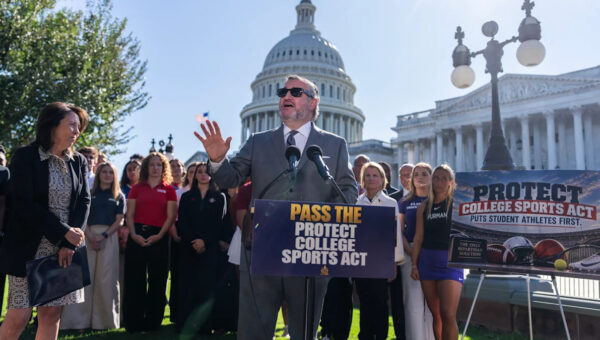
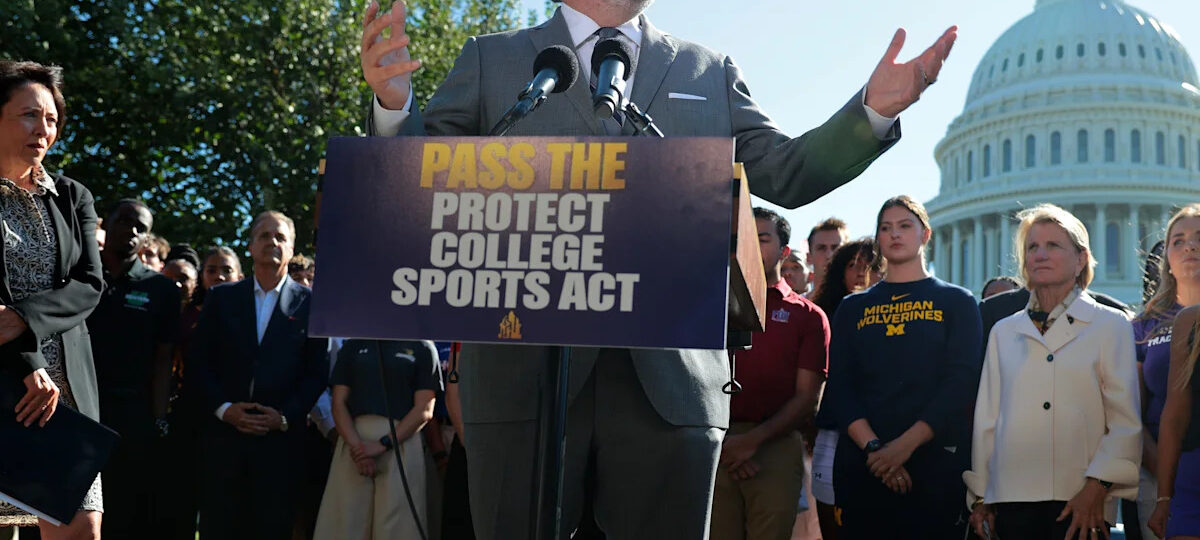
Sen. Ted Cruz, the bill’s main Republican architect alongside Sen. Maria Cantwell, D-Washington, told USA TODAY Sports before it passed that it would help curb a “spending spiral where virtually every athletic department is losing millions of dollars.”

“The most important part of the bill is bringing order to chaos,” said Cruz, the chairman of the Senate Commerce Committee. “College sports is the Wild West. There are essentially no rules.”
Yet just a month before the fall elections, the bill is inflaming stark divisions among congressional Democrats, many of whom have been under pressure from civil rights and labor leaders to block it amid criticism it would disempower student-athletes, primarily those of color.
In a lengthy speech on the Senate floor before the legislation passed, Sen. Cory Booker, D-New Jersey, himself a former college athlete, called it a “bill that’s going to hurt so many.”
“I regret this day,” he said. “I regret watching my colleagues do this.”

In recent years, court decisions in favor of athletes’ rights have allowed students to massively profit from their fame, often referred to as “name, image and likeness,” or NIL. In critics’ eyes, those changes have plunged universities’ finances into disarray, closed athletic programs and created inequities among wealthy and less-affluent schools.
“Litigation has struck down virtually all the rules, and as a result, you have athletes going into the transfer portal two, three, four times,” Cruz said. “If Congress doesn’t act within a few years, we will see hundreds of thousands of roster slots and scholarship positions going away, and that would be a tragedy.”
The Senate-passed bill would codify a federal right to NIL for student-athletes. It also would address the current landscape of unlimited transfers, temporarily pause conference realignment and create guidelines around which time a college football or basketball coach can be hired away from another program.
In addition, the measure would expand revenue-sharing from schools to athletes up to approximately $43 to $45 million. And it contains a provision where schools may spend up to an additional $5 million on revenue-sharing to women’s and Olympic non-revenue sports.
Sen. Eric Schmitt, R-Missouri, told USA TODAY Sports the legislation would bring stability, both for athletic conferences and players.

“I think we did a pretty good job of balancing all the competing interests,” Schmitt said.
The NCAA put out a statement late Monday night after the vote:
“The NCAA thanks the many senators who sponsored this bill – including Senators Cruz, Cantwell, Schmitt and Coons – as well as the many other senators who voted for the bill, for their bipartisan effort to protect this uniquely American tradition of college sports in the decades to come. Now the bill moves to the U.S. House of Representatives and there is much work left to do to ensure student-athlete benefits are codified into federal law and future generations of young people can access those benefits and use college sports as the launching point for their careers.”
Opponents of the bill, most vocally led by Sens. Booker and Chris Murphy, D-Connecticut, have argued it would only cap spending in the form of revenue-sharing to student-athletes and would not address multimillion dollar coaching contracts and buyouts. They also cite that the bill would not address collective bargaining concerns and doesn’t include a provision to make athletes employees of their respective institutions.
“At its core, it’s a bill that undermines the rights of young people who pour their blood, sweat, tears, countless hours of work and more into their craft,” Booker said. “We should’ve listened to their wisdom before voting today, before rushing to this vote as the last thing we do before a long recess.”
To become law, the Protect College Sports Act now has to pass the House with a simple majority vote. Should the bill survive that process, it would be moved to the desk of President Trump, who has signaled he would sign it.
The House, however, is recessed until after the midterm elections in early November. On Monday, Cruz called on Republican House Speaker Mike Johnson to immediately bring lawmakers back to pass the bill.
“The House can pass the bill in just one day. Unlike the Senate, the House can move very quickly,” he told USA TODAY Sports. “I’ve already urged President Trump to sign the bill on the set of (ESPN’s) ‘College GameDay’ at a big game this fall. But it is my hope and belief that this bill will be signed into law before election day.”
With many Republicans glued to the campaign trail, though, getting lawmakers to abruptly return to Washington would be a tough sell.
The Protect College Sports Act first cleared the Senate Commerce Committee on June 18 with a 19-9 vote. It then advanced to the full Senate. After senators approved cloture by a 74-24 margin, they unveiled a series of changes on Sept. 17, including:
- NCAA-led compliance oversight: One amendment required the NCAA to oversee compliance efforts on member campuses to ensure schools adhere to the bill’s health, wellness and safety standards. Supporters say the change adds an independent layer of oversight and reduces the risk of schools circumventing the law’s reporting requirements and enforcement structure.
- Reducing the conference-transition restriction from five years to three: One of the bill’s central goals is to protect programs outside the Power Four from being left behind during future rounds of conference realignment. The provision would require schools changing Power Four conferences to remain independent athletics entities for three years instead of the originally proposed five. The revision was viewed as key to gaining support from senators in states such as Florida and South Carolina, where concerns had been raised about the longer timeline.
Expanding medical coverage protections for athletes: This amendment establishes a minimum standard for medical coverage while eliminating language that could have been interpreted as capping institutional liability. Earlier versions of the bill limited the amount schools could be held financially responsible for in medical expenses. The revised language sets a floor for coverage without imposing a ceiling.
Connecting additional revenue-sharing opportunities to academic performance: Under the amendment, schools would be required to place additional revenue-sharing funds into a retention pool tied to academic benchmarks, including graduation rates and Academic Progress Rate (APR) standards. Supporters argue the change encourages athletes to continue making progress toward a degree, even in an era increasingly defined by transfer movement and roster turnover.
NCAA-led compliance oversight: One amendment required the NCAA to oversee compliance efforts on member campuses to ensure schools adhere to the bill’s health, wellness and safety standards. Supporters say the change adds an independent layer of oversight and reduces the risk of schools circumventing the law’s reporting requirements and enforcement structure.
Reducing the conference-transition restriction from five years to three: One of the bill’s central goals is to protect programs outside the Power Four from being left behind during future rounds of conference realignment. The provision would require schools changing Power Four conferences to remain independent athletics entities for three years instead of the originally proposed five. The revision was viewed as key to gaining support from senators in states such as Florida and South Carolina, where concerns had been raised about the longer timeline.
Expanding medical coverage protections for athletes: This amendment establishes a minimum standard for medical coverage while eliminating language that could have been interpreted as capping institutional liability. Earlier versions of the bill limited the amount schools could be held financially responsible for in medical expenses. The revised language sets a floor for coverage without imposing a ceiling.
Connecting additional revenue-sharing opportunities to academic performance: Under the amendment, schools would be required to place additional revenue-sharing funds into a retention pool tied to academic benchmarks, including graduation rates and Academic Progress Rate (APR) standards. Supporters argue the change encourages athletes to continue making progress toward a degree, even in an era increasingly defined by transfer movement and roster turnover.
With the House unlikely to return to session before the midterms, the Protect College Sports Act isn’t expected to see more legislative movement until later this year.
Discover more from NAIRAVOICE.COM.NG
Subscribe to get the latest posts sent to your email.